Museum für Archäologie Thurgau
Archaeology museum in Frauenfeld's old town: finds from Thurgau from the Stone Age to the Early Middle Ages, including the Eschenz gold cup.
No sound? Check your device’s silent switch.
Have only individual sections read aloud
About the museum
The collection dates back to 1859, when the newly founded Historical Association of the Canton of Thurgau began gathering finds from pile-dwelling settlements and other excavations. A first museum in a building of the Frauenfeld cantonal school lasted only about twenty years. In 1924 the collection moved to the Luzernerhaus in the old town, in 1958 the canton took over as the operating body, and in 1974 the famous Eschenz gold cup was given to the canton as a gift. In 1983 the Office of Archaeology was founded, which has looked after the holdings ever since; the public exhibition was initially housed in the west cellar of Frauenfeld Castle.
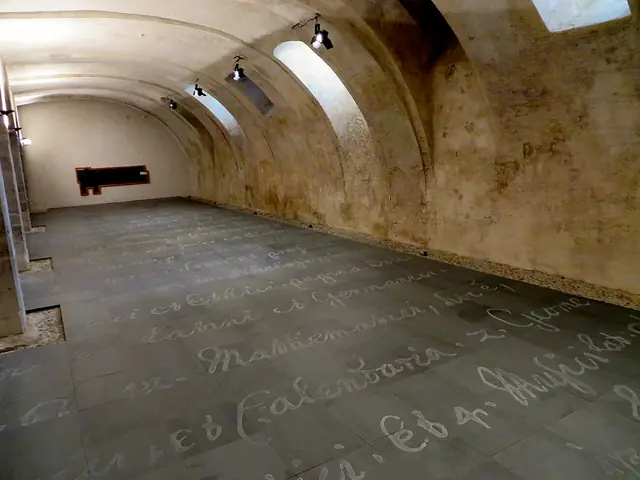
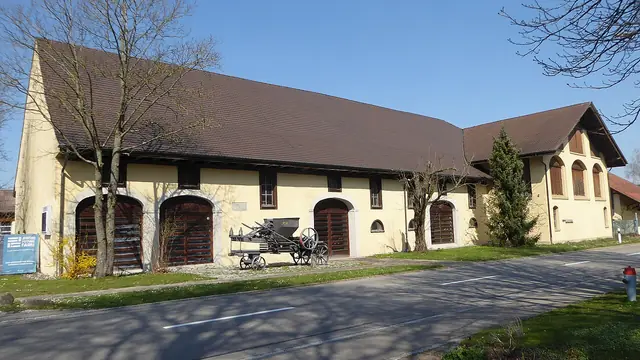
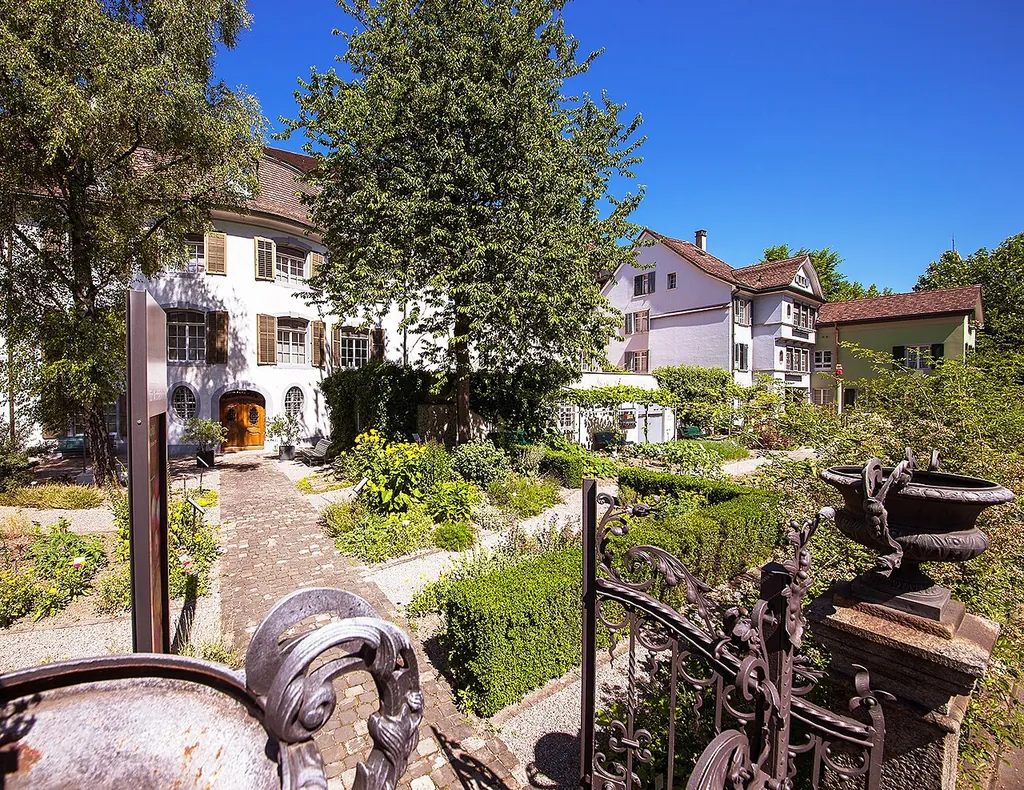
In 1996 the present Museum of Archaeology opened in the former remand prison next to the Natural History Museum. Both buildings share one entrance and are connected by the Archaeobotanical Museum Garden. In 2014 the "Otherworlds" ("Anderswelten") section on belief, cult and burial was added in the vaulted cellar; since 2011 the prehistoric pile dwellings around the Alps have been a UNESCO World Heritage Site, which is also a theme in the museum.
The museum sees itself as the showcase of the Office of Archaeology, which curates and runs it. Across several floors it presents everyday life, crafts, trade and burial in present-day Thurgau from the Neolithic to the Early Middle Ages. Since 2024 the permanent exhibition has been renewed in stages until 2030: the Bronze Age (2024) and the pile dwellings (2025) came first, followed in 2026 by the presentation on the gold cup.
Highlights
- Eschenz gold cup, the canton's most famous find
- Pile-dwelling room with a settlement model of Pfyn-Breitenloo (UNESCO World Heritage)
- Roman finds with an original pottery kiln and rare wooden objects
- Hands-on Roman road profile and archaeological methods
- Archaeobotanical museum garden and free admission
Permanent exhibitions
- Anderswelten – The vaulted cellar explores belief, cult and burial customs through the millennia, including a family's fate in Roman Eschenz and the mysterious crescent-shaped moon horns.
- Steinzeit und Bronzezeit – The 1st floor shows the life of the first settled people of Thurgau, finds from the UNESCO pile-dwelling settlements, a pile-dwelling room, the Bronze Age and the Eschenz gold cup.
- Kelten, Römer und Frühmittelalter – On the 2nd floor, visitors encounter the remains of Roman delicacies, coins, tableware, an original pottery kiln and rare wooden finds such as writing tablets, wine barrels and a panpipe.
- Founded
- 1996
- Operated by
- Amt für Archäologie des Kantons Thurgau
- Director
- Urs Leuzinger
Admission & discounts
Admission is free.
| Group tour Tuesday–Friday until 5 pm (approx. 60 min., max. 25 people) | CHF 150Admission is free; larger groups of up to 60 people are divided among up to three guides (CHF 100 for each additional guide). |
|---|---|
| Group tour Tuesday–Friday after 5 pm and Saturday/Sunday (approx. 60 min., max. 25 people) | CHF 250 |
Admission is free. The museum is an offer partner of the KulturLegi of Caritas Thurgau.
Accessibility
- Wheelchair accessible
- Elevator
- Accessible restroom
- Accessible parking: no information
- Service dogs welcome
- Tactile models & exhibits
- Sign language tours: no information
- Easy-to-read materials: no information
- Audio description: no information
The museum and the entrance through the museum garden (Promenadenstrasse) are wheelchair accessible, and there is a wheelchair-accessible toilet in the foyer. Seating in the exhibitions, portable folding stools on request. Lifts and handrails with Braille, steps with white visibility strips; accompanied visits for people with visual impairments by registration (tel. +41 58 345 74 00), tactile objects such as the Roman road profile. Tours with sign language interpretation are possible on request. Exhibition texts as PDF in German, French and English.
Kids & families
Great for kids & families
- Family tours & workshops
- Activity booklet, scavenger hunt or kids’ audio guide
- Hands-on stations
- Stroller-friendly
- Baby changing facilities
The children's trail with Archie the badger leads through the exhibition (pile-dwelling village model, jewellery figures, radio play about the gold cup); the free trail-finding activity is available on paper. Throughout the year there are events for children and families in the joint "Museum for Children" programme of the cantonal museums. Strollers can be left in the foyer, bicycle trailers in front of the entrance; changing table in the toilet in the foyer.
Getting there & parking
By public transit
Altstadt · 2-min walk
About a 5-minute walk from Frauenfeld station (SBB); or by bus from the station (line 803 towards Plättli Zoo or 804 towards Huben) to the "Altstadt" stop, then about 2 minutes on foot.
By car
Paid parking
Paid parking on Freie Strasse (max. 1 hour), at Parking Promenade (max. 2 hours), in the Parkhaus Altstadt (max. 8 days) and at Parking Marktplatz (max. 10 hours).
The museum is located in Frauenfeld's old town; step-free access through the museum garden from Promenadenstrasse.
Get directionsAmenities & dining
- Café
- Restaurant: not available
- Museum shop
- Coat check
- Lockers
Café Museumslaube (self-service, drinks and snacks from regional and fair-trade suppliers, during opening hours; you may eat your own afternoon snack here). Museum shop with souvenirs and archaeological specialist books. Lockers in the foyer that do not require a deposit.
Events & venue rental
- Spaces for rent
The Museumslaube and the Wissenswerkstatt (classroom on the 3rd floor) can be rented; prices and conditions are in the rental information on the website.
Inquiries & detailsPlan your visit
| Guided tours | yes · approx. 60 min |
|---|---|
| School programs | yes |
| Photography | Photography without flash is permitted in all exhibition rooms. |
| Good to know | Group tours with archaeologists and excavation technicians from the Office of Archaeology, on topics including pile dwellings, the Romans in Thurgau and "Museum total"; enquiries via the form on the website. Large bags and backpacks are not welcome in the exhibition rooms; dogs are not allowed (except assistance and guide dogs); eating and drinking only in the Museumslaube. Offers for schools include the museum suitcase and the Archäomobil. |