Museum La Truaisch
Valley museum of the municipality of Tujetsch in Sedrun, with a notable mineral collection, historic living rooms, linen culture, agriculture and films.
Have only individual sections read aloud
About the museum
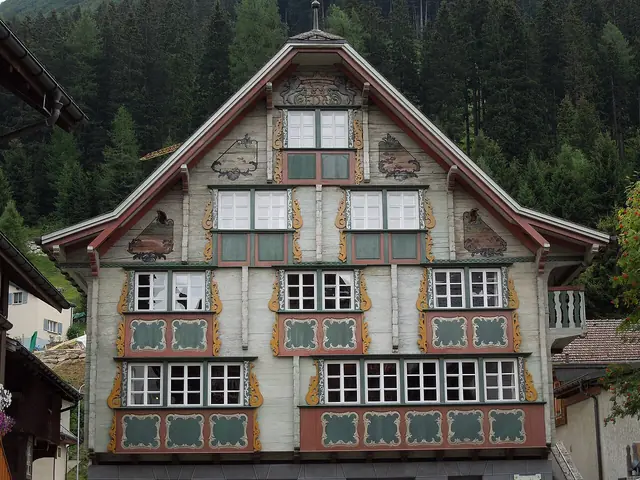
The house that is now the museum was built in 1898/99 as a holiday home at the top of the village of Sedrun by Sigisbert Monn-Beer (1857–1906), a railway foreman with the Swiss Federal Railways in Ticino. As a stone house it was an exception in Tujetsch, which at the time was built almost entirely of wood. His technically gifted sons set up a workshop on the first floor; Sebastian Monn (1888–1960) later ran the valley's first mechanical workshop there and repaired sewing machines, bicycles, gramophones and radios.
In 1980 the municipality of Tujetsch bought the house to set up a valley museum in it. After renovation until 1984, objects and tools were collected that show the life and work of the population before mechanization around 1950; many came as donations from the valley. The museum was inaugurated on September 7, 1986. Its name is an old Romansh term for a granary or a warehouse.
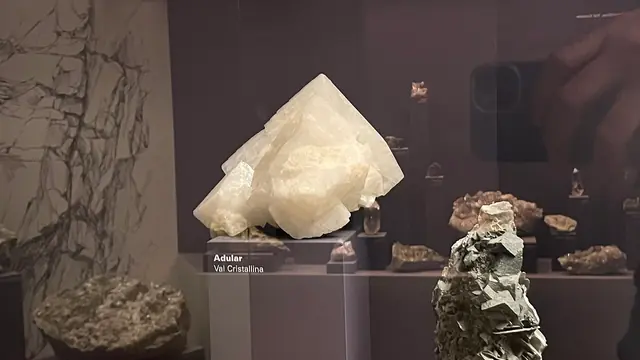
Today the museum shows a living room, a kitchen and a bedroom from earlier times, tools of shoemakers and carpenters, and equipment for farming and alpine agriculture. The mineral section presents finds from local crystal hunters (Strahler), pieces from the Gotthard Base Tunnel and an especially large milarite; since summer 2023 the collection of Ignazi Albin (1933–1987) from Tschamut has also been on display. An exhibition on linen culture, models in the hay barn, a ceramics collection from Bugnei and more than fifty films about the valley complete the offering.
Highlights
- One of the most valuable mineral collections in Switzerland, with a large milarite
- Minerals from the Gotthard Base Tunnel and the Ignazi Albin collection
- Living room, kitchen and bedroom as in earlier times
- Linen culture from flaxseed to fabric, with spinning wheel and loom
- More than fifty films on the culture, customs and agriculture of Tujetsch
- Search game for children with a crystal as a gift
Permanent exhibitions
- Heimat-, Geschichts- und Kulturmuseum – Living room, kitchen and bedroom from earlier times, tools of shoemakers and carpenters, and equipment for farming and alpine agriculture show everyday life in Tujetsch.
- Mineralien – Kristalle – Finds from local crystal hunters, pieces from the Gotthard Base Tunnel, an exceptionally large milarite and the Ignazi Albin collection; the loans from the crystal hunters change every three years.
- Leinenkultur – The path from flaxseed to fabric is shown with small-scale figures and equipment, as well as a flax comb, spinning wheel, yarn reel and loom in full size.
- Founded
- 1986
- Operated by
- Gemeinde Tujetsch
Admission & discounts
| Adults | CHF 7 |
|---|---|
| Children & teens | CHF 4 |
| Groups | –Groups please register. |
Free admission with the Raiffeisen Bank EC card, with the guest card and with the Golden Card.
Accessibility
The museum hasn’t published any information on this.
Kids & families
Great for kids & families
- Activity booklet, scavenger hunt or kids’ audio guide
In the search game, children use a picture sheet to find ten ceramic photos hidden in the museum; as a reward, they may choose a crystal.
Getting there & parking
By public transit
By train over the Oberalppass or via Chur into the Surselva to Sedrun; the museum is in the upper part of the village on the Via dil Bogn.
By car
Parking available
Parking above Bogn Sedrun.
By car from Andermatt over the Oberalppass (closed in winter) or from Chur via Disentis/Mustér to Sedrun.
Get directionsAmenities & dining
The museum hasn’t published any information on this.
Events & venue rental
- Spaces for rent
- Private parties
- Corporate events
Up to 40 guests.
The hall (6 tables of 6 people, up to 40 people) and the museum garden can be rented for apéros, class reunions, meetings, celebrations and seminars.
Inquiries & detailsPlan your visit
| Good to know | From a list of more than fifty films on the culture, customs, sports, religion, school, crystal hunting and agriculture of Tujetsch, films can be selected and watched on site. For teachers there is documentation for school visits as a PDF. In summer, barley, rye, flax and potatoes grow in the museum garden. |
|---|