Bill Douglas Cinema Museum
A free museum at the University of Exeter showing the history of cinema and pre-cinema entertainment from magic lanterns to film stars.
Have only individual sections read aloud
About the museum
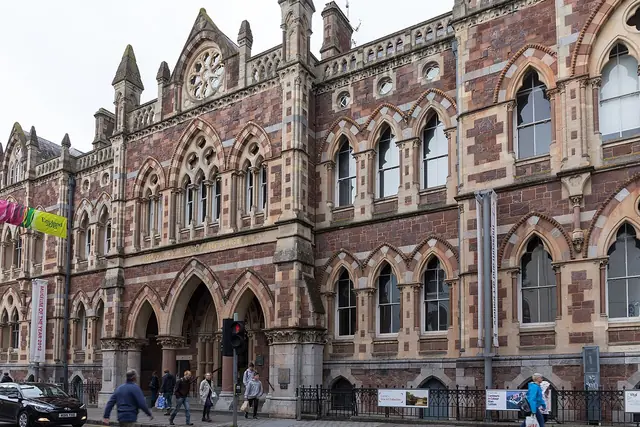
The Bill Douglas Cinema Museum grew out of the collection of the film-maker Bill Douglas (1934 to 1991) and his friend Peter Jewell (1934 to 2025). Together they gathered more than 50,000 items about film and the history of moving images. After Douglas died, Jewell gave the collection to the University of Exeter, which opened it as a museum in the Old Library on its Streatham campus.
The collection has since grown to more than 90,000 objects, of which about 1,000 are on display. The Lower Gallery covers pre-cinema visual culture up to 1910, including magic lanterns, shadow puppets, optical toys and early prints. The Upper Gallery follows cinema from 1910 to the present with publicity material, books, ephemera and memorabilia.
The museum is an accredited public museum and also serves as a research facility for students and scholars. Arts Council England has designated the collection as a Collection of National Importance. Study facilities are open by appointment on weekdays, and the museum supports teaching with school resources and a children's section on its website.
Highlights
- Magic lanterns, shadow puppets and early moving toys
- Lower Gallery on pre-cinema culture up to 1910
- Upper Gallery on cinema from 1910 to today
- Rare books, prints and publicity material
- Designated Collection of National Importance
Permanent exhibitions
- Lower Gallery: pre-cinema – Magic lanterns, shadow puppets and optical toys that show how moving images developed before cinema, up to 1910.
- Upper Gallery: cinema – Publicity material, books and memorabilia that trace cinema from 1910 to the present.
- Founded
- 1994
- Operated by
- University of Exeter
Admission & discounts
Admission is free.
Admission is free. A guidebook can be borrowed at the entrance or bought online for £10.
Accessibility
- Wheelchair accessible
- Elevator
- Accessible restroom: no information
- Accessible parking
- Service dogs welcome: no information
- Tactile models & exhibits: no information
- Sign language tours: no information
- Easy-to-read materials: no information
- Audio description: no information
Ramp access into the museum and a lift between the two galleries that takes all but the very largest wheelchairs. Blue Badge holders can park in front of the building on the chapel side, Monday to Friday and possibly at weekends, but the area has uneven cobbles; the museum advises wheelchair users to come by car because the road is cobbled.
Kids & families
The museum website has a Kids Zone with learning topics on shadow puppets, early moving toys, magic lanterns, film stars and animation.
Getting there & parking
By public transit
Queen's Building (bus 4)
Bus 4 runs between the city centre and the university; from the city centre get off by the Queen's Building and walk down the hill past the chapel. The museum is about a 15-minute walk uphill from Exeter St David's and Exeter Central stations; bus 4 also runs from outside St David's.
By car
Paid parking
Pay-and-display parking along Prince of Wales Road, which can be limited in term time; spaces outside the Old Library are for Blue Badge holders.
- Accessible parking
The museum is in the Old Library halfway along Prince of Wales Road, next to the University Chapel. Enter through the glass main doors on the chapel side.
Get directionsAmenities & dining
The guidebook and museum items are sold through the University of Exeter online store; no café or shop is listed on site.
Events & venue rental
The museum hasn’t published any information on this.
Plan your visit
| Guided tours | yes |
|---|---|
| Audio guide | yes |
| School programs | yes |
| Good to know | An audio guide is available through a third-party website. Tours are available for groups of five or more on weekdays, preferably during university vacations; large groups should notify the museum in advance. School and college groups are welcome and tours can be tailored to the curriculum. |