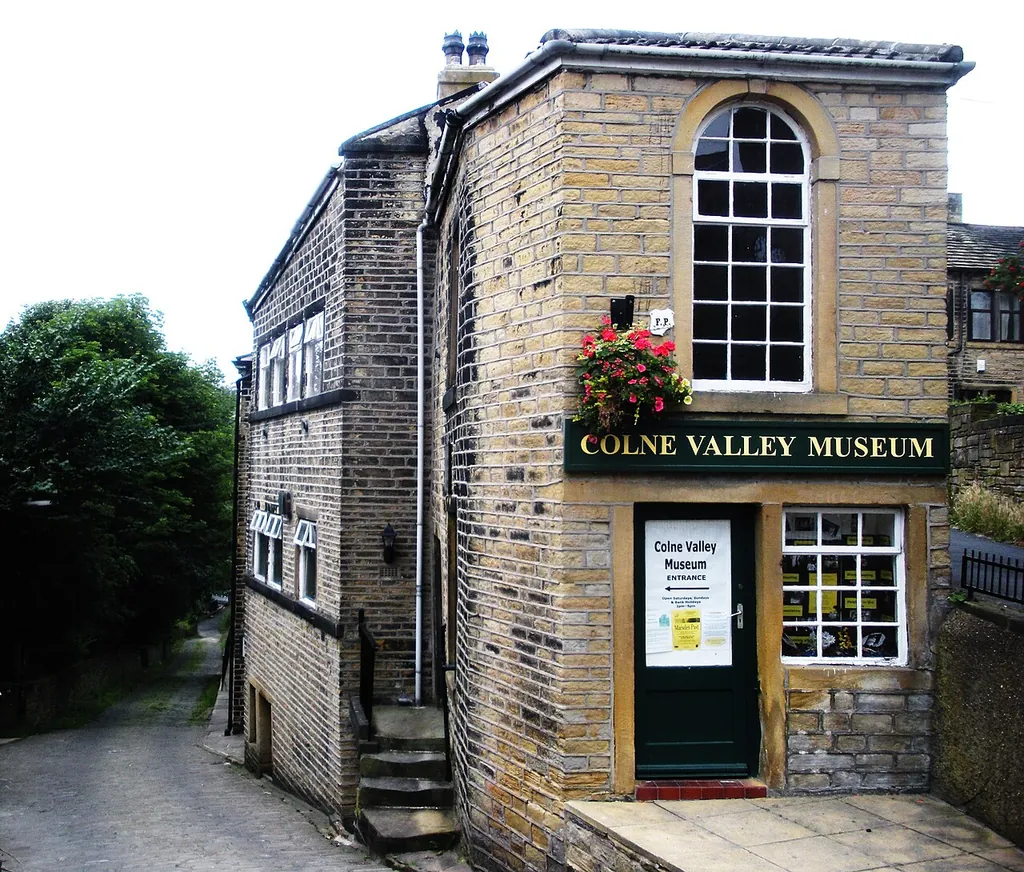
Colne Valley Museum
Volunteer-run museum in four 1840s weavers' cottages in Golcar, showing handloom weaving, clog-making and everyday life around 1840.
Have only individual sections read aloud
About the museum
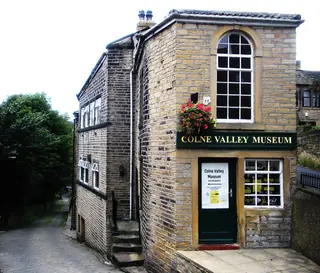
The Colne Valley Museum occupies four Grade II listed weavers' cottages in Golcar, built in the 1840s on a steep hillside by the Pearson family, independent cloth manufacturers. James and Sally Pearson named the row Spring Rock. After James Pearson died the cottages stayed a family home until 1910, and later the building housed the Golcar Socialist Club until the 1960s.
The museum was formed in 1970 when the empty building was given for museum use. It grew as neighbouring properties were acquired, with two cottages in the early years and the top cottage and an adjoining shop in 2008. A Heritage Lottery Fund project that began in 2014, called Realising the Dream, recreated a complete weaver's cottage with a living kitchen, a period bedroom and a loom chamber above, where the family worked.
The collection covers industrial, professional, educational and domestic items used in the Colne Valley between 1800 and 1920, and includes an archive of educational videos. Costumed volunteers demonstrate spinning, weaving and clog-making and explain daily life in the cottages. The museum is run by volunteers and held in trust by its trustees as a registered charity.
Highlights
- Recreated handloom weaver's cottage with kitchen, bedroom and loom chamber
- Costumed volunteer demonstrations of spinning, weaving and clog-making
- Four Grade II listed 1840s cottages built into a hillside
- Collection of tools and household items from 1800 to 1920
- Tea Room and shop selling cloth woven at the museum
Permanent exhibition
- Spring Rock weaver's cottage – A recreated handloom weaver's home with a living kitchen, a period bedroom and a loom chamber, showing family life around 1840.
- Founded
- 1970
- Operated by
- Colne Valley Museum Trustees (registered charity 1179231)
Admission & discounts
| Adults | £5 |
|---|---|
| Children & teens | freefree up to age 15 · Children under 16 are admitted free. |
Members of the museum are admitted free. Cash and card are accepted. Admission is charged only if you tour the museum; the Tea Room can be used without a ticket.
Accessibility
- Partially wheelchair accessible
- Elevator: no information
- Accessible restroom: no information
- Accessible parking: no information
- Service dogs welcome: no information
- Tactile models & exhibits: no information
- Sign language tours: no information
- Easy-to-read materials: no information
- Audio description: no information
The museum says disabled access is available on both the ground floor and the upper floor, but the building is not easy to access, being built into a steep hillside with a lower entrance and a separate rear entrance to the top floor. There is a toilet on the ground floor, reached directly from the Tea Room, and one on the upper floor.
Kids & families
Great for kids & families
| Kids’ admission | free up to age 15 |
|---|
- Family tours & workshops
- Hands-on stations
Children's activities run at special events and during school holidays; children attend with a parent or grandparent and make simple projects to take home. Children under 16 enter free.
Getting there & parking
The museum hasn’t published any information on this.
Amenities & dining
- Café
- Museum shop
The Tea Room serves hot and cold drinks and homemade cakes, with gluten-free cake sometimes available. The shop sells gifts made from museum-spun and woven cloth, clog-maker items, books, stationery and children's items. Cash and card accepted.
Events & venue rental
The museum hasn’t published any information on this.
Plan your visit
| School programs | yes |
|---|---|
| Good to know | School visits offer a day with a Victorian weaving family around 1840. Group visits centre on Mrs Pearson's house with craft sessions and storytelling, and relaxed sessions suit care homes and groups of young adults with disabilities. |