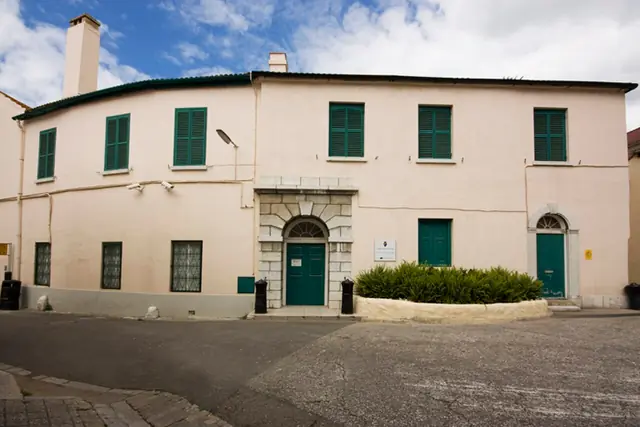
Great Siege Tunnels
Galleries hewn into the north face of the Rock in 1782 to mount guns during the Great Siege, with cannon and an exhibition of the defence of Gibraltar.
Have only individual sections read aloud
About the museum
The Great Siege tunnels belong to the defences built during the fourteenth siege of Gibraltar, which lasted from 1779 to 1783 when France and Spain tried to retake the Rock from the British. Governor Eliott is said to have offered a reward for a way of bringing guns to a ledge on the sheer northern face known as the Notch. Sergeant Major Henry Ince of the Company of Military Artificers suggested tunnelling, and work began in May 1782 under Lieutenant J. Evelegh of the Royal Engineers.
The miners used sledgehammers, crowbars and gunpowder. Because the fumes from blasting nearly suffocated them, a vent was opened in the rock face, and it soon proved to be an excellent embrasure for a gun. More openings followed, and by the end of the siege in February 1783 the first gallery, the Windsor Gallery, was about 113 metres long and held four guns. Ince later added the King’s and Queen’s Lines lower down the face.
After the siege the tunnellers drove a shaft downwards and cut out St George’s Hall beneath the Notch, a large chamber that housed a battery of seven guns, together with the Cornwallis Chamber. Today the entrance to the Upper Galleries is dominated by a Victorian 64-pounder cannon, and further Victorian guns dating back to 1850 stand in the galleries alongside an original eighteenth-century cannon. During the Second World War the Royal Engineers, including a Canadian contingent, added around 52 kilometres of further tunnels elsewhere in the Rock.
Highlights
- Windsor Gallery with gun embrasures cut into the north face
- St George’s Hall and the Cornwallis Chamber
- Victorian cannon and an original eighteenth-century gun
- Victorian 64-pounder cannon at the entrance to the Upper Galleries
- Operated by
- Gibraltar Nature Reserve (Department of the Environment, HM Government of Gibraltar)
Admission & discounts
| Adults | £30 |
|---|---|
| Children & teens | £22free up to age 4 · Children aged 5 to 11 pay £22; anyone over 11 pays the adult price. |
Admission is included in the Upper Rock Nature Reserve ticket (adult £30, child aged 5 to 11 £22, free for children aged 4 and under), which is valid for the whole day and covers all the attractions in the Reserve. Holders of the Gibraltar red ID card and currently serving members of the British Armed Forces enter free. Tickets are sold at the Reserve entrances (Moorish Castle, Jews’ Gate, Devil’s Gap) and at the Market Place bus station.
Accessibility
- Wheelchair accessible: not available
- Elevator: no information
- Accessible restroom: no information
- Accessible parking: no information
- Service dogs welcome: no information
- Tactile models & exhibits: no information
- Sign language tours: no information
- Easy-to-read materials: no information
- Audio description: no information
The tunnels are not recommended for visitors with limited mobility because of the steep incline at the far end of the route and on the way back to the exit; the heritage value of the site does not allow alterations.
Kids & families
The museum hasn’t published any information on this.
Getting there & parking
By public transit
Willis’s Road terminus (bus 1) · 5-min walk
Bus 1 runs from the Market Place terminus to the Willis’s Road terminus; the Reserve entrance at the Moorish Castle is a short walk up the road.
By car
No on-site parking at the museum.
Only locally registered vehicles (and vehicles displaying a Blue Badge) may enter the Nature Reserve.
On foot, the walk from Casemates Square takes about 15 to 20 minutes; follow the signs to the Moorish Castle. Reserve tickets can also be combined with a cable car ride (the top station is currently closed for refurbishment).
Get directionsAmenities & dining
The museum hasn’t published any information on this.
Events & venue rental
The museum hasn’t published any information on this.
Plan your visit
| Good to know | The site is part of the Upper Rock Nature Reserve, where wild Barbary macaques roam freely; visitors should keep food out of sight. |
|---|