Knockaloe Centre for WW1 Internment
Volunteer-run visitor centre in Patrick telling the story of the First World War internment camp at Knockaloe, with artefacts, a camp model and a walking app.
Have only individual sections read aloud
About the museum
During the First World War the British authorities held civilians of enemy nationality in camps on the Isle of Man. Knockaloe, on a farm near Patrick in the west of the island, became the largest of them. It opened in November 1914 and until the camp closed in 1919 held many thousands of men from Germany, Austria and other countries, cared for by a large body of guards. The internees made craft objects, some of which survive today.
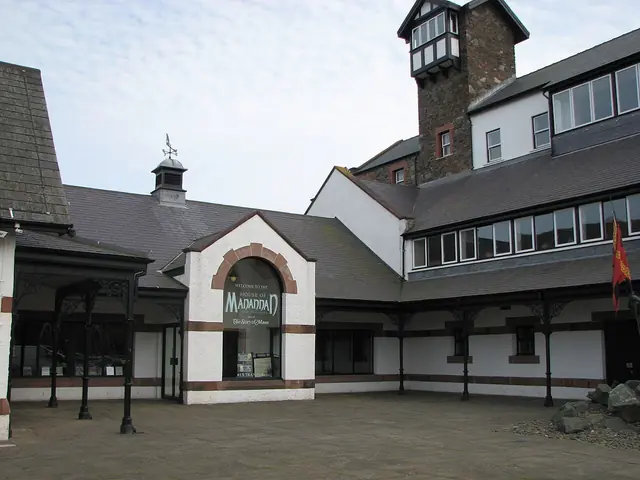
The Knockaloe charity was launched on 17 November 2014, a hundred years after the first internees arrived, to preserve and share this story. Its visitor centre is in the old school rooms at Patrick Corner and uses film and still images, diaries, letters, oral accounts and artefacts to explain camp life. A scale model of the camp at 1:500 shows how large it was. Descendants can contact the team in advance to learn about an ancestor who was interned here.
From the centre a self-guided walk with a free app leads to places where huts once stood and to the graves of internees in the adjoining churchyard, ending at the Garden of Barbed Wire. A separate children’s app offers a quiz walk. The centre is run by volunteers as a not-for-profit charity.
Key themes
- Artefacts, diaries, letters and photographs from the internees
- 1:500 scale model of the Knockaloe camp
- Audio-visual displays and oral stories
- Self-guided camp walk with a free app ending at the Garden of Barbed Wire
- Internee graves in Patrick churchyard
- Help to research an internee ancestor
Permanent exhibitions
- Knockaloe internment exhibition – Displays of artefacts made by internees, diaries, letters, film and photographs, plus a 1:500 scale model of the camp, telling the story of the largest First World War internment camp in the British Empire.
- Self-guided camp walk – An app-guided walk from the centre to the sites of former huts and the graves of internees, ending at the Garden of Barbed Wire.
- Operated by
- Knockaloe charity (volunteer-run)
Admission & discounts
Admission is free.
| Groups | £6 per personPre-booked groups pay £6 per person on Tuesday to Thursday from May to September; guides and coach drivers are free and tea or coffee costs £1 extra per person. |
|---|
Entry is free for walk-in visitors; a donation of £5 per person is suggested. The centre receives no government funding.
Accessibility
- Wheelchair accessible
- Elevator: no information
- Accessible restroom: no information
- Accessible parking: no information
- Service dogs welcome
- Tactile models & exhibits: no information
- Sign language tours: no information
- Easy-to-read materials: no information
- Audio description: no information
The centre is described as fully accessible, with an optional wider entrance at the rear for wheelchair users. Well-behaved dogs on a lead are welcome. The camp walk follows paths outside the centre.
Kids & families
- Activity booklet, scavenger hunt or kids’ audio guide
A children’s app offers a quiz walk around the camp site. The subject matter is serious, so the centre suits school-age children best.
Getting there & parking
By car
Parking available
A car park is directly in front of the visitor centre. The entrance is narrow, so drive carefully.
The centre is in the old school rooms at Patrick Corner, in Patrick village, with the churchyard next door.
Get directionsAmenities & dining
- Café
- Museum shop
The Garden Room serves self-service organic bean-to-cup coffee, hot chocolate and organic tea, and sells books about internment and sustainable gifts; all proceeds support the centre. Toilets are in the new extension. Wi-Fi is not mentioned.
Events & venue rental
- Spaces for rent
The schoolroom can be rented.
Inquiries & detailsPlan your visit
| School programs | yes |
|---|---|
| Good to know | Visits can be tailored for groups, for example to a region or to particular internees; tell the team in advance if descendants of internees or guards are in the group. A free app and map guide a self-guided walk through the former camp site. School visits can be arranged. |