Long Crendon Courthouse
A 15th-century timber-framed courthouse in a Buckinghamshire village, with an upper-floor exhibition on village life, open on selected weekends.
Have only individual sections read aloud
About the museum
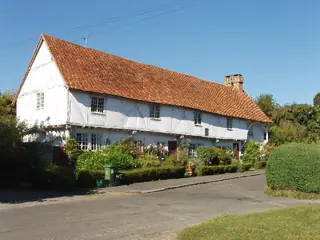
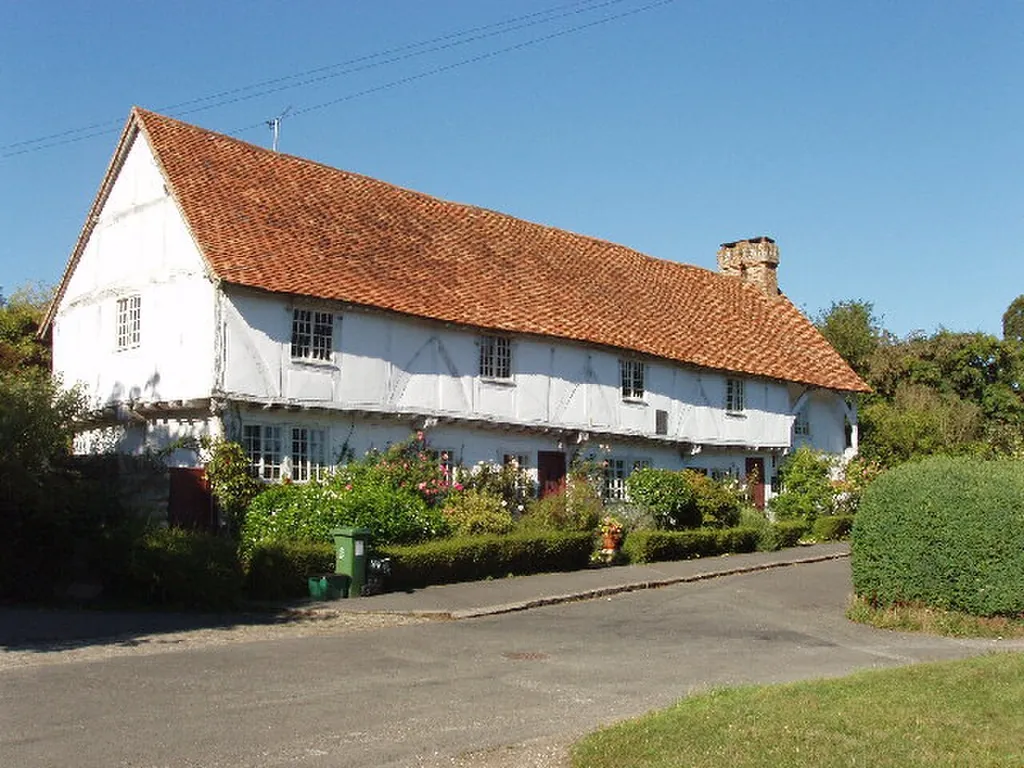
Long Crendon Courthouse is a two-storey timber-framed building on the High Street, next to the parish church. Tree-ring dating places its construction in the late 15th century, and it may have started as a wool store, as it was once known as the Staple Hall. The oak frame has five bays with brick infill on a stone base, and the upper storey juts out over the street.
The large upper room was used for the annual manor court, held each year on the Thursday of Whit week and followed by a dinner served from the kitchen below. These courts dealt with matters such as tithes and offences like selling bad fish, brewing without a licence or overcharging customers, and they continued under successive owners until the 1900s. From about 1603 the ground floor was often used to house the village poor, and later the building also served as a Sunday school, a meeting place and a church storehouse.
By the 1890s the building had fallen into decay. After a fundraising campaign the National Trust bought it in 1900, saving it from demolition; it was only the second property the Trust acquired. It was repaired in 1901. The upper floor is open to visitors on selected dates, while the ground floor is let to a tenant.
Highlights
- Late 15th-century timber-framed manor courthouse
- Large upper room where the manor court met
- Exhibition on village life on the upper floor
- Ground floor once used as the village poor house
- One of the first properties acquired by the National Trust
Permanent exhibition
- Village life exhibition – An exhibition about everyday life in Long Crendon, shown in the large upper room of the courthouse.
- Operated by
- National Trust
Admission & discounts
| Visitors with disabilities | –companion free · The National Trust offers an Essential Companion Card for free admission for one companion or carer, and a free carer ticket can be booked in advance. |
|---|
The National Trust page does not publish an admission price. National Trust members are admitted free.
Accessibility
- Wheelchair accessible: not available
- Elevator: not available
- Accessible restroom: not available
- Accessible parking: not available
- Service dogs welcome
- Tactile models & exhibits: no information
- Sign language tours: no information
- Easy-to-read materials: no information
- Audio description: no information
The public exhibition is on the upper floor and is reached by a very steep, narrow and uneven set of stairs. The National Trust says it is not suitable for pushchairs, wheelchairs or people with poor balance or reduced mobility. There is no toilet and no parking at the site. Only assistance dogs are allowed. The upper room itself is spacious, with good light and about a metre of space between displays.
Kids & families
- Stroller-friendly: not available
The steep stairs make the building unsuitable for pushchairs.
Getting there & parking
By car
No on-site parking at the museum.
There is no designated parking on site. Visitors are asked to park in the village streets with care for residents and local restrictions.
- Accessible parking: not available
The building is on the High Street, on the left as you walk towards the church, and brown signs point to it from the surrounding roads. National Trust directions give the location as 51.775002, -0.98567. Cycling information is linked from the property page.
Get directionsAmenities & dining
- Café: not available
- Restaurant: not available
- Wi-Fi: not available
There is no catering and no toilet at the site; food and drink are available in the village. There is no Wi-Fi on site, but mobile phone reception is generally good.
Events & venue rental
The museum hasn’t published any information on this.
Plan your visit
| Good to know | A National Trust access statement for the courthouse is available as a PDF. The main door is propped open during opening hours. |
|---|