July 7, 2026 – February 21, 2027
Drawn on the Western Front
More than 50 drawings by the French liaison officer Paul Sarrut record daily life of British, French and Indian soldiers in the First World War, shown with uniforms, photographs and medals.

Free national museum in Chelsea telling the story of the British Army and its soldiers from the 1600s to today in five galleries, with a soft-play area for young children.
July 7, 2026 – February 21, 2027
More than 50 drawings by the French liaison officer Paul Sarrut record daily life of British, French and Indian soldiers in the First World War, shown with uniforms, photographs and medals.
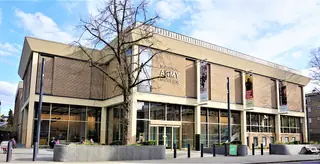
The National Army Museum was conceived in the late 1950s, largely through the fundraising of Field Marshal Sir Gerald Templer, and was established by Royal Charter in 1960. It first occupied temporary rooms in the former riding school at the Royal Military Academy Sandhurst. A purpose-built brutalist building by William Holford & Partners was begun in 1961 on part of the old infirmary site of the Royal Hospital Chelsea, finished ten years later and opened by Queen Elizabeth II on 11 November 1971.
Unlike the many regimental and corps museums, it covers the British Army as a whole, together with Commonwealth forces and the pre-independence armies of the East India Company and the British Indian Army. A plan for a northern branch at Catterick was dropped in 2003, and the Chelsea displays were reworked from 2006 onwards.
The museum closed on 1 May 2014 for a rebuilding project costing £23.75 million, partly funded by the Heritage Lottery Fund, which created five new galleries covering the Army from the English Civil War to the present. It reopened in March 2017. It remains a national museum with free admission and today also holds the Victoria Cross and George Cross collection of Lord Ashcroft.
Admission is free.
| Groups | –Self-guided and military group visits can be arranged. |
|---|---|
| Play Base session (children aged 0 to 8; adults free) | £7.50A £1 booking fee applies to online bookings; no fee for tickets bought at the museum. One adult may enter with one child, or two adults with two to four children. |
Entry to all galleries and temporary exhibitions is free. Play Base, some events and talks are ticketed.
The main entrance on Royal Hospital Road is level, and the group entrance has a ramp. Two central lifts serve every floor. There are accessible toilets on the ground and lower ground floors and a Changing Places facility on the ground floor. A limited number of manual wheelchairs can be borrowed from the Welcome Desk, but they cannot be taken outside and staff cannot push them. Induction loops are fitted in the public areas and wherever gallery audio is used. Fixed seating is provided throughout the galleries. All assistance dogs are welcome.
Great for kids & families
Play Base is an indoor soft-play area for children aged 8 and under, with an assault course, a command vehicle, a cookhouse, a quartermaster store and a field-craft area, in one-hour sessions from 10:00 to 17:00. The galleries are interactive, and family events and activities to try at home are listed on the website. Baby changing is available on the ground, first and second floors and baby feeding on the first floor. Folded pushchairs can be left in the cloakroom in limited numbers. Birthday parties for children aged 8 and under can be booked as a package for 20 children.
Sloane Square station · 10-min walk
Sloane Square Underground station is a 10-minute walk and Victoria station a 20-minute walk. Bus route 170 stops outside the museum. The nearest cycle docking station is Ormonde Gate, and Battersea Power Station Pier is a 15-minute walk.
Cycle hoops are in front of the building for visitors' own locks. The museum is in Zone 2.
Get directionsThe Café is on the first floor and serves tea, coffee and seasonal food; serving members of the armed forces get a discount. The Shop sells gifts inspired by the Army and the collections. Free wifi is available throughout the museum. The cloakroom takes coats, small bags and umbrellas, some folded pushchairs and folding scooters, but nothing larger than 45 × 30 × 45 cm or heavier than 10 kg. Bags are searched on entry, and bicycles and e-scooters are not allowed inside.
Spaces range from a boardroom to the atrium beneath the suspended Lynx helicopter, with private views and guided tours possible. Children's party rooms are offered separately.
Inquiries & details| School programs | yes |
|---|---|
| Good to know | Schools can book curriculum-linked workshops, self-guided visits, gallery trails and a lunch space. Self-guided and military group visits are offered. Bag searches are a condition of entry. |
Loading experiences …