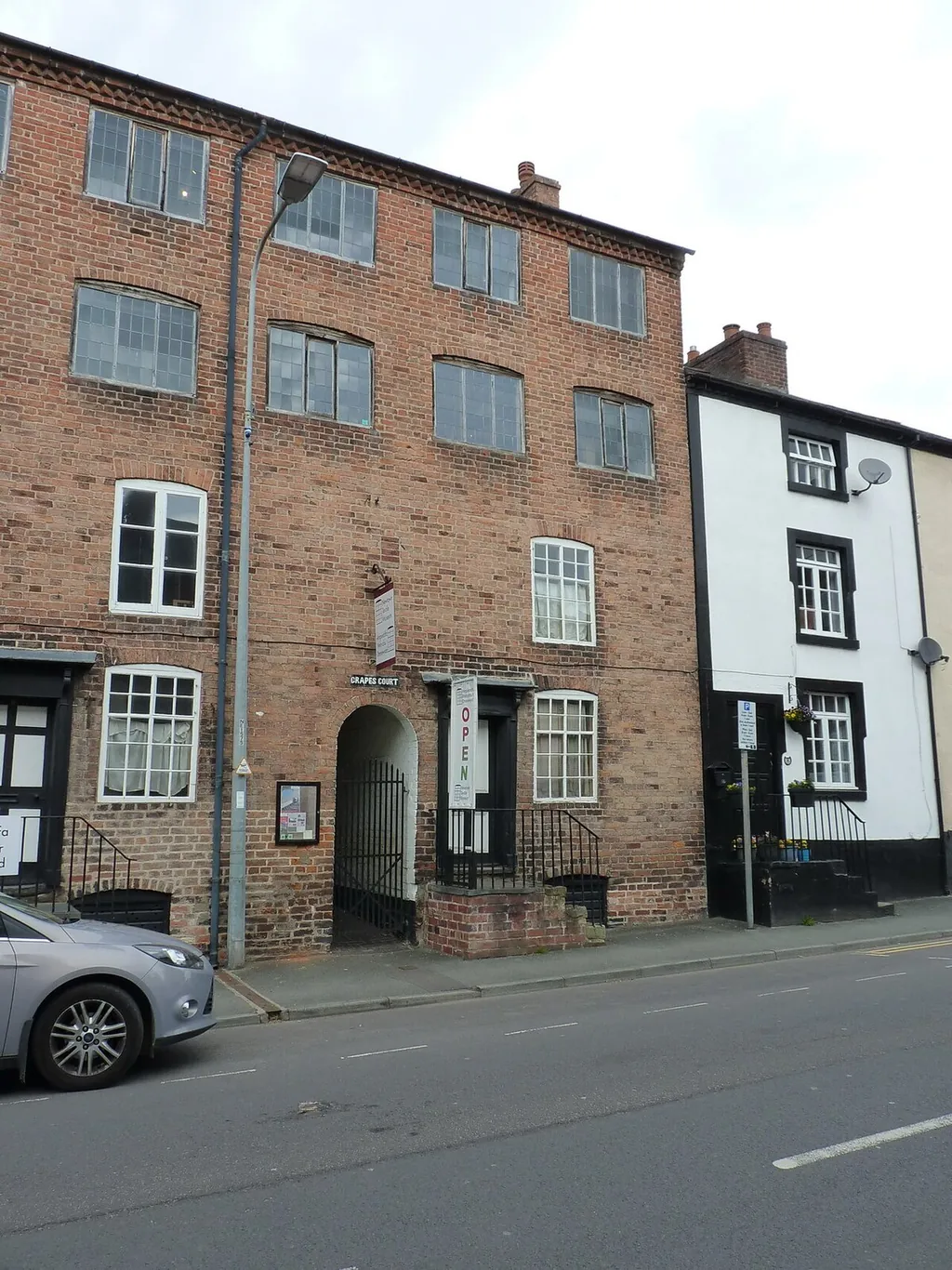
Newtown Textile Museum
Free museum in an 1830s handloom weaving building in Newtown, telling the story of the town’s wool and flannel industry over several floors.
Have only individual sections read aloud
About the museum
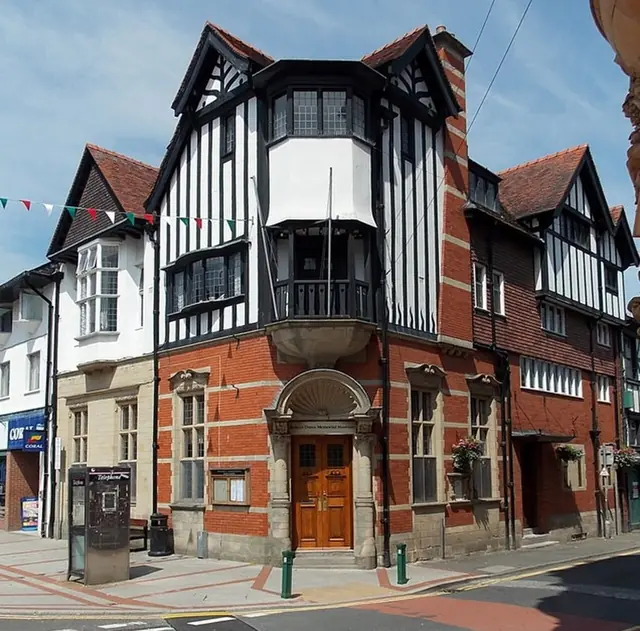
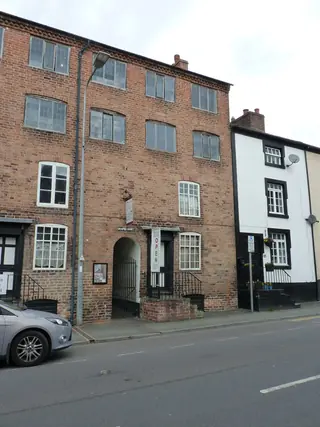
Newtown Textile Museum occupies a building from the 1830s that was put up as a handloom weaving factory. Looms were set up on the top two floors, and below them stand three pairs of back-to-back cottages. The structure inside is still much as it was in the 1830s, with low doorways, low ceilings and uneven floors.
The museum was established in 1967, and the author and antiquary J. K. D. Lloyd of Montgomery helped to set it up. In its early years it accepted objects of the right period with a known history, even when they did not come from the local area. Today it collects only objects from the Newtown area and holds about 1,600 items on the town’s textile industry and on life in the nineteenth and early twentieth centuries.
The main collections cover the Royal Welsh Warehouse of Pryce Jones, a pioneer of mail-order selling; the papers of the draper Amelia Ray, who competed with him; the work of Newtown’s first professional photographer, John Owen; and a small group of items about the Newtown to Llanidloes Railway, which opened in 1859.
Visitors can follow the making of cloth from fleece to flannel, see how handloom weavers lived and worked, and look at re-created cottage rooms. The museum is run as an accredited museum and relies on donations to stay open.
Highlights
- Looms and spinning wheels on the top floors, showing the route from fleece to flannel
- Re-created rooms in the former weavers’ cottages
- Collection linked to Pryce Jones and early mail-order selling
- John Owen photographs of nineteenth-century Newtown
- Handling collection of objects visitors may touch
- Virtual tour for visitors who cannot reach the upper floors
Permanent exhibitions
- From fleece to flannel – The top floors show how wool became cloth, with looms, spinning wheels and displays on related trades and local figures such as Pryce Jones.
- Weavers’ cottages – Re-created rooms in the former cottages show how handloom weavers lived and how Newtown grew into an industrial town.
- Founded
- 1967
Admission & discounts
Admission is free.
Entry is free. The museum asks for a donation because it depends on donations to stay open.
Accessibility
- Partially wheelchair accessible
- Elevator: not available
- Accessible restroom
- Accessible parking: no information
- Service dogs welcome
- Tactile models & exhibits
- Sign language tours: no information
- Easy-to-read materials: no information
- Audio description: no information
The front door has three stone steps, a landing and then one more step. Step-free access is through the courtyard doors at the back (74 cm wide), reached through the arched passage from Commercial Street or from Bryn Street. The exhibits are spread over four floors and there is no lift, so wheelchair users can reach only the ground floor: reception and shop, two re-created rooms and a room on Newtown’s history in the 1800s with an audio-visual presentation in Welsh or English. A virtual tour of the upper floors is shown at reception. The internal stairs are wide and shallow with handrails and chairs on each floor. The toilet in the courtyard has level access and is suitable for wheelchair users. Guide dogs are welcome, a host can show visitors with a visual impairment around if asked in advance, large-print guides and fact sheets are available, and a handling collection can be touched.
Kids & families
Great for kids & families
- Hands-on stations
Children are welcome at all times and the museum has developed activities for them. A handling collection can be touched, and online resources include weaving videos and jigsaws.
Getting there & parking
By public transit
Back Lane bus station
Local and long-distance buses stop at the bus station in Back Lane car park, a short walk over the bridge. The railway station is about a 15-minute walk away.
By car
Parking available
Free on-street parking for one hour near the museum. Town car parks at Back Lane and Gravel charge £2.50 for two hours.
From the town centre go over the bridge at the north end of Broad Street and turn right at the roundabout into Commercial Street (B4568); the museum is on the left. Taxis can drop off directly at the entrance.
Get directionsAmenities & dining
- Museum shop
The shop is in reception and sells souvenirs, local crafts and local marmalade (cash and card). A café is not mentioned.
Events & venue rental
The museum hasn’t published any information on this.
Plan your visit
| Guided tours | yes |
|---|---|
| Good to know | Small group tours, with optional demonstrations, run during the season and at other times by arrangement. A speaker can also visit groups elsewhere. An audio-visual presentation and a virtual tour are available in Welsh or English. |