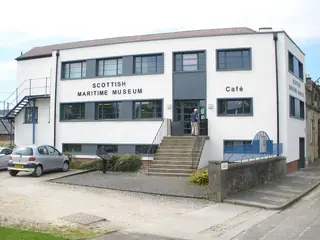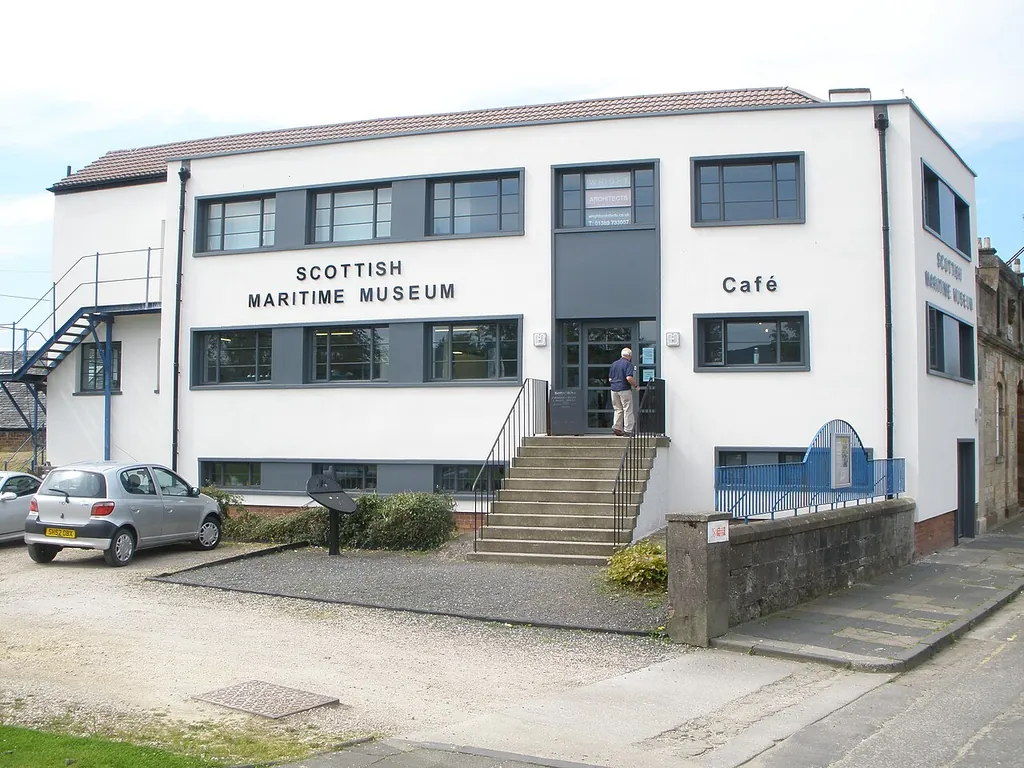
Scottish Maritime Museum, Dumbarton
Museum in the listed Denny Ship Model Experiment Tank in Dumbarton, the world’s first commercial ship-testing tank, on Clyde ship design.
Have only individual sections read aloud
About the museum
The Dumbarton site of the Scottish Maritime Museum occupies the Denny Ship Model Experiment Tank, which the shipbuilder William Denny and Brothers had built in 1883 so that hull and propeller designs could be tested in models before ships were built. It was the first commercial tank of its kind, and the Category A listed building is believed to be the oldest such tank still in existence. It stretches roughly the length of a football pitch.
The Denny yard was one of the most inventive shipbuilders in the world. It built the clipper Cutty Sark, and its experiments helped produce ideas such as the Denny helicopter, the Denny hovercraft and the Denny-Brown stabiliser. The company went into voluntary liquidation in 1963, and the tank later passed to the Vickers shipbuilding group. Public funding helped to acquire the tank and its experimental equipment and records for museum use in the 1980s, and it opened as a museum in 1983.
Visitors can walk along the tank, see the drawing office of William Denny, which shows how ships were designed, and visit the Propeller Shop with ship models, photographs and a re-created 1882 working space for model makers, clay moulders and carpenters. Hands-on activities include carving a wax hull model. The museum is the Dumbarton outstation of the Scottish Maritime Museum, whose main site is in Irvine.
Highlights
- The 100 m long Denny Ship Model Experiment Tank, Category A listed
- William Denny’s drawing office
- Propeller Shop with ship models and a re-created 1882 workshop
- Hands-on wax hull carving
- Story of the Cutty Sark builders and the Denny hovercraft
Permanent exhibitions
- Denny Ship Model Experiment Tank – The listed 1883 testing tank, the world’s first commercial one, shows how ship models were tested before building.
- William Denny’s drawing office – A re-created drawing office explaining how ships were designed at the Denny yard.
- The Propeller Shop – Ship models, photographs and a re-created 1882 workplace of model makers, clay moulders and carpenters.
- Founded
- 1983
- Operated by
- Scottish Maritime Museum Trust
Admission & discounts
| Adults | £5 |
|---|---|
| Reduced | £4Over-60s, registered disabled people, unemployed people, full-time students, YoungScot cardholders, British military personnel, NHS staff and emergency services personnel |
| Children & teens | £2.50free up to age 2 · Children under 3 are free. Up to three children aged 3 and over enter free with each paying adult or concession ticket. |
| Seniors | £4Over-60s pay the concession price. |
| Visitors with disabilities | £4companion free · Registered disabled people pay the concession price. |
| Students & apprentices | £4Full-time students pay the concession price. |
| Groups (10+ people) | –Groups of 10 or more receive discounted rates; call 01389 763444. |
Day ticket prices. One registered carer per paying disabled visitor enters free. Members of the Scottish Maritime Museum (including corporate members), ASVA and Art Fund members enter free with proof of membership.
Accessibility
- Wheelchair accessible: not available
- Elevator: not available
- Accessible restroom: not available
- Accessible parking: no information
- Service dogs welcome
- Tactile models & exhibits: no information
- Sign language tours: no information
- Easy-to-read materials: no information
- Audio description: no information
The entrance has 11 concrete steps with a handrail, and there are no ramps or lifts, so the exhibition rooms on the first floor and the second-floor displays can only be reached by stairs. Toilets are upstairs; the nearest accessible toilet is in the Morrisons supermarket next door and the nearest Changing Places toilet is in Dumbarton Centre. A portable induction loop is available at the visitor services desk, films are captioned and transcripts are placed next to exhibits. Registered assistance dogs and guide dogs are welcome.
Kids & families
Great for kids & families
| Kids’ admission | free up to age 2 |
|---|
- Family tours & workshops
- Activity booklet, scavenger hunt or kids’ audio guide
- Hands-on stations
- Baby changing facilities
Seasonal family games and trails and an activity trail help children explore the museum, and a hands-on wax hull carving activity is offered. Because of the steps and the lack of lifts, buggies cannot easily be taken into the galleries.
Getting there & parking
By public transit
Dumbarton Central station · 5-min walk
Take the Edinburgh to Helensburgh Central line to Dumbarton Central station; the museum is about five minutes’ walk away. National Cycle Network Route 7 passes through Dumbarton.
By car
Free parking
Free on-site parking is available in front of the main entrance.
By road follow the A82 and then the A814 from Glasgow towards Dumbarton, follow the brown tourist signs and turn left onto Church Street and then left onto Castle Street.
Get directionsAmenities & dining
A nappy changing station is upstairs with the toilets.
Events & venue rental
The museum hasn’t published any information on this.
Plan your visit
| Good to know | Groups of 10 or more can book discounted visits by phone. |
|---|