Musei Vaticani
The great museum complex of the popes: from the Sistine Chapel to the Stanze di Raffaello, from classical antiquities to the Pinacoteca and contemporary art.
Have only individual sections read aloud
About the museum
The origins of the Musei Vaticani (Vatican Museums) go back to 1506, when Pope Julius II acquired the Laocoonte sculpture group, discovered that year in Rome, and placed it in the Vatican palaces. Around this collection of antiquities, the nucleus of the papal collections took shape in the following centuries. In 1771, under Clement XIV, the museum was opened to the public with the Museo Pio-Clementino, later extended by Pius VI.
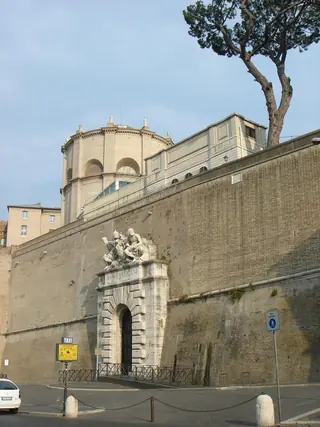
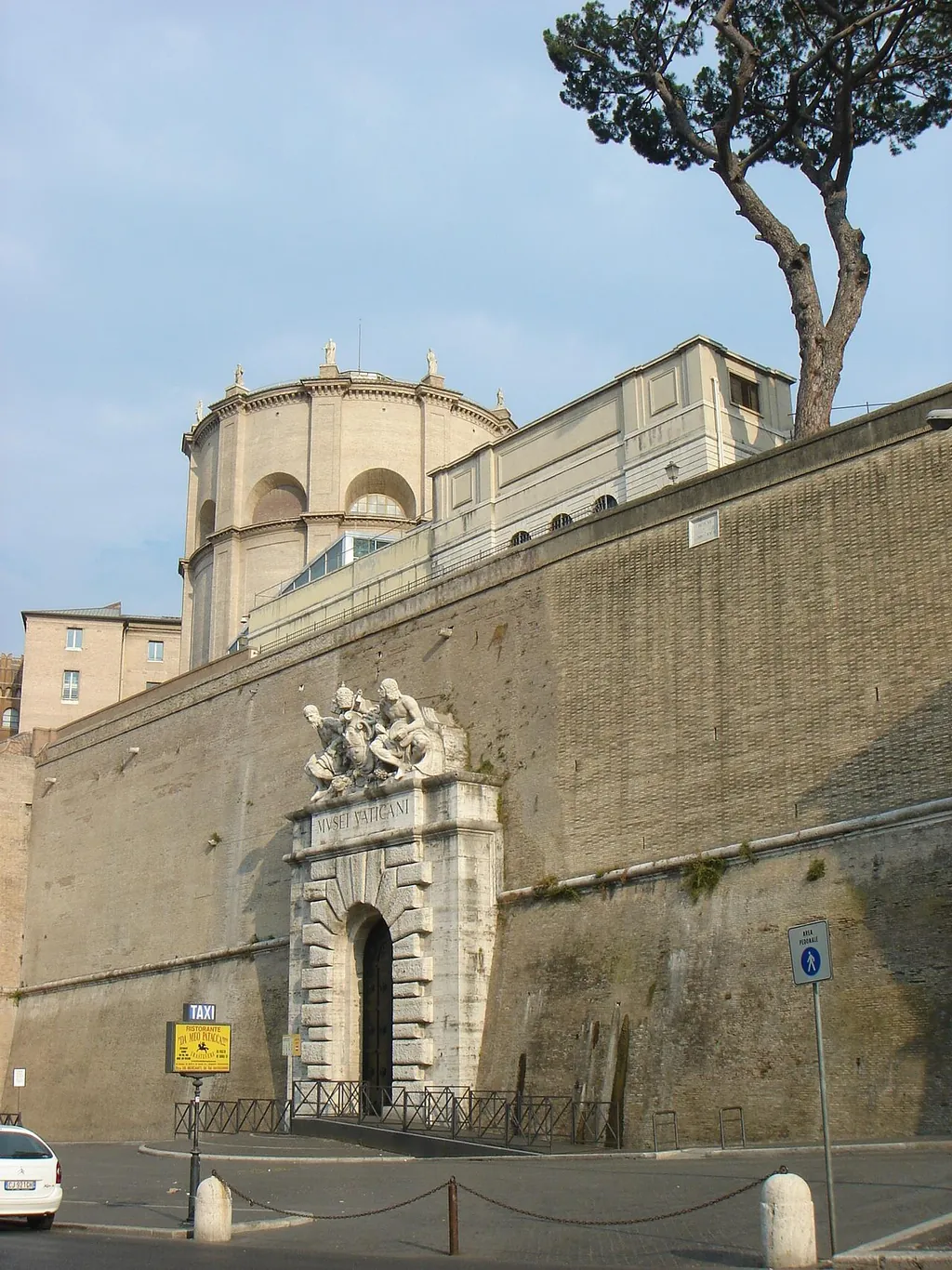
In the 19th century the collections grew with the Museo Chiaramonti, founded by Pius VII, and the Braccio Nuovo, which houses among other works the Augusto di Prima Porta. In 1836 Gregory XVI founded the Museo Gregoriano Egizio and the Museo Gregoriano Etrusco. In the 20th century Pius XI had the Pinacoteca built to a design by Luca Beltrami, and the entrance on Viale Vaticano dates from 1932.
The visit route now passes through dozens of rooms and galleries: in addition to the museums of antiquities, it includes the Galleria degli Arazzi, the Galleria delle Carte Geografiche, the Stanze di Raffaello, the Cappella Sistina, the Museo Etnologico Anima Mundi and the Collezione d’Arte Moderna e Contemporanea. The restoration of the Cappella Sistina was completed in 1994; in 2000 a new entrance was inaugurated for the Great Jubilee, and in 2006, to mark the museum’s five hundredth anniversary, a necropolis was opened on the Vatican hill. Since 2017 the director has been Barbara Jatta, the first woman to lead the institution.
Highlights
- Cappella Sistina with the vault frescoes and the Last Judgement (Giudizio Universale)
- Stanze di Raffaello
- Galleria degli Arazzi and Galleria delle Carte Geografiche
- Museo Pio-Clementino and Braccio Nuovo with the Augusto di Prima Porta
- Museo Gregoriano Egizio and Museo Gregoriano Etrusco
- Pinacoteca and Museo Etnologico Anima Mundi
Permanent exhibitions
- Cappella Sistina – The frescoed walls and vault, with the Last Judgement, form the high point of the visit. Silence is observed inside, and photography is not permitted.
- Stanze di Raffaello – A series of frescoed rooms, included in the Musei Vaticani route.
- Founded
- 1506
- Director
- Barbara Jatta
- Visitors per year
- approx. 6,900,000 (2025)
Admission & discounts
| Adults | €20 |
|---|---|
| Reduced | €10Students and other categories provided by the museum |
| Children & teens | freefree up to age 6 · Free admission for children under 7. |
| Visitors with disabilities | freecompanion free · Free admission with a certified disability of at least 67%; the free ticket is collected at the Special Permits office or the Welcome Desk and cannot be booked online. |
| Students & apprentices | €10Reduced ticket for students. |
| Supplement for the online “Skip the Line” booking | €5Added to the full or reduced ticket. |
| School ticket | €5With online booking, €2 is added. |
Free admission: Last Sunday of the month, 09:00–14:00
Online tickets can only be purchased on the official website tickets.museivaticani.va. Without online booking they cost €20 (full price) and €10 (reduced); the “Skip the Line” booking adds €5. Admission is also free for directors of museums and cultural heritage sites, holders of an ICOM or ICOMOS card, and university lecturers who give specialist lessons on written request. The Vatican Gardens and the Necropoli della Via Triumphalis are booked with separate tickets.
Accessibility
- Partially wheelchair accessible
- Elevator
- Accessible restroom
- Accessible parking: no information
- Service dogs welcome
- Tactile models & exhibits
- Sign language tours: no information
- Easy-to-read materials: no information
- Audio description: no information
Most areas are accessible, and there is a barrier-free route with a dedicated map. Free wheelchairs are available at the cloakroom while stocks last, with an identity document left as a deposit. Mobility scooters and electric wheelchairs are permitted, but in some areas visitors must switch to a manual wheelchair. Since 2021 a lift has given access to the Museo Pio-Clementino, the Gregoriano Egizio and the Gregoriano Etrusco. Accessible toilets are located along the route and in the refreshment areas. Standard guided tours are not open to wheelchair users, with the exception of the “Vatican Gardens Without Barriers” tour. Tactile tours are available for visitors who are blind; for deaf visitors there is a video guide in American Sign Language. Guide dogs are admitted on a leash and muzzled; please notify accoglienza.musei@scv.va at least one day in advance.
Kids & families
Great for kids & families
| Kids’ admission | free up to age 6 |
|---|
- Family tours & workshops
- Activity booklet, scavenger hunt or kids’ audio guide
- Stroller-friendly
- Baby changing facilities
Families with children and pushchairs are welcome: staff will point out the easiest route and the dedicated lifts. Along the route there are baby-changing facilities and a nursing room; some refreshment areas have high chairs. The Family Tour includes an audio guide and an illustrated map designed for children.
Getting there & parking
By public transit
Fermata dell’autobus 49 davanti ai Musei Vaticani
Metro line A, stops Ottaviano or Cipro. Bus 49 (stop in the square in front of the Musei Vaticani); buses 32, 81 and 982 and tram 19 (stop Piazza del Risorgimento); buses 492 and 990 (stop Via Leone IV / Via degli Scipioni).
Taxi rank in the square in front of the entrance.
Get directionsAmenities & dining
- Café
- Restaurant
- Museum shop
- Coat check
- Wi-Fi: not available
Vending machines, cafés, self-service restaurants and a pizzeria along the route; bookshop. Free cloakroom for large bags, backpacks and umbrellas. The Wi-Fi does not cover the museum areas.
Events & venue rental
The museum hasn’t published any information on this.
Plan your visit
| Guided tours | yes |
|---|---|
| Audio guide | yes |
| School programs | yes |
| Photography | Photos and videos for personal use are permitted, always without flash; photographing and filming are prohibited in the Sistine Chapel. |
| Good to know | The official app, an MP3 player with an audio guide and the Family Tour for children are available. Modest dress is required: no bare shoulders, shorts above the knee or hats. Large bags, backpacks, umbrellas, sticks and tripods must be left at the cloakroom. In the Sistine Chapel, silence is observed and phones are not allowed. Guided groups of more than 10 people must rent radio headsets (€1.50 per person). Educational offers: education.musei@scv.va. |