Fort George
Eighteenth-century artillery fortress on the Moray Firth, still an army base, with barrack rooms, a great magazine, ramparts and the Highlanders' Museum.
Alleen afzonderlijke secties laten voorlezen
Over het museum
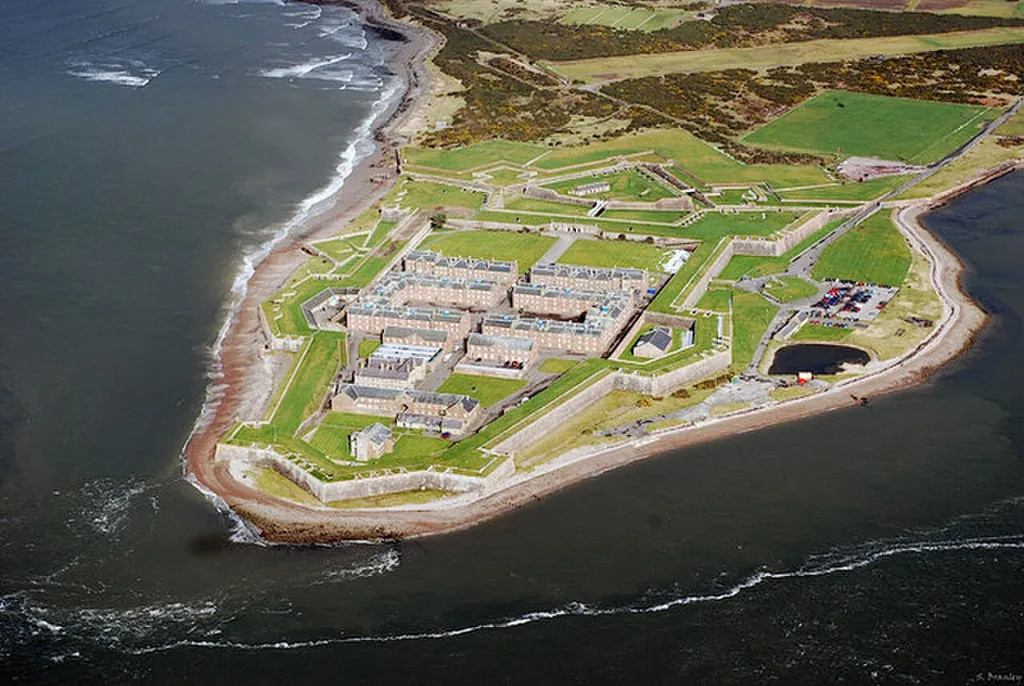
Fort George was built after the Jacobite defeat at Culloden in 1746 as the main garrison fortress of the Scottish Highlands. It was named after King George II and designed by Lieutenant-General William Skinner, who also served as its first governor, with members of the Adam family of architects involved in the building work. Construction took 22 years, by which time the Jacobite threat had faded, and the fort never fired a shot in anger. It is regarded as one of the finest examples of eighteenth-century military engineering in the British Isles.
The fort stands on a promontory in the Moray Firth and was laid out so that heavy guns covered every angle, with the strongest defences facing the landward side from which an attack was expected. Within its walls were homes for a governor, officers and an artillery detachment, barracks for an infantry garrison of 1,600 men, a chapel, stores and a magazine built to hold 2,672 barrels of gunpowder. More than 80 guns were installed.
In later centuries the fort became a recruiting base and training camp for the British Army. From 1881 to 1964 it was the depot of the Seaforth Highlanders, and today it is the home of the 3rd Battalion The Royal Regiment of Scotland (the Black Watch). Because it is still a working army base, visitors can walk the main rampart of more than a kilometre, explore the barrack rooms with their recreated soldiers' living conditions, see the garrison chapel and the dog cemetery, and visit the Highlanders' Museum, a regimental museum housed in the fort.
Hoogtepunten
- Main rampart walk of more than 1 km with views over the Moray Firth
- Grand magazine built for 2,672 gunpowder barrels, now showing weapons
- Barrack rooms recreating soldiers' living conditions
- Garrison chapel, probably designed by Robert Adam
- Highlanders' Museum inside the fort
- Dog cemetery for regimental mascots and officers' pets
Vaste collectie
- Highlanders' Museum – A regimental museum inside the fort covering the history of the Highland regiments.
- The grand magazine – A powder magazine designed for 2,672 barrels, now holding a collection of weapons.
- Barrack rooms – Historic barrack rooms fitted out to show how soldiers lived in earlier centuries.
- Opgericht
- 1748
- Beheerder
- Historic Environment Scotland
Toegangsprijzen & kortingen
| Volwassenen | £ 10 |
|---|---|
| Met korting | £ 8Concession |
| Kinderen & jongeren | £ 5Child ticket for ages 7 to 15. |
| Mensen met een beperking | –begeleider gratis · Visitors with disabilities pay the standard rate; up to two accompanying carers enter free, added when booking. |
| Gezinnen | –Family tickets are offered with standard entry; the price is shown during online booking. |
| Young Scot and National Entitlement Card holders (ages 7 to 25) | £ 1 |
Prices shown are the online advance prices for adult (16 to 64), concession and child; the prices on the day are adult £11, concession £9 and child £5.50. Historic Environment Scotland members enter free, and Explorer Pass holders and members of English Heritage, Cadw or Manx National Heritage get free or discounted entry. A 25% discount applies to visitors who arrive by train, bus or bike when they book through Good Journey. The audio guide is included in the ticket price. The Highlanders’ Museum inside the fort quotes the Fort George admission prices on its own website as the cost of a visit.
Toegankelijkheid
- Deels rolstoeltoegankelijk
- Lift: geen informatie
- Aangepast toilet
- Gehandicaptenparkeerplaats
- Hulphonden welkom
- Tastmodellen / voelbare objecten: geen informatie
- Rondleidingen in gebarentaal: geen informatie
- Informatie in eenvoudige taal: geen informatie
- Audiodescriptie: geen informatie
The fort is large (620 m from end to end) and mainly on one level with tarmac roads and pavements; ramps with a gradient of 1:6 and a reinforced grass surface lead up to the ramparts. The entrance is 200 m from the car park along a tarmac path, plus a further 15 m over cobbles to the ticket shop. The car park has four accessible bays. A limited number of mobility scooters and manual wheelchairs can be borrowed on a first-come, first-served basis; the drawbridge is not suitable for scooters, but an alternative route can be arranged by phone. Adapted toilets are at the centre of the site, the shop has step-free access, and ear defenders can be borrowed. Fort George is a working military base, so loud noises and low-flying helicopters are common. Assistance dogs are allowed everywhere; other dogs are allowed on the site but not in roofed areas.
Kinderen & gezin
Family tickets are available with standard entry, and children aged 7 to 15 pay a reduced price. The café is described as family friendly.
Bereikbaarheid & parkeren
Met het openbaar vervoer
Ardersier
The number 1 Stagecoach bus links Inverness with Fort George, and more frequent local buses stop at Ardersier, from where the fort is a 1.4 mile walk along a signposted shore path. Regular trains run to Inverness from Glasgow, Aberdeen and Edinburgh.
Met de auto
Gratis parkeren · 200 m naar de ingang
Free car park, part tarmac and part gravel, with coach parking. The fort entrance is 200 m from the car park along a tarmac path.
- Gehandicaptenparkeerplaats
Fort George is near Ardersier on the southern shore of the Moray Firth. By bike it is 8.5 miles from Balloch and Nairn on National Cycle Network route 1, via the B9006 or the shore path from Ardersier.
Route plannenService & horeca
- Café
- Museumwinkel
Family-friendly café with hot and cold food, drinks and snacks, a gift shop, self-service tea and coffee, a picnic area and a water bottle refill point. Bicycle rack for up to 10 bikes.
Evenementen & zaalverhuur
Het museum heeft hierover geen informatie gepubliceerd.
Je bezoek plannen
| Audiotour | ja |
|---|---|
| Goed om te weten | The audio guide runs on your own device and is included in the ticket price. Visitors move through the buildings without a set route, and access to some spaces may be limited. |