fra 12. april 2026
Resonare
Textile art by Marie Katharina Fischer from the Wendland: plant-dyed fabrics that take up the light and formal language of Cistercian architecture.
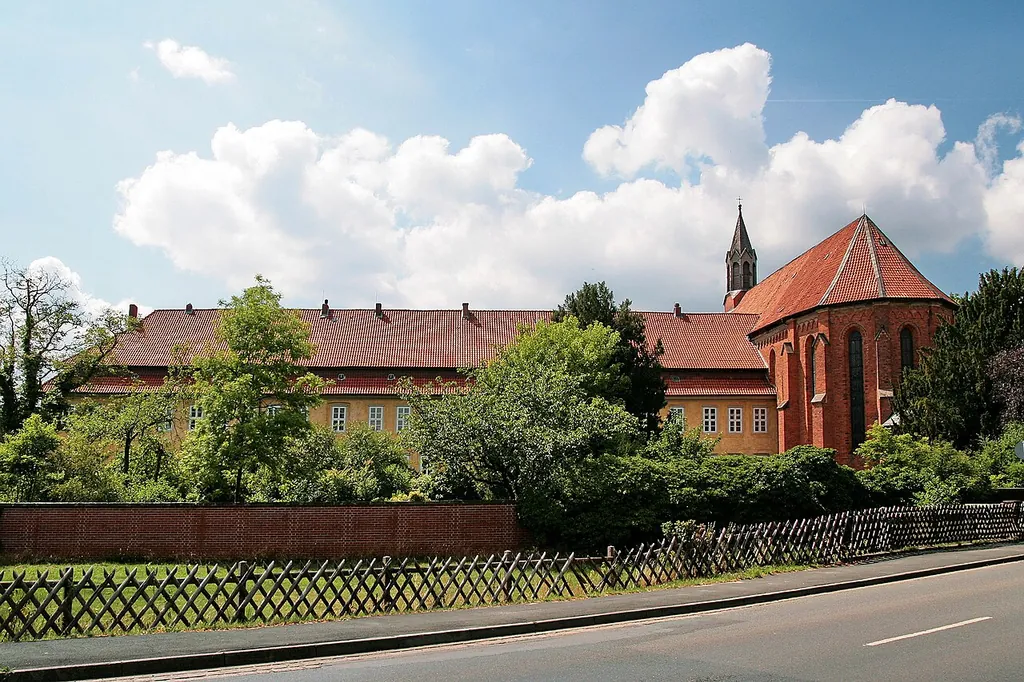
Protestant convent with a convent museum, Gothic brick church, and historic gardens in Mariensee near Neustadt am Rübenberge.
fra 12. april 2026
Textile art by Marie Katharina Fischer from the Wendland: plant-dyed fabrics that take up the light and formal language of Cistercian architecture.
Særudstilling
The convent museum shows the original 1522 prayer book of Abbess Odilie von Ahlden and explains its contents.
Særudstilling
Stages in the life of the duchess (1510–1558), who played a key role in enabling many northern German convents to survive the Reformation.
Count Bernhard II of Wölpe endowed the convent for Cistercian nuns around 1213/14; according to current research, the founding year of 1207 long cited goes back to a scribal error in a charter from 1227. The nuns lived in strict enclosure and managed extensive landholdings. The plain brick church dates from this early period; its three bays were built around the middle of the 13th century, and the western bay was added in the early 14th century.
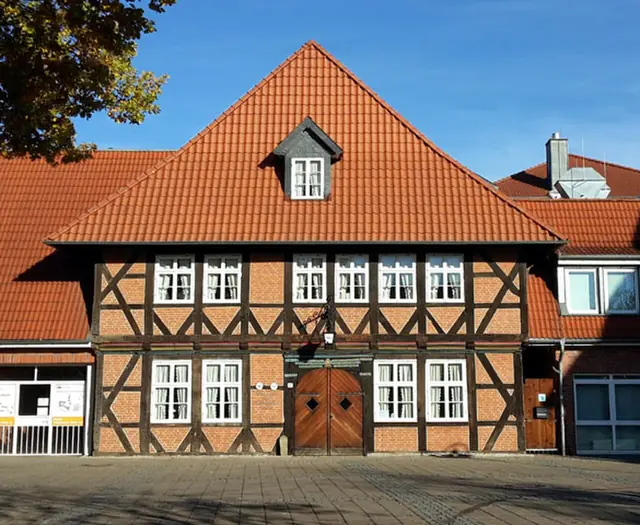
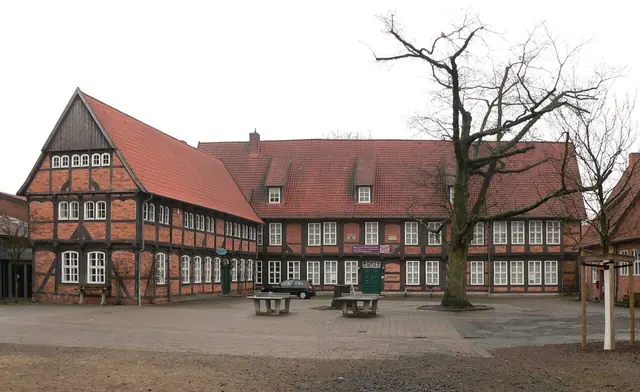
During the Reformation, Mariensee was not dissolved in 1543 but continued as a Protestant convent for women – a path that Duchess Elisabeth of Calenberg paved for many convents in the region. After a major fire in 1720, the present convent building was erected from 1726 to 1729 as a Baroque four-wing complex. In 1748 the poet Ludwig Christoph Heinrich Hölty was born in Mariensee; a small exhibition commemorates him.
The convent is one of the five Calenberg convents and is administered by the Klosterkammer Hannover as part of the Allgemeiner Hannoverscher Klosterfonds. To this day, a small Protestant community lives here under the leadership of an abbess. Since 2007 the convent museum has documented life in Lower Saxony's Protestant women's convents from the Middle Ages to the present; special exhibitions have been devoted, for example, to the 1522 prayer book of Abbess Odilie von Ahlden. The community cultivates traditional convent crafts such as Klosterstich (convent stitch embroidery) and calligraphy, offers concerts, seminars, and retreat days, and keeps open the gardens, laid out on a Baroque model with herb beds.
| Voksne | 5 € |
|---|---|
| Grupper | –Group tours by arrangement. |
€5 per person for the open tour (as of 2025), museum visit included. On International Museum Day, admission and tours in the museum are free.
Museet har ikke offentliggjort oplysninger om dette – spørg venligst museet direkte.
Museet har ikke offentliggjort oplysninger om dette – spørg venligst museet direkte.
Mariensee Kloster
Regional express or S-Bahn from Hannover toward Bremen to Neustadt am Rübenberge, then Regiobus 850 to the "Mariensee Kloster" stop.
Parkering muligt
Parking directly behind the convent church.
By car via the A 2 (Herrenhausen exit) and the B 6 to Neustadt, then toward Mandelsloh via Empede to Mariensee.
Planlæg ruteParking lot directly behind the convent church. No on-site food service; refreshments at the Dorfladen Mariensee (village shop) and, in summer, at the ice cream café on Höltystraße. Reading room during office hours.
Museet har ikke offentliggjort oplysninger om dette – spørg venligst museet direkte.
| Rundvisninger | ja |
|---|---|
| Godt at vide | Registration only required for larger groups. Themed tours for groups: convent history with texts and chants (max. 15 people), Frauenort Äbtissin Odilie, convent garden. The Hölty exhibition in the upper gate area is accessible by arrangement. Also concerts, seminars (Klosterstich, calligraphy), and retreat days according to the annual program. |
Cookies hjælper dig med at bruge websitet. Kort og statistik indlæser vi kun med dit samtykke.