Muséum de Zoologie et d’Anthropologie de l’ULB
University museum devoted to animal evolution, with about a thousand specimens on display and an anthropology room; free admission.
Have only individual sections read aloud
About the museum
Since its creation in the 19th century, the zoology museum of the Université libre de Bruxelles (ULB) has continued to grow. It holds several thousand specimens representing all the major groups of living animals, of which about a thousand are permanently on display. The thread running through the collections is the evolution of animal species, with particular attention to the adaptations of organisms. The museum is also known by the name of the zoologist Auguste Lameere, who founded the Torley-Rousseau zoological institute in 1926.
The museum was renovated in 2010. The general display follows phylogeny and takes a U-shaped route: the base is devoted to animals with two embryonic layers, one branch to protostomes and the other to deuterostomes. Very small or transparent animals are shown on digital displays installed in some cases, and each case includes a family tree diagram that places the organisms in their context.
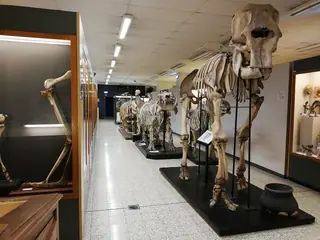
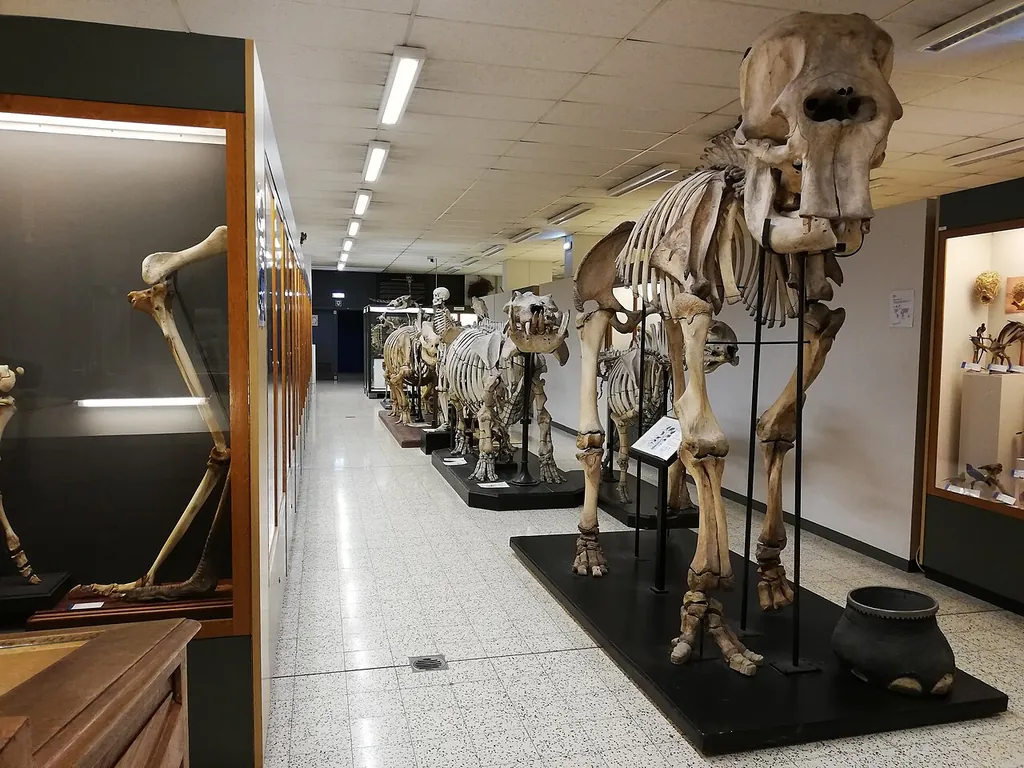
In the centre of the main hall, two galleries are devoted to comparative anatomy (skeletons of mammals, birds and reptiles) and to the diversity of taxidermied mammals. Three alcoves illustrate research themes in animal biology, and an anthropology room presents human evolution. Among the notable acquisitions is a coelacanth caught in 1981. The museum is part of the ULB Museums Network.
Highlights
- Coelacanth caught in 1981
- Phylogenetic route through about a thousand specimens
- Comparative anatomy gallery: skeletons of mammals, birds and reptiles
- Gallery of taxidermied mammals
- Anthropology room devoted to human evolution
Permanent exhibitions
- Collection générale phylogénétique – A U-shaped route presents about a thousand specimens classified by relationship, with digital displays for small animals and a family tree diagram in each case.
- Galeries d’anatomie comparée et de diversité des mammifères – In the centre of the room, skeletons of mammals, birds and reptiles stand alongside taxidermied mammals.
- Salle d’anthropologie – This room traces human evolution.
- Operated by
- Université libre de Bruxelles (ULB)
- Director
- Jean-Christophe de Biseau
Admission & discounts
Admission is free.
| Guided tour for the general public (per person) | €7By reservation, unless otherwise stated |
|---|
Visits without a guide are free. For school groups the price depends on the activity: €7 per pupil for a 2-hour workshop and €4 for a 1-hour workshop; schools recognised or subsidised by the Fédération Wallonie-Bruxelles enjoy free admission for the 2026-2027 school year.
Accessibility
- Wheelchair accessible
- Elevator: no information
- Accessible restroom: no information
- Accessible parking: no information
- Service dogs welcome: no information
- Tactile models & exhibits: no information
- Sign language tours: no information
- Easy-to-read materials: no information
- Audio description: no information
Access for people with reduced mobility through door C; the museum is on level 1 of building U (room UA1.319).
Kids & families
Great for kids & families
- Family tours & workshops
The museum mainly caters to primary and secondary pupils and their teachers, with workshops on evolution, classification and comparative anatomy; the general public is welcomed at occasional events and on self-guided visits.
Getting there & parking
By public transit
ULB
Bus 71 and 72 (ULB stop), tram 25 and 8 (ULB stop). From metro line 5 (Delta station): bus 71 or 72 to the ULB stop.
Solbosch campus, building U, level 1. Access via the square Groupe G, door A (go down the stairs behind the lift), via the square Servais, door B (follow the signs), or via door C for people with reduced mobility. Villo! station at the junction of avenue Adolphe Buyl and avenue Paul Héger.
Get directionsAmenities & dining
The museum hasn’t published any information on this.
Events & venue rental
The museum hasn’t published any information on this.
Plan your visit
| Guided tours | yes |
|---|---|
| School programs | yes |
| Good to know | Visits without a guide need no reservation. Guided tours and workshops for schools can be booked online via the “Activités pour les écoles” page of the website. |