Arheološki muzej Istre
The main building of the museum in Pula preserves the archaeological heritage of Istria from prehistory to the Middle Ages; it is currently closed while a new permanent display is being prepared.
Have only individual sections read aloud
About the museum
The history of the museum in Pula begins in 1902 with the founding of the Museum of the City of Pula (Museo Civico), after stone monuments had been collected in the Temple of Augustus and finds from Nesactium formed the basis of the first museum institution. Following its merger with other collections and the Provincial Museum of Poreč in 1925, it grew into the Royal Museum of Istria; since 1947 it has borne its present name, the Archaeological Museum of Istria.
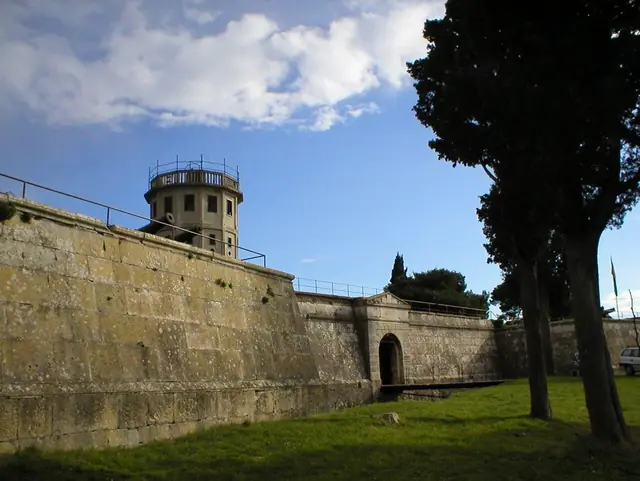
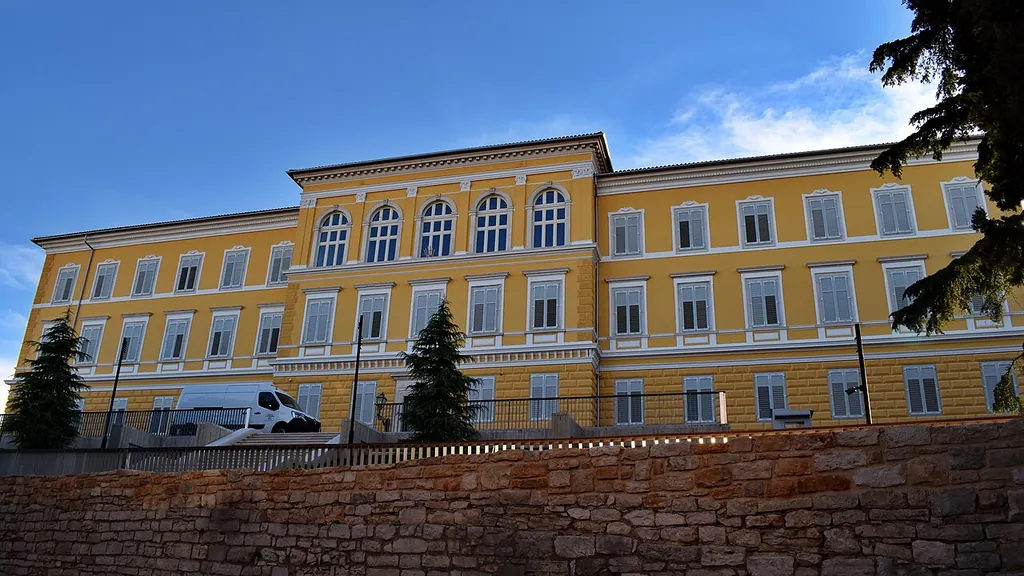
It has been based since 1930 in the former German State Gymnasium, designed in 1890 by the architect Natale Tommasi, on the eastern slope of the city hill below the Venetian fortress. The building stands on an archaeologically rich site: in prehistory there was a Histrian hill fort (gradina) there, and in antiquity the area lay within the walls of Roman Pula, next to the Small Roman Theatre and a domus whose walls are still visible today.
After the Second World War a large part of the objects was taken to Italy, and some was returned in 1961. The lapidarium was redesigned in 1968, and the halls with the prehistoric, ancient and medieval displays opened in 1973. From 2013 to 2021 the building was adapted and extended. The museum also manages other sites in Pula and the surrounding area, among them the amphitheatre, the Temple of Augustus, the Small Roman Theatre, Nesactium and Betiga. A new permanent display for the main building is in preparation.
Highlights
- Building of the former German State Gymnasium from 1890
- Prehistoric, ancient and medieval collections of Istria
- Location on the site of the Histrian hill fort and Roman Pula
- Management of the amphitheatre, the Temple of Augustus and Nesactium
- Founded
- 1902
Admission & discounts
The museum is closed while the new permanent display is being prepared; opening is planned for late 2026 or early 2027.
Accessibility
- Wheelchair accessible
- Elevator
- Accessible restroom
- Accessible parking: no information
- Service dogs welcome: no information
- Tactile models & exhibits: no information
- Sign language tours: no information
- Easy-to-read materials: no information
- Audio description: no information
From the basement to the second floor the building is accessible for persons with reduced mobility: entrance at the front by ramp and lifting platform, and a lift at the rear. The attic is not accessible for wheelchairs.
Kids & families
The museum is closed while the new permanent display is being prepared; opening is planned for late 2026 or early 2027.
Getting there & parking
By car
Parking available
Parking is possible in the public car park near the museum.
The museum is located in the historic centre of Pula, on the eastern slope of the central city hill.
Get directionsAmenities & dining
- Museum shop
Publications, guides, postcards and souvenirs are sold in the souvenir shop of the amphitheatre and at the Temple of Augustus.
Events & venue rental
The museum is closed while the new permanent display is being prepared; opening is planned for late 2026 or early 2027.
Plan your visit
| School programs | yes |
|---|---|
| Photography | Cameras and video cameras may be used with prior permission. |
| Good to know | Guided tours for tourists are not offered. Expert-led tours for school and kindergarten groups are possible if booked at least 10 days in advance. Pets on a leash are permitted in the museum premises. |