June 18, 2026 – May 2, 2027
Krig, kaos og overlevelse
Shows how Jutland was devastated by successive wars in the mid-17th century, using sources and objects of ordinary people, with themes such as fear, violence and reconstruction.

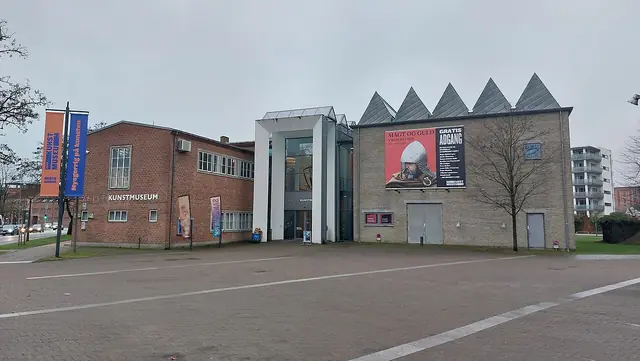
Cultural history museum in Vejle's former cotton mill with the bog body Haraldskærkvinden, the Iron Age, industry, and nightlife – free admission.
June 18, 2026 – May 2, 2027
Shows how Jutland was devastated by successive wars in the mid-17th century, using sources and objects of ordinary people, with themes such as fear, violence and reconstruction.
since May 4, 2025
Cooperation and resistance in occupied Vejle 1940–1945; the exhibition shows how confusing the situation was at the time.
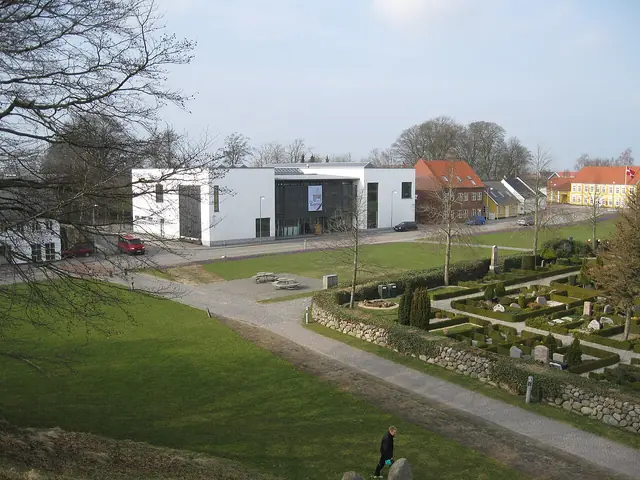
The roots of Vejle's museums go back to 1898, when the estate owner and collector Christian Eckardt gave the town his large collection of artworks, coins, and antiquities. In the 1970s, the holdings were divided between an independent cultural history museum and an art museum. In 2012, both institutions came together again, along with Vingsted Historiske Værksted, under the roof of the municipal Vejlemuseerne.
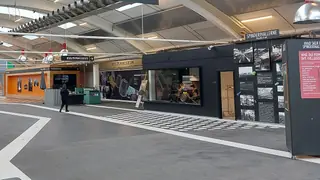
The following year, the new exhibition spaces in the Spinderihallerne opened. The building complex was part of the cotton mill that had been founded in 1892 as the first of its kind in Denmark and earned Vejle the nickname of a Danish Manchester. After yarn production ended, a cultural and commercial center emerged here, in which the museum now sits alongside a café, workshops, and event rooms; the administration of the Vejlemuseerne is also located here.
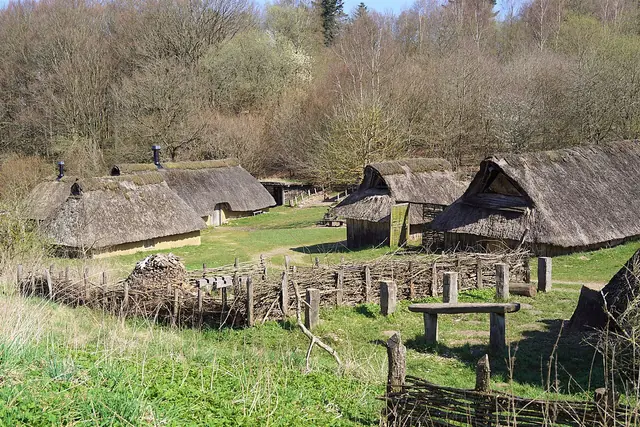
The museum tells Danish history from Vejle's perspective, from the Iron Age to the recent past. Its best-known object is the bog body from the Haraldskær bog, discovered in 1835, which was on display in Skt. Nicolai Kirke until 2012 and is exhibited on loan from the parish. Other permanent exhibitions cover the villages and warrior culture of the Iron Age, industrialization and working life, and the nightlife of 1990 to 2010, starting from the first Crazy Daisy discotheque, which opened in Vejle in 1991. All exhibitions have activities for children, and admission is free.
Admission is free.
| Adults | free |
|---|
Admission is always free; some openings, events, and workshops charge admission.
According to the museum, easily accessible for wheelchair users and people with limited mobility.
Great for kids & families
All exhibitions offer activities for children: in the large excavation box, you can uncover skeletons and search for treasure with the metal detector; with the culture suitcase, families explore the exhibitions; and in the play room "Asen og Masen," you play and work the way people used to. At the activity table in the shop, you can get creative with craft kits you buy; programs are offered during school holidays.
Free parking
Parking at the Spinderihallerne: up to 2 hours free on weekdays, free all day on Saturdays and Sundays; charging stations for electric cars.
Coffee is available in the museum shop. The café of the Spinderihallerne sells food, cake, and coffee on weekdays (closed on weekends, public holidays, and during some school holidays). Food you bring yourself may be eaten at the tables in the hall.
As far as we know, the museum does not rent out spaces for external events.
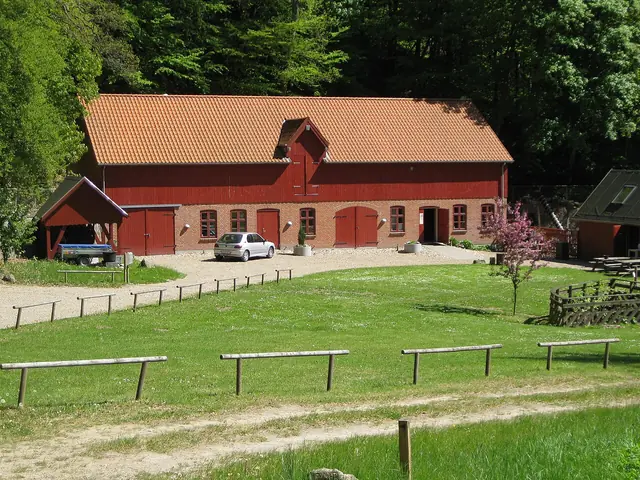
The Vejlemuseerne rent out rooms only at other locations (Vingsted Mølle, Randbøldalmuseet, Vingsted).
Inquiries & details| Guided tours | yes · approx. 60 min |
|---|---|
| School programs | yes |
| Good to know | Group tours with curators (up to 25 people) on archaeology and Haraldskærkvinden, on industrialization, or on the current special exhibition; request via form. Price per group: weekdays DKK 700, weekends DKK 1,075; outside opening hours DKK 1,500 and DKK 1,825 respectively. Educational programs for schools can be booked. |
Loading experiences …