Château de Fénelon
Fortress in the Périgord Noir, birthplace of the writer Fénelon, with furnished interiors and an exhibition devoted to the author.
No sound? Check your device’s silent switch.
Have only individual sections read aloud
About the museum
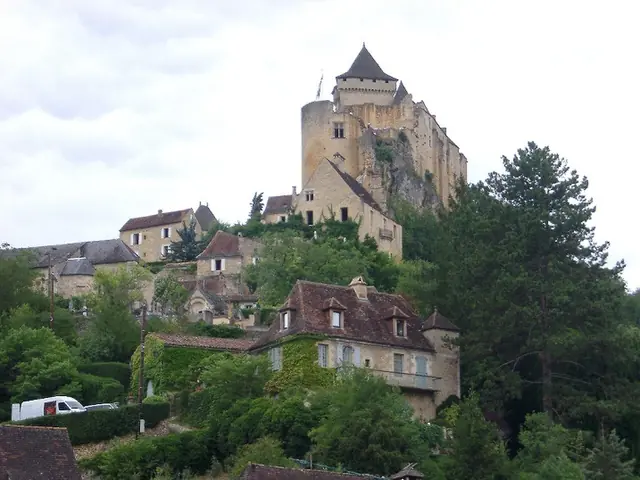
The site was already occupied in Gallo-Roman times. Around the year 1000, the Fénelon family, vassals of the viscounts of Turenne, established a lordship and an early castrum here. The fortress was dismantled in 1241 after serving as a refuge for the last Cathars, and was rebuilt at the end of the 13th century with ramparts and a crenellated keep. During the Hundred Years’ War it was captured and recaptured several times.
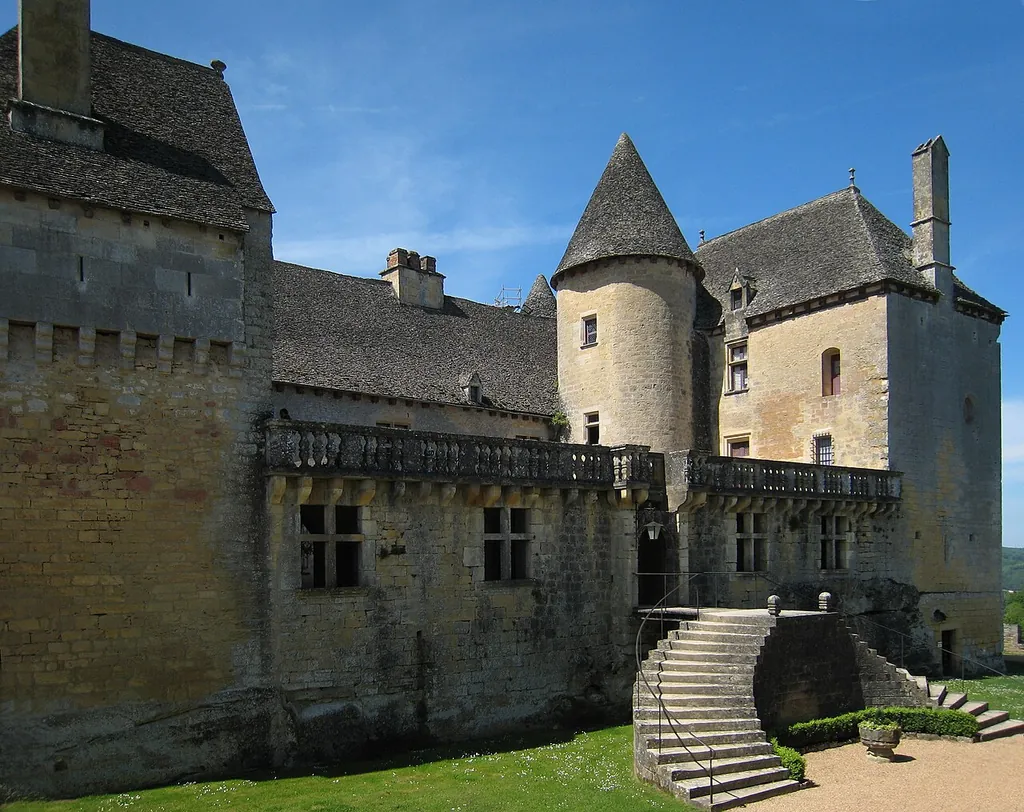
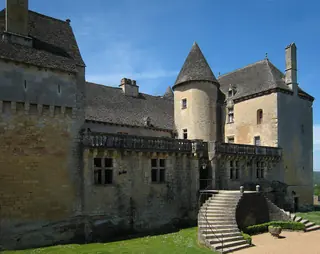
At the beginning of the 15th century it passed to the Salignac family, who kept it for roughly four centuries. After 1453 the fortress was converted into a Gothic residence, with a spiral staircase, carved dormers and a large roof of stone slabs (lauzes). In 1577 Bertrand de Salignac de La Mothe-Fénelon, a diplomat, strengthened it on the king’s orders: the château received three curtain walls and fourteen towers.
The writer François de Salignac de La Mothe-Fénelon was born at the château on August 6, 1651. In the 17th century, major works modernised the main building, with a terrace and a horseshoe staircase. Sold in 1780, then turned into a farm after the Revolution, the château was restored from 1859.
Listed as a historic monument in 1963, it was bought in 1989 by the Delautre family, who launched a conservation programme and opened it to the public. Restoration of the roofs and timber frames has continued since 2009, and the estate received the Grand Prix des Vieilles Maisons Françaises in 2018.
Highlights
- Fortress in the Périgord Noir with three curtain walls and numerous towers
- Birthplace of the writer Fénelon (1651)
- Furnished interiors and collections
- Large Gothic roof of stone slabs
- Exhibition devoted to Fénelon
Permanent exhibition
- Intérieurs et collections – The visit covers the exteriors, the furnished rooms and an exhibition devoted to the writer Fénelon.
- Founded
- 1989
Admission & discounts
| Adults | €11.80 |
|---|---|
| Reduced | €9.50Students |
| Children & teens | €6.50Rate for ages 5 to 11; €7.50 for ages 12 to 17. |
| Students & apprentices | €9.50 |
| Groups (20+ people) | €9.50 per personGroups of at least 20 people: self-guided visit, adults €9.50; guided visit, adults €12; school groups €5.50 (CM1–CM2) and €6.50 (collège and lycée) for a self-guided visit. |
| Teenagers aged 12 to 17 | €7.50 |
On European Heritage Days in September, admission is free for children up to age 12. Payment by bank card, cash, ANCV holiday vouchers and cheques.
Accessibility
- Wheelchair accessible: not available
- Elevator: no information
- Accessible restroom: no information
- Accessible parking: no information
- Service dogs welcome: no information
- Tactile models & exhibits: no information
- Sign language tours: no information
- Easy-to-read materials: no information
- Audio description: no information
The château is not accessible to visitors with reduced mobility. Toilets are accessible during the visit.
Kids & families
| Time needed | approx. 1.5 hrs |
|---|
- Stroller-friendly: not available
Pushchairs are not allowed inside the château. Specific rates apply for children aged 5 to 11 and teenagers aged 12 to 17.
Getting there & parking
By car
Free parking
Free parking.
The château is about 18 km from Sarlat (30 minutes by car), 18 km from Souillac and 14 km from Gourdon, in the Périgord Noir.
Get directionsAmenities & dining
- Café: not available
- Restaurant: not available
- Museum shop
- Wi-Fi
Free Wi-Fi. Souvenir shop; drinks and ice cream sold on site. Picnic area. Dogs are welcome on a lead: only small dogs that are carried may enter the interior; larger dogs stay outside.
Events & venue rental
The museum hasn’t published any information on this.
Plan your visit
| Guided tours | yes |
|---|---|
| Audio guide | no |
| School programs | yes |
| Photography | Photography and filming are prohibited inside; exterior photos are allowed. Drones are prohibited. |
| Good to know | The visit is self-guided, with information panels translated into English, Spanish, Dutch, German and Italian. Guided tours are reserved for groups of at least 20 people, booked by phone or email. |