Musée des Pêcheries
Museum in Fécamp housed in a former cod-drying plant on the harbour: fishing, fine arts, life in the Pays de Caux (vie cauchoise) and childhood, with a panoramic viewpoint.
No sound? Check your device’s silent switch.
Have only individual sections read aloud
About the museum
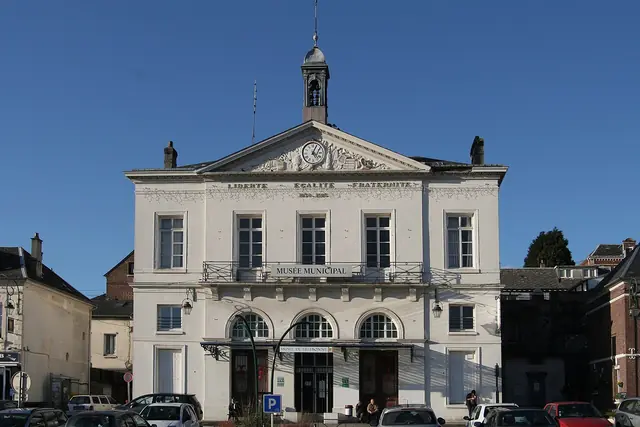
The Musée de Fécamp is the culmination of several successive institutions. The first, a museum of painting and art objects, was officially founded in 1879 and housed in the town hall. It was joined by a museum on fishing techniques (1899), a Vieux-Fécamp museum devoted to archaeology and folk traditions (1911), and a children's museum (musée de l'Enfance) born from the collections of Dr Léon Dufour (1918).
The collections were brought together in 1931 in a municipal museum, then moved in 1960 into a town mansion on rue Alexandre Legros. In 1988 the institution became the Musée des Terre-Neuvas et de la Pêche (Museum of the Newfoundland Fishermen and of Fishing), before moving into the present building on quai Capitaine Jean Recher.
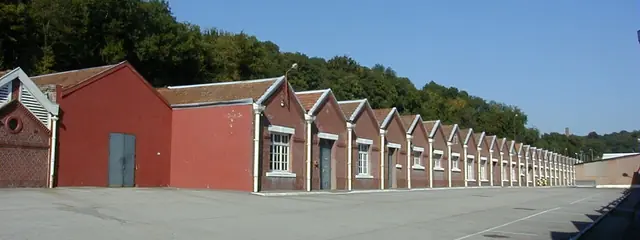
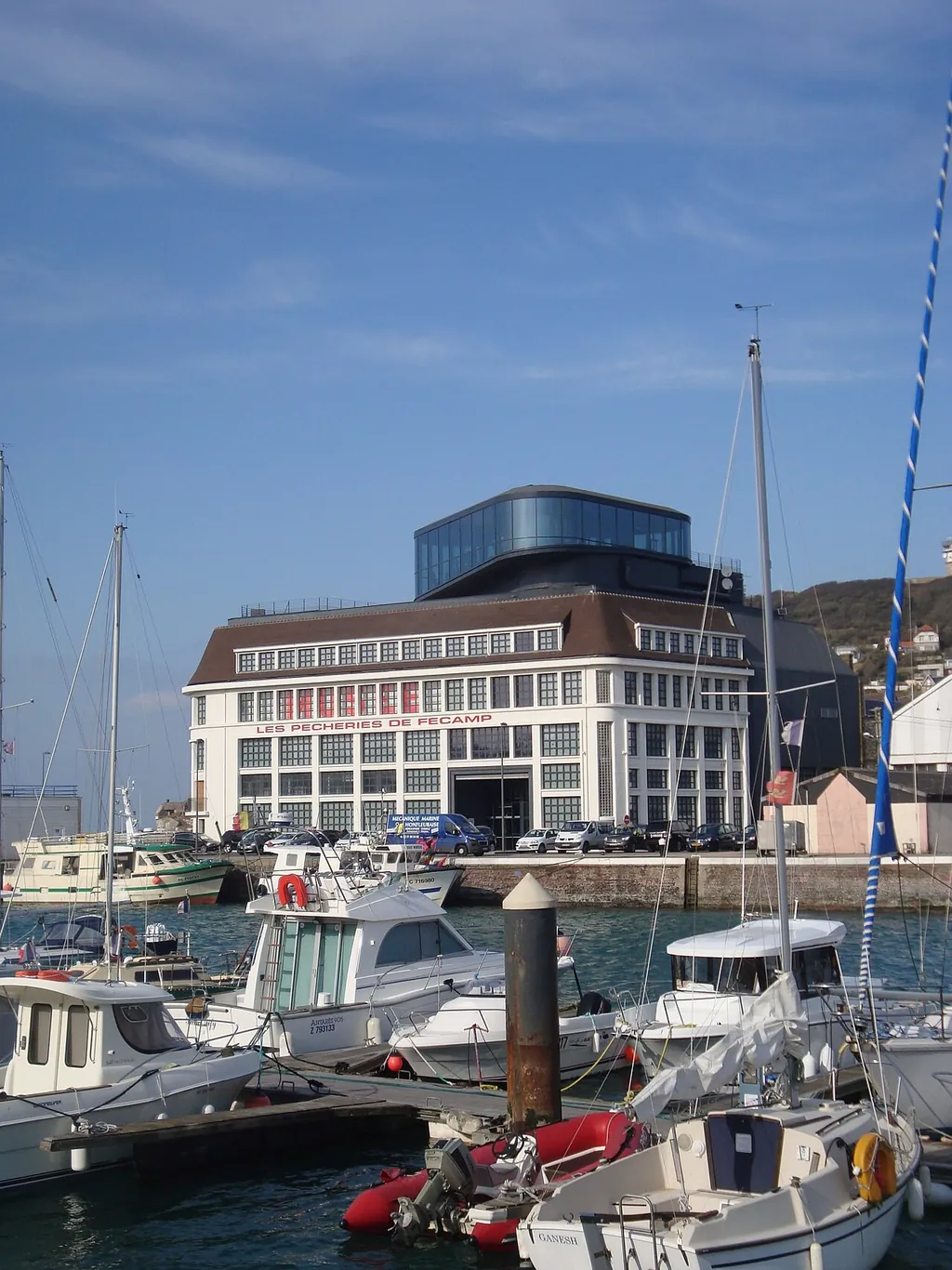
The building is itself a piece of the collection: it is the former La Morue normande factory, built in 1950 by the architect André Hamayon in the Reconstruction style, with four levels supported by concrete posts. The factory dried the cod caught by the trawlers of the local shipping firm, then processed herring until 1996. A panoramic view was added at the top when the building was converted into a museum.
The route now brings together sections on the history of the town, the navy and fishing, fine arts, life in the Pays de Caux and childhood.
Highlights
- Belvedere with panoramic views over the town and harbour
- Navy and fishing section: coastal fishing, cod fishing off Newfoundland, herring fishing
- Children's museum collection assembled by Dr Léon Dufour
- Fine arts and objects from life in the Pays de Caux: furniture, costumes, Norman jewellery
- Former La Morue normande factory, a Reconstruction-era building
Permanent exhibitions
- Marine et pêche – The story of Fécamp's fishermen: coastal fishing, cod fishing off Newfoundland and herring fishing, shipbuilding and sea rescue.
- Beaux-arts et vie cauchoise – Paintings and sculptures, along with furniture, costumes and Norman jewellery from the Pays de Caux.
- Musée de l'Enfance – Collection of early-childhood objects, including baby bottles, assembled by Dr Léon Dufour.
- Founded
- 1879
- Operated by
- Ville de Fécamp
Admission & discounts
| Adults | €9 |
|---|---|
| Reduced | €6Adult groups without a guided tour, students, job seekers, Pass Éducation holders, Carte d'Hôte de Fécamp holders, CNAS members and holders of a partner museum pass (Palais Bénédictine in Fécamp, Cité de la Mer in Cherbourg) |
| Children & teens | freefree up to age 17 · Free admission for under 18s. |
| Visitors with disabilities | freeFree with a disability card. |
| Students & apprentices | €6 |
| Individual annual pass | €24Unlimited visits for one year; the companion receives the reduced rate. |
| Audio guide (supplement) | €2Available in French and English. |
Free admission: First Sunday of every month, Museum Night, European Heritage Days and Tourism Night (Nuit du Tourisme), free for all
Temporary exhibitions are included in the price. Free admission also for Friends of the museum, residents of care homes (EHPAD), IMS and IME facilities, holders of ICOM, Ministry of Culture and Réseau des musées de Normandie cards, approved guides and the press. Partnerships: a full-price ticket at the museum entitles you to the reduced rate at the Palais Bénédictine (10% off) and at the Cité de la Mer in Cherbourg (€1.50 off), and vice versa. Payment in cash, by bank card, cheque or with holiday vouchers (chèques-vacances).
Accessibility
- Wheelchair accessible
- Elevator
- Accessible restroom: no information
- Accessible parking
- Service dogs welcome
- Tactile models & exhibits: no information
- Sign language tours: no information
- Easy-to-read materials: no information
- Audio description: no information
The museum describes itself as fully accessible to visitors with reduced mobility. Two lifts serve the floors, wheelchairs are lent free of charge at reception, there are toilets and seats on every floor, and the audio devices have induction loops. One reserved space in front of the museum. Only guide dogs and assistance dogs are admitted.
Kids & families
Great for kids & families
| Time needed | approx. 2 hrs |
|---|---|
| Kids’ admission | free up to age 17 |
- Family tours & workshops
- Activity booklet, scavenger hunt or kids’ audio guide
- Stroller-friendly
- Baby changing facilities
The booklet “Le bestiaire caché du musée” and “Cherche et trouve” games are given out free at reception. The “Mystère en maquettes” trail is for children from age 7. Strollers, bottle warmers and nursing cushions can be borrowed. Reading corner and colouring in the lounge. Art workshops and tours for children and families all year round.
Getting there & parking
By public transit
Gare de Fécamp
Fécamp station is less than a 10-minute walk away (connections from Paris, Rouen and Le Havre).
By car
Parking available
Parking spaces on quai Capitaine Jean Recher and nearby streets, quai Bérigny and quai de la Vicomté (opposite, reached via the footbridge), and the Mâture car park near the station and tourist office. One space for people with reduced mobility in front of the museum.
- Accessible parking
The museum is in the middle of the harbour, on quai Jean Recher. Bike racks are in front of the museum and the tourist office.
Get directionsAmenities & dining
- Museum shop
- Lockers
Bookshop open during museum hours (books, merchandise, children's books). Free lockable lockers for personal belongings. Lounge with a reading corner on the ground floor.
Events & venue rental
The museum hasn’t published any information on this.
Plan your visit
| Audio guide | yes (FR, EN) |
|---|---|
| School programs | yes |
| Good to know | Allow about 2 hours to see all the floors. An annual programme of events (guided tours, lectures, workshops) can be downloaded from the website. The filleters' cloakroom (vestiaire des filetières) and the shipowner's office are only open for special events, such as Museum Night. |