Photographer and object artist Stefan Nestler shows photographic works from the series “Ansitze” and numerous art objects, all of which are stools. Visitors are welcome to sit on the objects.
About the museum
As early as 1886, Rabenau called for antiquities and products of local trades to be collected; the museum was founded in 1922. From 1931 the local history collection was displayed in several attic rooms of the Rabenau school.
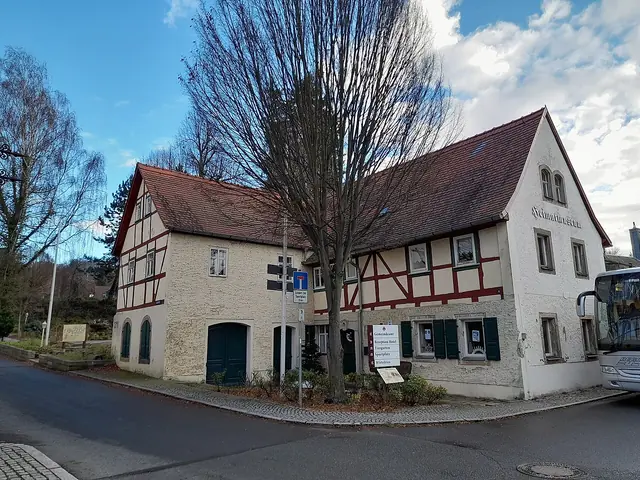
In 1978 the museum moved into the former stable building of the Vorwerk (manor farm) of Rabenau Castle on Lindenstraße and reopened as the Heimat- und Stuhlbaumuseum (local history and chair-making museum). In 1866 a chair dealer had added a story to the building, which has a cross-vaulted ceiling, and used it as a chair factory; later it served as a residence. Since 1992 the museum has been gradually expanded with support from the town and the Free State of Saxony, and it was renovated and redesigned in 1993/94.
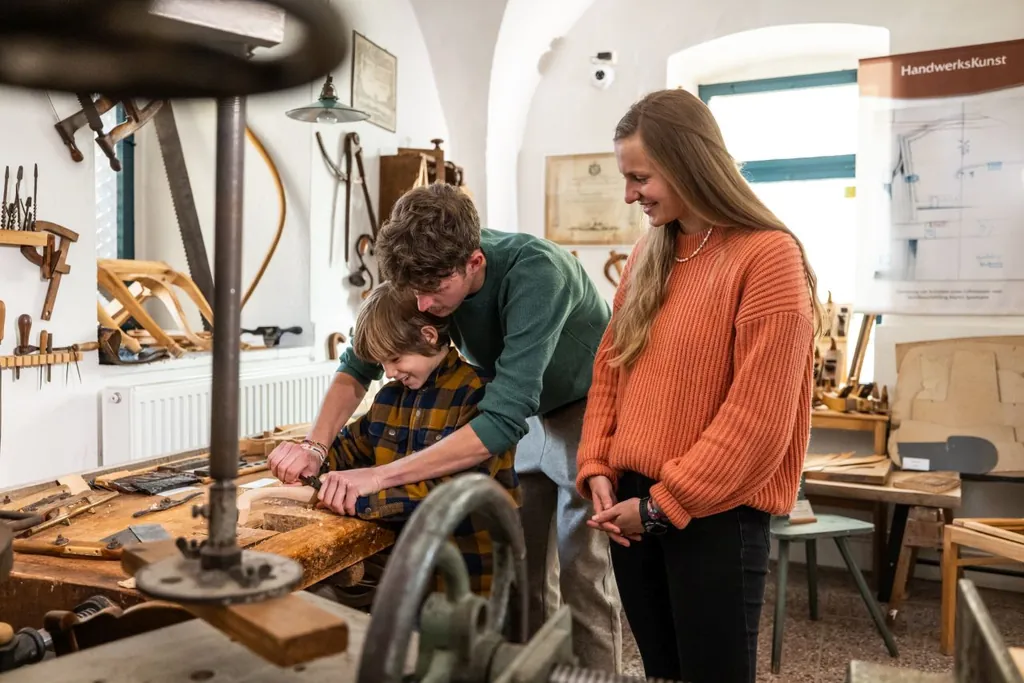
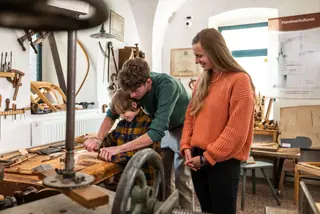
The collection shows chairs from the Baroque, Biedermeier, Gründerzeit, and Art Nouveau periods, made in Rabenau, along with tools, wickerwork patterns, and carvings. In 2005 the faithfully rebuilt workshop of chair maker Kurt Aehlig was added; its machines are still driven by overhead belts (Transmissionen). The exhibition is supplemented by the local history collection on town history, a wooden library, and changing cabinet exhibitions. The museum is run by a non-profit association.
Highlights
Chairs from the Baroque, Biedermeier, Gründerzeit, and Art Nouveau periods
Machine room with overhead-belt drive from Kurt Aehlig's workshop
Rabenau bentwood and Thonet chairs
Wood library (Xylothek) with native woods
Vaulted room in the former manor farm of Rabenau Castle
Permanent exhibitions
Holzstuhlbau – More than 400 years of chair making in Rabenau, from craft in almost every house to industrial bentwood production, shown with chairs, tools, and drawings.
Werkstatt & Maschinenraum Kurt Aehlig – Rebuilt chair-making workshop, whose machines are still driven centrally by overhead belts, at the technical level of the early 20th century.
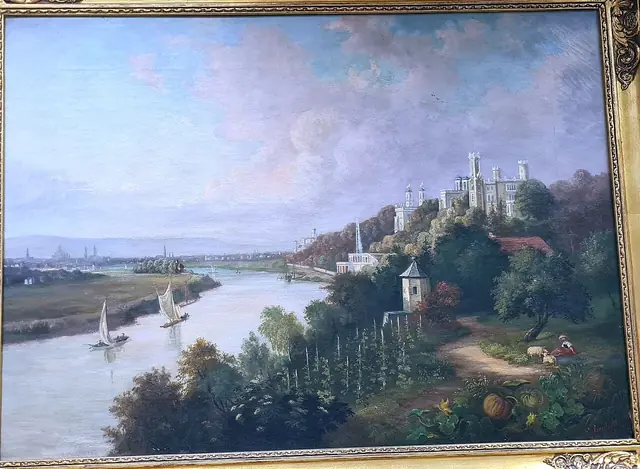
Heimatsammlung & Stadtgeschichte – Objects and views on the history of Rabenau, from the castle in the Middle Ages to the 20th century.
Founded
1922
Operated by
Deutsches Stuhlbaumuseum Rabenau/Sa. e. V.
Director
Daniela Simon
Admission & discounts
Adults
€5
Reduced
€3
Children & teens
freefree up to age 10 · Children up to 10 years old free.
Groups
–Guided tour of the museum €30 plus admission; school and student groups receive free admission with a guided tour.
Guided tour of the museum
€30Per group, by registration
Accessibility
Partially wheelchair accessible
Elevator: no information
Accessible restroom
Accessible parking: no information
Service dogs welcome: no information
Tactile models & exhibits: no information
Sign language tours: no information
Easy-to-read materials: no information
Audio description: no information
Step-free access to the museum is possible at ground level. A stair lift leads to the second floor, where there is also an accessible toilet. Tours for visually impaired visitors on request.
Kids & families
Great for kids & families
Kids’ admission
free up to age 10
Family tours & workshops
Baby changing facilities
Overview tours designed especially for children and young people. On the footpath from Rabenau stop up to the museum there are nature-style play equipment and a raven memory game; solving it earns a small reward at the museum. Changing table in the accessible toilet on the second floor.
Getting there & parking
By public transit
Rabenau (Weißeritztalbahn) · 800 m
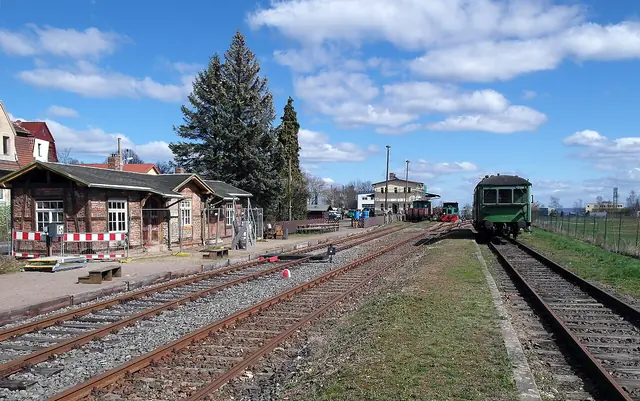
Weißeritztalbahn (narrow-gauge railway) to the Rabenau stop, then a walk up to the museum via the “Sagenhafter Mühlberg” adventure trail. Hiking routes also run from S-Bahn station Freital-Hainsberg (about 1.5 hours), from Freital-Coßmannsdorf (bus 160, about 45 min), and from bus stops in Oelsa (bus 348), Obernaundorf (bus 347), and Seifersdorf (bus 376).
Check the Weißeritztalbahn timetables in advance. Rabenau tourist information: Markt 3.
Museum shop with publications, hiking and bike maps, souvenirs, craft items, and a kit for a frame chair at 1:5 scale.
Events & venue rental
The museum hasn’t published any information on this.
Plan your visit
Guided tours
yes
School programs
yes
Good to know
Tours by arrangement, including on the permanent exhibition, hand-built wooden chair construction, and tours for visually impaired people, trainees, children and young people, and seniors. Educational offerings for schools are in the flyer and at sachsens-museen-entdecken.de.