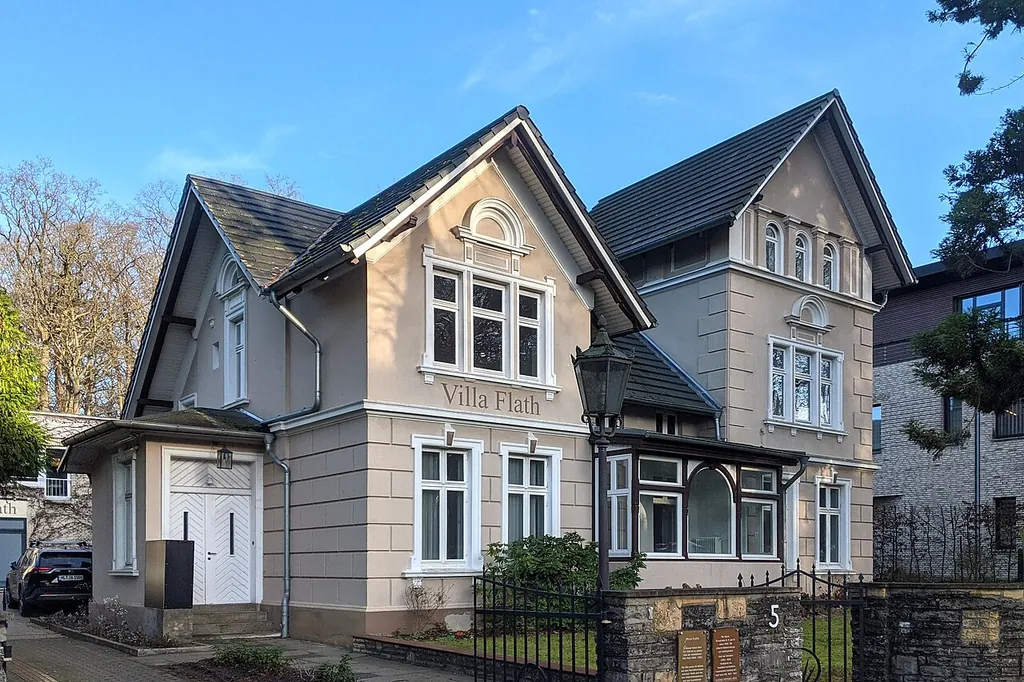
Kunsthalle Otto Flath
Inclusive artist's house in Bad Segeberg with wooden sculptures, altarpieces and watercolors by sculptor Otto Flath, at his home and workplace.
Have only individual sections read aloud
About the museum
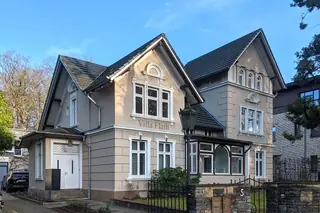
The villa on Bismarckallee was built in 1893 by soap manufacturer Johann Wilhelm Wittmack. Later it served as a convalescent home for Jewish children; in 1938 the city expropriated the house. In 1939 the patron couple Ellen and Willy Burmester acquired the property and set up a workshop for sculptor Otto Flath (1906–1987) in the former horse stable. Exhibition halls were added in 1948, 1960 and 1973.
In 1977 Flath handed the entire ensemble of residence, halls and workshop over to the city of Bad Segeberg, on condition that a foundation be set up in memory of his work. The Otto Flath Foundation was established in 1978 and has since operated the art hall and villa. His oeuvre comprises roughly 50 altarpieces, 3,500 wooden sculptures and more than 10,000 watercolors and graphic works.
After a renovation in 2019/2020, the "New Kunsthalle Otto Flath" opened on February 14, 2020, as the first inclusive museum in Schleswig-Holstein. The villa has been a listed monument since 2017. The residence, exhibition hall and workshop, with the overhead trolley, are preserved in their original location.
Highlights
- Residence, exhibition halls and workshop of the artist at the original site
- Wooden sculptures and altarpieces in three thematic areas
- Workshop with overhead trolley and original planing bench
- Watercolors and graphic works by Otto Flath
- Inclusive concept with tactile floor plan and Braille
- Garden between the art hall and the residence
Permanent exhibitions
- Leben und Werk Otto Flaths (Foyer) – Exhibits and a media station trace Flath's biography, from his childhood in Ukraine to his encounter with his patrons and life in the house on Bismarckallee.
- Skulpturen, Altäre, Aquarelle und Grafiken – Organized into three halls named "Divine Love," "Animated Human Beings" and "Supernatural Beings"; the selection from the oeuvre changes every year.
- Werkstatt des Bildhauers – The preserved workshop, with the overhead trolley and the original planing bench, conveys the artist's way of working.
- Operated by
- Otto-Flath-Stiftung
Admission & discounts
| Adults | €4 |
|---|---|
| Children & teens | freefree up to age 18 · Children and young people up to and including 18 years old enter free. |
| Groups (20+ people) | €3 per person |
| Group tour (in addition to admission) | €10 |
Accessibility
- Wheelchair accessible
- Elevator: no information
- Accessible restroom
- Accessible parking
- Service dogs welcome: no information
- Tactile models & exhibits
- Sign language tours: no information
- Easy-to-read materials: no information
- Audio description: no information
First inclusive museum in Schleswig-Holstein: tactile floor plan, tactile floor strips, labels and room texts in Braille, explanations for deaf visitors, wheelchair-accessible information desks, accessible restroom and accessible parking space. Tours for blind and visually impaired visitors, and events for people with dementia.
Kids & families
The museum hasn’t published any information on this.
Getting there & parking
By car
Accessible parking space available.
- Accessible parking
Amenities & dining
Small garden between the art hall and the residence, maintained by volunteers, for relaxing.
Events & venue rental
- Spaces for rent
The villa and art hall can be rented for cultural events such as readings or concerts; the studio is available by the day to artists and for workshops. Inquiries by email to the foundation.
Inquiries & detailsPlan your visit
| Guided tours | yes |
|---|---|
| Good to know | Tours and lectures by appointment by phone, including tours for blind and visually impaired visitors and events for people with dementia. |