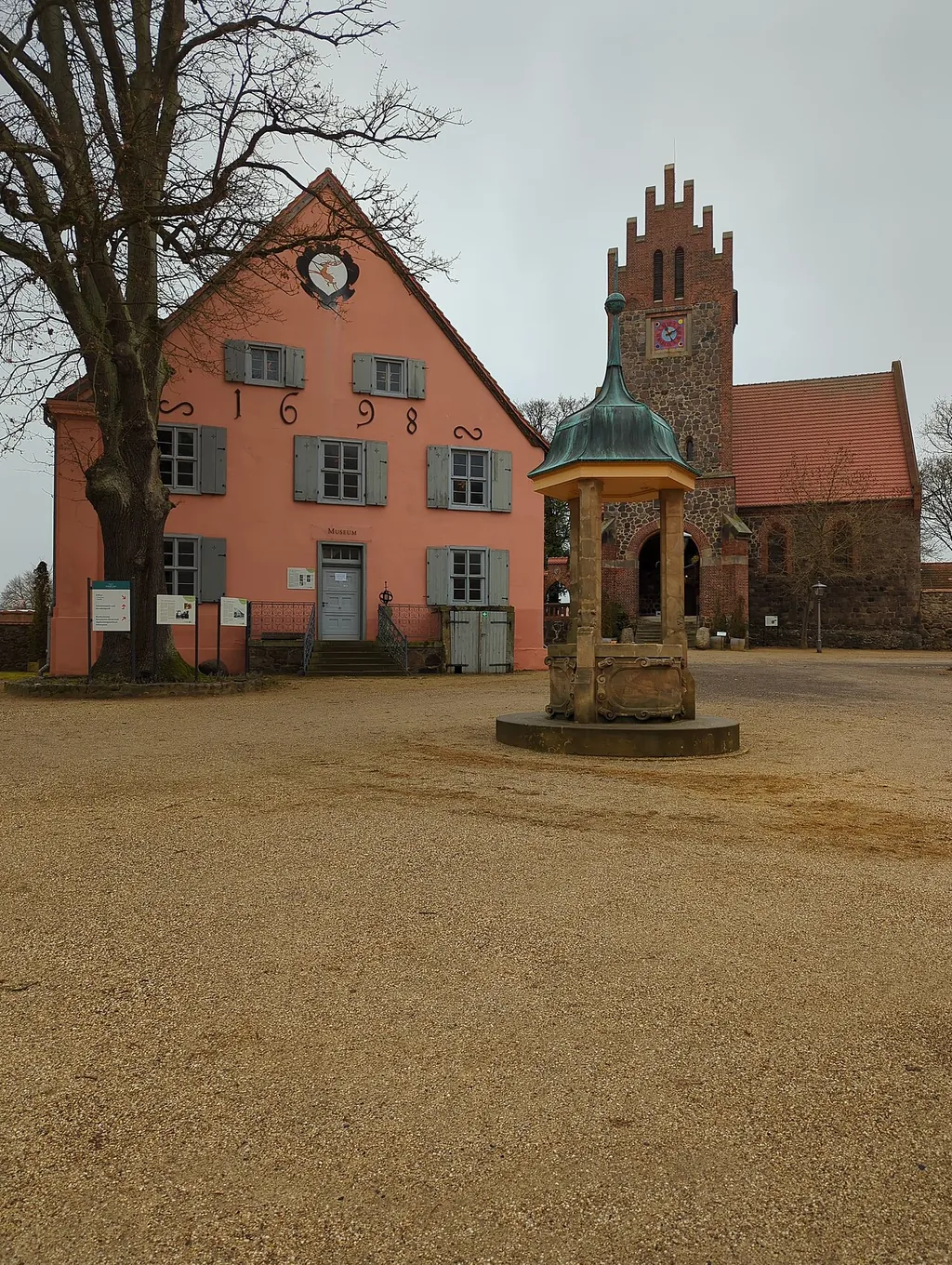
Museum Schloss und Gut Liebenberg
Museum in the Inspektorenhaus (inspector’s house) of Schloss und Gut Liebenberg, on the history of the village, the Eulenburg-Hertefeld family, agricultural technology and hunting.
Have only individual sections read aloud
About the museum
The museum shows the eventful history of Schloss und Gut Liebenberg in the Löwenberger Land north of Berlin. The place is first mentioned in records in 1267, and the manor house was built in 1743. Later the Hertefeld and Eulenburg families shaped the estate; Philipp zu Eulenburg und Hertefeld regularly received Kaiser Wilhelm II here. Theodor Fontane devoted a chapter to the palace in his Wanderungen (rambles); during the Nazi era, the resistance fighter Libertas Schulze-Boysen used the estate as a refuge, and in the GDR it served as a model estate and recreation resort.
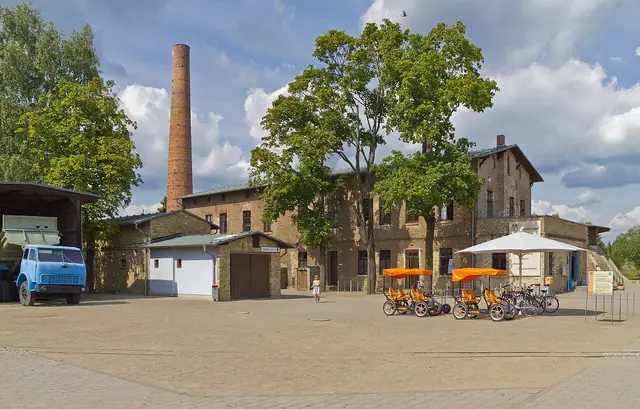
The exhibition is housed in the Inspektorenhaus, one of the oldest and largest half-timbered buildings in Brandenburg, in the estate yard. Permanent exhibitions cover local history and the Eulenburg-Hertefeld family, historic agricultural technology and hunting. Among the striking pieces are life-size sculptures of the goddess Diana and two stags from the Eulenburg era, a ceramic wall relief from GDR days and a large walrus jaw.
The sponsor is the DKB STIFTUNG für gesellschaftliches Engagement (DKB foundation for social engagement), which has been responsible for running Schloss und Gut Liebenberg through an inclusion company since 2010. In addition to the house, there is a digital museum with a historical walk and online tours of the grounds.
Highlights
- Exhibition in the Inspektorenhaus, one of the oldest half-timbered buildings in Brandenburg
- History of Schloss und Gut Liebenberg and the Eulenburg-Hertefeld family
- Life-size Diana and stag sculptures
- Historic agricultural technology and hunting exhibition
- Historical walk past the estate yard, fieldstone church and palace chapel
- Digital museum with online tours
Permanent exhibition
- Geschichte von Schloss und Gut Liebenberg – In the Inspektorenhaus, exhibits tell the story of the village and the Eulenburg-Hertefeld family; there is also historic agricultural technology and a hunting exhibition.
- Operated by
- DKB STIFTUNG für gesellschaftliches Engagement
Admission & discounts
| Historical walk (group tour, flat fee for up to 25 people) | €100Duration 60 to 90 minutes |
|---|
The tour is charged as a flat fee for the group, not per person.
Accessibility
- Wheelchair accessible: no information
- Elevator: no information
- Accessible restroom: no information
- Accessible parking
- Service dogs welcome: no information
- Tactile models & exhibits: no information
- Sign language tours: no information
- Easy-to-read materials: no information
- Audio description: no information
About 15 parking spaces for people with mobility impairments are directly in front of the main entrance to the palace grounds; the site is somewhat uneven.
Kids & families
The museum hasn’t published any information on this.
Getting there & parking
By public transit
Liebenberg Parkweg
By RB12 to Grüneberg station or by RE5 to Löwenberg station; from there by taxi, bike or on foot. Bus: stops Liebenberg Bergsdorfer Straße, Liebenberg Parkweg and Liebenberg Grüneberger Straße; the public on-demand shuttle (03306 2307) must be called at least 1.5 hours in advance.
By car
Parking available
Parking at the Hotel Schloss & Gut Liebenberg; charging station for electric cars available.
- Accessible parking
From Grüneberg or Löwenberg station it is about 4 to 6 km on foot or by bike along a separate, unlit footpath and cycle path.
Get directionsAmenities & dining
The museum hasn’t published any information on this.
Events & venue rental
The museum hasn’t published any information on this.
Plan your visit
| Guided tours | yes |
|---|---|
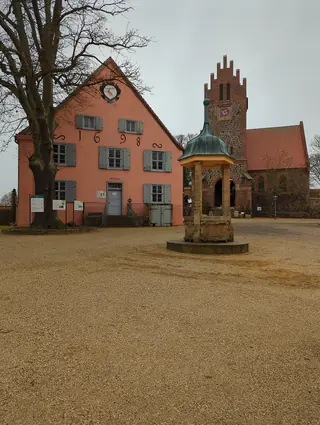
| Good to know | Historical walk for up to 25 people, starting from the palace courtyard with the Kaiserbrunnen (Kaiser fountain), past the fieldstone church, exhibition rooms and palace chapel, to the estate yard and park; booking through the DKB STIFTUNG. Online, the digital museum offers a historical walk. |