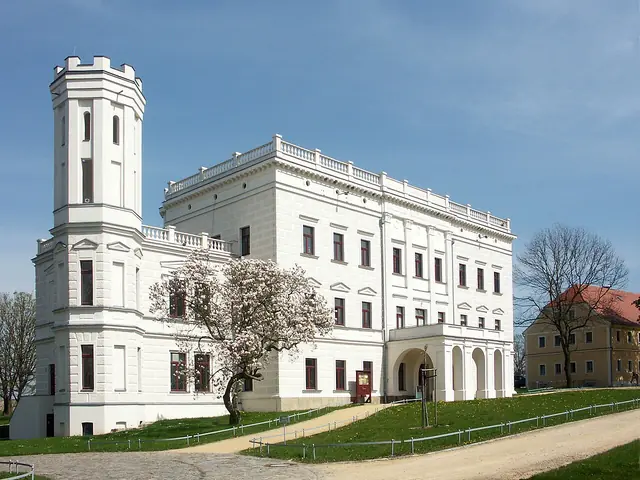
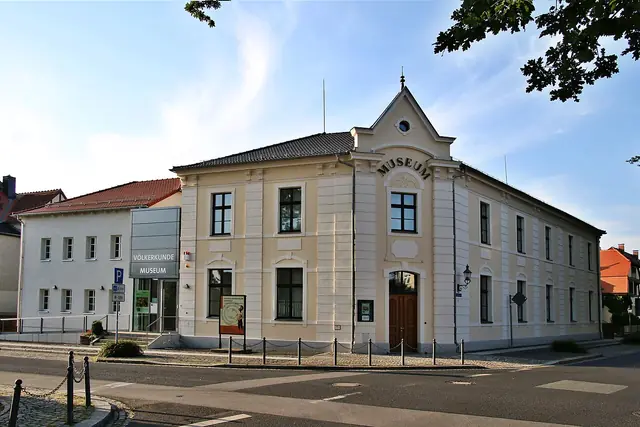
Anniversary exhibition marking 500 years of the Schönhof: the construction and usage history of the Renaissance house, craftsmanship, heritage preservation, and its conversion into a museum, with eyewitness interviews and an animated film.
Some 40 photographs by Thomas Voßbeck show German lettering that was removed in Poland after 1945 and is now becoming visible again on building facades.
About the museum
The idea of a central museum for Silesia in the Federal Republic dates back to the 1970s. After an initial attempt in Lower Saxony, Görlitz was chosen in 1991 as the largest city in the part of Silesia that remained in Germany. In 1996 the federal government, the Free State of Saxony, the city of Görlitz, and the Landsmannschaft Schlesien (Silesian expellees’ association) set up a foundation to run the museum; the federal and state governments fund its operation.
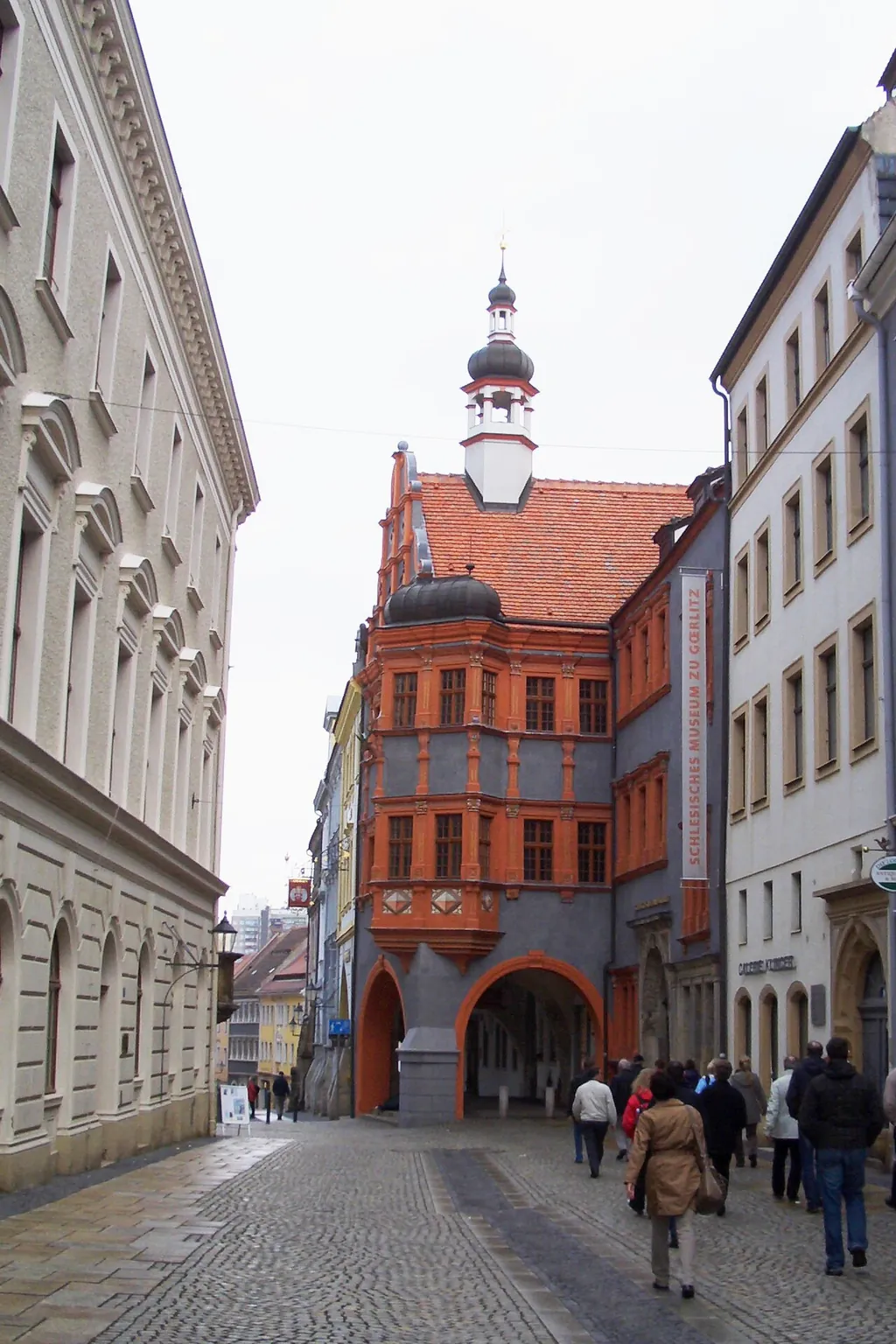
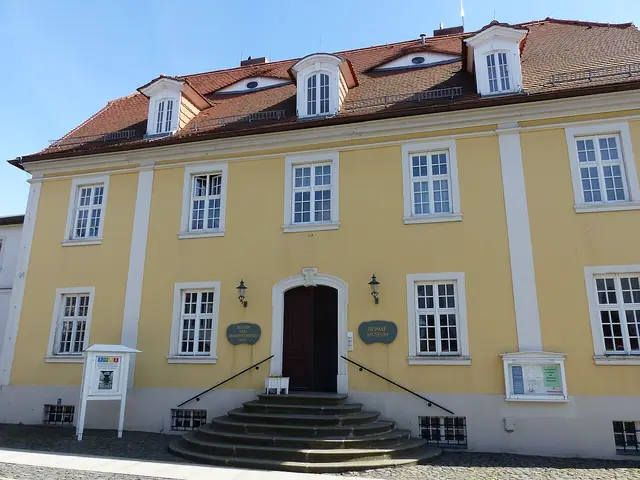
The city provided the Schönhof on the Untermarkt as the museum building. The house dates back to the time the town was founded, stood on the Via Regia trade route, and after the town fire of 1525 received its Renaissance facade, which became the model for many Görlitz townhouses. Together with the Haus zum Goldenen Baum and the Fischmarkthaus, the badly dilapidated complex underwent extensive restoration completed in 2005, uncovering wall and ceiling paintings from the 16th and 17th centuries. The first exhibition rooms opened in 2001, and the permanent exhibition in the Schönhof in May 2006.
Across some 2,000 square meters, the museum tells a thousand years of Silesian history – from the landscape and towns through the Habsburg and Prussian eras, industrialization and modernism, to National Socialism, flight and expulsion, and the development of Silesia after 1945. On display are Breslau goldsmiths’ work, Riesengebirge (Giant Mountains) glass, Proskau faience, Bunzlau pottery, cast-iron art, and works of Breslau modernism. The museum works closely with museums in Polish Silesia, presents its texts in two languages, and houses the Kulturreferat für Schlesien (cultural office for Silesia). In 2026 it celebrates 500 years of the Schönhof and 20 years of the permanent exhibition.
Highlights
The Schönhof of 1526 with Renaissance wall and ceiling paintings
A thousand years of Silesian cultural history across some 2,000 m²
Riesengebirge glass, Bunzlau pottery, and Breslau goldsmiths’ work
Works of Breslau modernism, including Otto Mueller and Oskar Moll
Multimedia section “Schlesien seit 1945” (Silesia since 1945) with a children’s area
Free audio guide in German, Polish, and English
Permanent exhibitions
Schlesien – tausend Jahre Kulturgeschichte – Permanent exhibition ranging from landscapes and towns through the Prussian era and modernism to National Socialism, the end of the war, and Silesia after 1945.
Founded
2006
Operated by
Stiftung Schlesisches Museum zu Görlitz
Director
Dr. Agnieszka Gąsior
Admission & discounts
Adults
€8
Reduced
€6School students aged 19 and over, university students, apprentices, people doing military, civilian, or volunteer service, recipients of Bürgergeld (basic income support), people with severe disabilities
Children & teens
freefree up to age 18 · Visitors up to and including age 18 are free, as are school classes with students up to age 18.
Seniors
–No senior discount mentioned.
Visitors with disabilities
€6companion free · Reduced admission for people with severe disabilities; companions free with the “B” marker.
Students & apprentices
€6Reduced admission.
Groups (10+ people)
€6 per personGroups of 10 or more: permanent exhibition €6, special exhibition €3.50, combination ticket €7.50; school classes with students aged 19 and over €1.
Special exhibition ticket
€4Reduced €3.50.
Combination ticket for permanent and special exhibitions
€10Reduced €7.50; also valid on the following opening day.
After-work ticket (1 hour before closing)
€5
Monday guided tour (every Monday at 10:00)
€9Reduced €7; ticket also valid the following day.
Annual pass (personalized)
€27Reduced €20.
Free admission:Free admission for everyone on the first Sunday of every month.
Audio guide included in admission. Also free for press on assignment and for members of ICOM, the German and Saxon museum associations, and the friends’ association.
Accessibility
Partially wheelchair accessible
Elevator
Accessible restroom
Accessible parking
Service dogs welcome: no information
Tactile models & exhibits: no information
Sign language tours: no information
Easy-to-read materials
Audio description: no information
All rooms can be reached by wheelchair users, but four rooms only with assistance (stairlift to room 15, mobile ramp to room 6, platform lifts to rooms 16 and 17). Wheelchair-accessible entrance via the museum shop (Brüderstraße 8) or Fischmarkt 5; accessible parking space in the courtyard at Bäckerstraße 2; accessible restroom in the Fischmarkthaus. Wheelchair and stools available at the ticket desk. Museum guide in Easy Language (Leichte Sprache); tours in plain language and for people with dementia on request; induction loop in the event room.
Kids & families
Great for kids & families
Kids’ admission
free up to age 18
Family tours & workshops
Activity booklet, scavenger hunt or kids’ audio guide
Playground / play area
Kids’ birthday parties
Children's island in the Lichthof atrium with games, riddles, puzzles, books, and films; children's audio guide for daycare and elementary school children at the ticket desk. Themed tours for groups (e.g., with Rübezahl) and children's birthday parties by registration.
Getting there & parking
By car
Parking available · 5-min walk to the entrance
Park at Obermarkt (about a 5-minute walk) or in the parking garage An der Frauenkirche 12. Accessible parking space in the courtyard of the administration building at Bäckerstraße 2, about 50 m from the entrance at Fischmarkt 5.
Accessible parking
The museum is located in the old town on Untermarkt, opposite the town hall; the main entrance is in the pedestrian zone.
Event room (approx. 105 m², up to 100 people in theater seating) with conference and interpreting equipment, plus hallway, south courtyard, and glass-roofed north courtyard for catering. Only for professional and cultural events, not for private parties.
Public guided tour of the permanent and special exhibitions €3 per person plus admission; Monday tour every Monday at 10:00. Group tours (up to 25 people, book 3 working days in advance): permanent exhibition from €100 (Tue–Fri) or €110 (Sat/Sun/public holidays), special exhibition €25/€35, plus admission. Exhibition texts in German and Polish.