Stadtgeschichtliches Museum Wolgast
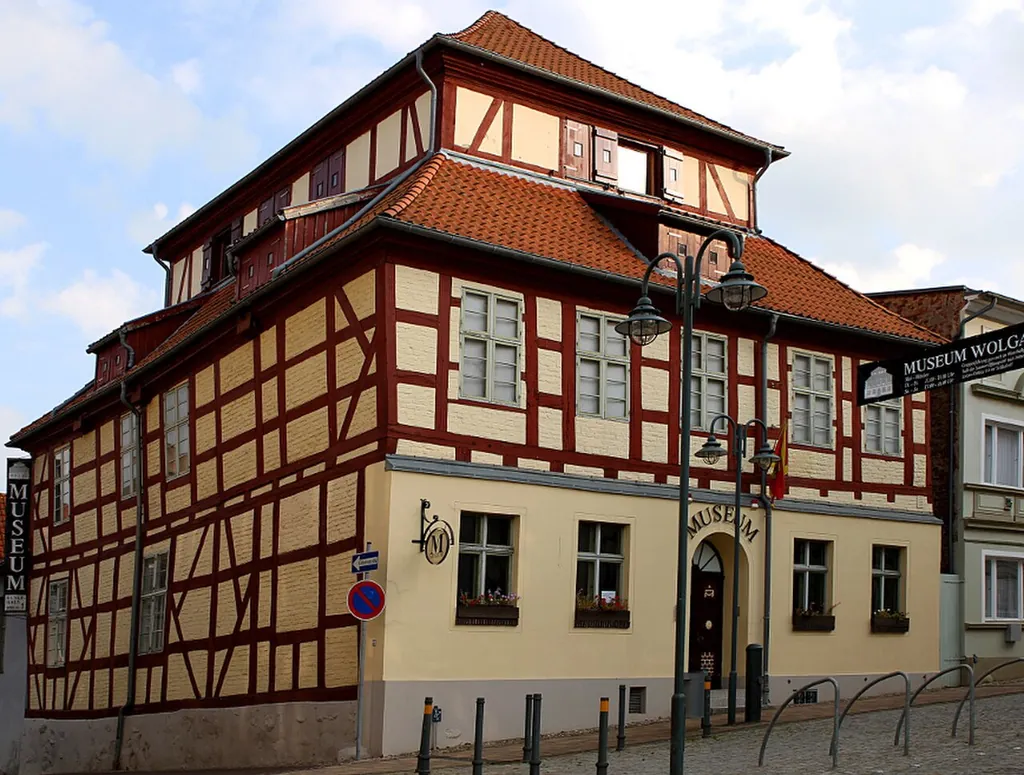
Wolgast's city museum in the half-timbered storehouse "Kaffeemühle" (Coffee Mill): from the Pomeranian ducal residence to shipbuilding, with Freest fishermen's rugs.
About the museum
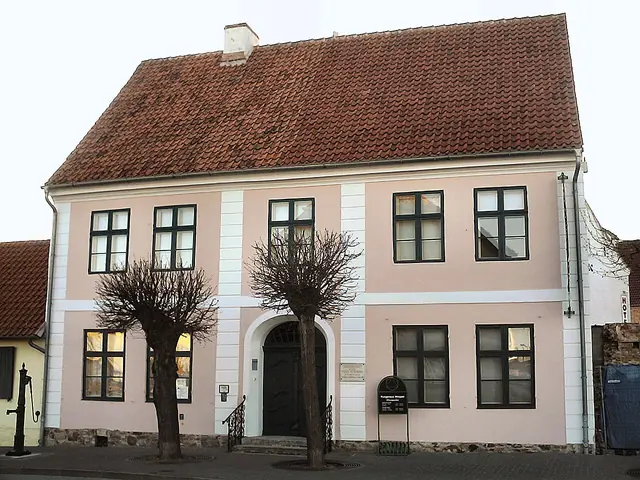
The building on Rathausplatz owes its nickname to its distinctive roof, which resembles an old coffee mill without a crank. The age of the half-timbered building is not clearly established: for a long time it was considered one of the few secular buildings to survive the city fire of 1713, but the construction method points rather to a Swedish official's house from the early 18th century. The cellar dates back to the 15th century. After the Swedes withdrew in 1815, an inn was set up in the building, and around 1840 a hall extension was added; after 1945 the building served, among other things, as a vegetable shop.
In the mid-1950s a small local history museum was established here. Because the building had tilted after war damage, it was thoroughly renovated from 1975 to 1982 with great support from Wolgast citizens and businesses; afterwards the museum first moved into the first floor and a year later also into the second floor. In a second renovation between 1990 and 1995 the roof was raised and the attic made usable for exhibitions.
Today the museum tells, on four floors, how Wolgast developed from the residence city of the Dukes of Pomerania-Wolgast into a shipbuilding location. Themes include the Swedish period, trade, crafts, seafaring and industry. A special feature is the extensive collection of Freest fishermen's rugs. Special exhibitions, lectures as well as the Kulturnacht (culture night) in August and the Manufakturtag (workshop day) in October round out the program. The museums of the city of Wolgast also include the Rungehaus and the Kapelle St. Gertrud (St. Gertrud Chapel).
Highlights
- Half-timbered storehouse with a distinctive "coffee mill" roof
- Extensive collection of Freest fishermen's rugs
- Residence city of the Dukes of Pomerania-Wolgast
- Swedish period and shipbuilding history
- Historic workshops and everyday scenes
Permanent exhibitions
- Wolgaster Stadtgeschichte – On four floors from the Pomeranian ducal residence through the Swedish period to the modern shipbuilding location, with industrial, trade and craft history.
- Freester Fischerteppiche – Knotted rugs from the fishing village of Freest, a regional textile tradition to which the museum devotes a presentation of its own.
- Founded
- 1955
- Operated by
- Wolgaster Kulturgesellschaft gGmbH (Museen der Stadt Wolgast)
- Director
- Stefan Rahde
Admission & discounts
| Adults | €7 |
|---|---|
| Reduced | €6 |
| Children & teens | €3free up to age 5 · Children aged 6 to 14 €3, younger children free. |
| Students & apprentices | €4Pupils and students. |
| Families | €152 adults and 2 children under 18. |
| Combination ticket Stadtgeschichtliches Museum and Rungehaus | €9Per person, valid for 7 days from purchase |
| Annual pass combination (Stadtgeschichtliches Museum and Rungehaus) | €30Per person |
| Annual pass combination, family | €502 adults and 2 children under 18 |
| Museum tour (by registration only) | €30Flat fee plus €5 per person |
The prices include special exhibitions.
Accessibility
- Partially wheelchair accessible
- Elevator: no information
- Accessible restroom: no information
- Accessible parking: no information
- Service dogs welcome: no information
- Tactile models & exhibits: no information
- Sign language tours: no information
- Easy-to-read materials: no information
- Audio description: no information
The first floor with the large hall for special exhibitions is accessible without barriers; the upper floors can only be reached by stairs.
Kids & families
The museum hasn’t published any information on this – please ask the museum directly.
Getting there & parking
The museum hasn’t published any information on this – please ask the museum directly.
Amenities & dining
The museum hasn’t published any information on this – please ask the museum directly.
Events & venue rental
The museum hasn’t published any information on this – please ask the museum directly.
Plan your visit
| Guided tours | yes |
|---|---|
| Good to know | Tours are possible only with advance registration. Annual events are the Kulturnacht in August and the Manufakturtag with historic crafts in October. |