Terra-Sigillata-Museum Rheinzabern
Association-run museum on the Roman pottery town of Tabernae in Rheinzabern with Terra Sigillata workshop finds, hands-on stations and original Roman kilns.
About the museum
In Roman times, Rheinzabern, then called Tabernae, was one of the largest pottery towns north of the Alps. From around 140 AD, potters from Gaul brought the knowledge of how to make Terra Sigillata, the glossy red tableware that was produced here in large quantities and traded far and wide. The names of over 400 workshops are known, which marked their vessels with stamps.
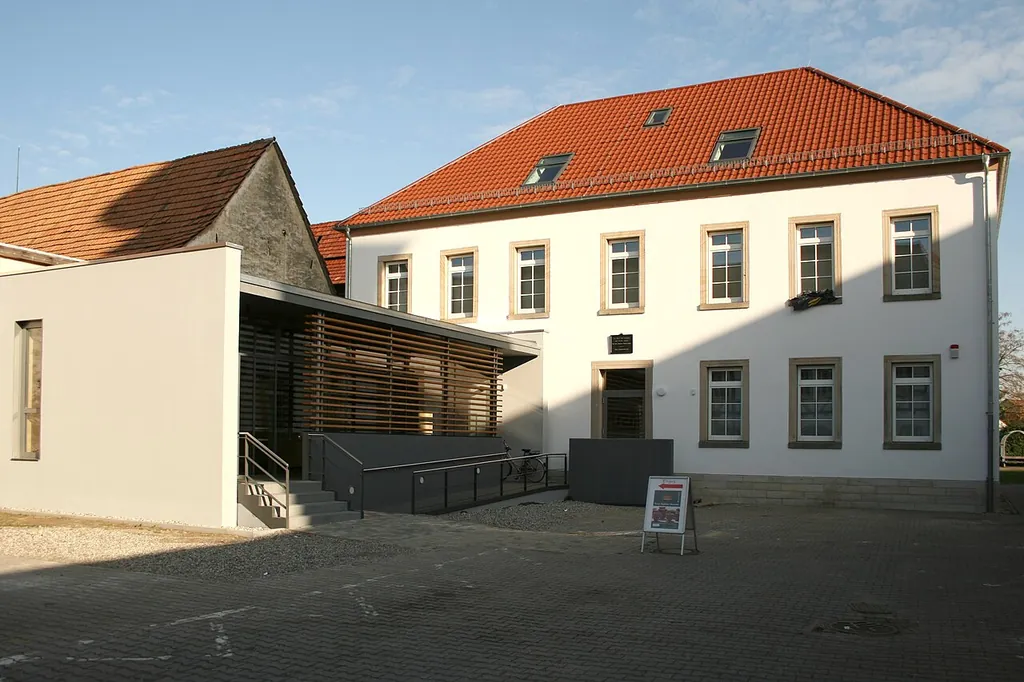
After the large excavations in the "24 Morgen" field, which began in 1975 and lasted until 1995, the association Terra-Sigillata-Museum Rheinzabern was founded in September 1977. In October 1978, a first exhibition room opened on the upper floor of the old schoolhouse. In 1981, a protective structure followed over two kilns preserved at their original location – a brick kiln and a sigillata kiln from around 200 AD – which is integrated into the kindergarten on Faustinastraße. From 1984 until its move to Speyer, the Neupotz hoard of over 1,000 objects was on display on loan.
After several years of planning and a fundraising campaign, which tiles in the stairwell commemorate today, the museum reopened in 2007 with a new design; the exhibition space grew to 320 square meters. Four themed rooms lead through settlement history, everyday life and religion in the vicus, the production technique of sigillata and the trade in the tableware.
The association still runs the museum today, supported by many volunteers; since 2022 there has been a full-time museum director. Since 2021, selected objects have been available online, and in 2023 the museum was named "Museum of the Month" by the state of Rhineland-Palatinate.
Highlights
- Original Roman kilns at the site where they were found (satellite location)
- Molding bowls and tools of Roman sigillata potters
- Partially reconstructed potter's kiln
- Hands-on stations with Roman clothing and scents
- Pottery workshops in the Roman style
Permanent exhibitions
- Zeit und Raum / Lebenswelten – Settlement history of Tabernae and everyday life in the Roman vicus with hands-on stations on clothing, scents, religion and the cult of the dead, as well as building ceramics.
- Terra Sigillata und Töpfermarkt – Production technique of the glossy clay coating, tools and molding bowls, a partially reconstructed kiln as well as distribution, customers and monetary affairs.
- Römische Brennöfen (Außenstelle) – Foundations of a brick kiln and a sigillata kiln from around 200 AD at the original site, visitable with a booked tour.
- Founded
- 1978
- Operated by
- Verein Terra-Sigillata-Museum Rheinzabern e. V.
- Director
- Barbara Thomas
Admission & discounts
| Adults | €3 |
|---|---|
| Children & teens | €1free up to age 5 · Children and teenagers from age 6. |
| Visitors with disabilities | –Concession with severe disability ID (Schwerbehindertenausweis). |
| Groups | –For registered groups, also outside opening hours: tour in the museum or at the kilns (1 hour, max. 15 people) €60 per group, combination of both tours (2 hours) €105, each plus admission. Larger groups are guided in several smaller groups. |
| Public guided tour incl. admission | €8Children from age 6 and teenagers €4 |
Concessions with PfalzCard, Rheinpfalz-Card, JuLeiCa (youth leader card) and Schwerbehindertenausweis (severe disability ID); with an admission ticket from the Museum Herxheim, €0.50 discount per person. Association members have free admission. Tickets only at the museum ticket desk.
Accessibility
- Wheelchair accessible
- Elevator
- Accessible restroom
- Accessible parking: no information
- Service dogs welcome
- Tactile models & exhibits: no information
- Sign language tours: no information
- Easy-to-read materials
- Audio description: no information
Ramp to the foyer and elevator in the building; all exhibition rooms accessible without barriers, many display cases can be rolled under. Accessible restroom in the annex (key at the ticket desk). Mobile seating available. Information in plain language on the website. Trained assistance dogs are allowed.
Kids & families
Great for kids & families
| Kids’ admission | free up to age 5 |
|---|
- Family tours & workshops
- Hands-on stations
- Kids’ birthday parties
Interactive stations: slip into Roman clothing, sniff Roman scents, explore animal tracks and everyday objects. Children's birthday parties for up to 10 children from age 7 with a tour and clay work (2 hours, €75 plus admission and materials). During the Rhineland-Palatinate summer holidays, the "Römerwoche" (Roman Week) takes place with workshops; pottery events can also be booked for families.
Getting there & parking
By public transit
Rheinzabern Bahnhof · 4-min walk · 300 m
S-Bahn lines S51, S52 and S3 (VRN/KVV) to Rheinzabern Bahnhof, from there a 4-minute walk.
By car
Parking available
Parking directly at the museum; entrance to the museum courtyard next to the town hall. Motorhome parking of the local municipality at the Marktplatz.
Amenities & dining
Free brochures on Roman everyday life, local history and the clay industry at the ticket desk; museum publications available. Large bags and backpacks are not allowed in the exhibition rooms.
Events & venue rental
The museum hasn’t published any information on this – please ask the museum directly.
Plan your visit
| Guided tours | yes · approx. 60 min |
|---|---|
| School programs | yes |
| Photography | Photography in the exhibition is not permitted; exception: photos documenting the visit of groups or school classes. |
| Good to know | Public tours once a month on changing topics (1 hour, no registration, tickets at the day ticket desk). Private tours, pottery workshops and the offer "Artes Cenadi et Visitandi" (tour with a Roman-inspired menu, for 15 or more people) on request. For school classes from daycare to upper secondary level, tours and working with clay. Food, drink and dogs (except assistance dogs) are not allowed in the exhibition rooms. |