Vogtlandmuseum Plauen
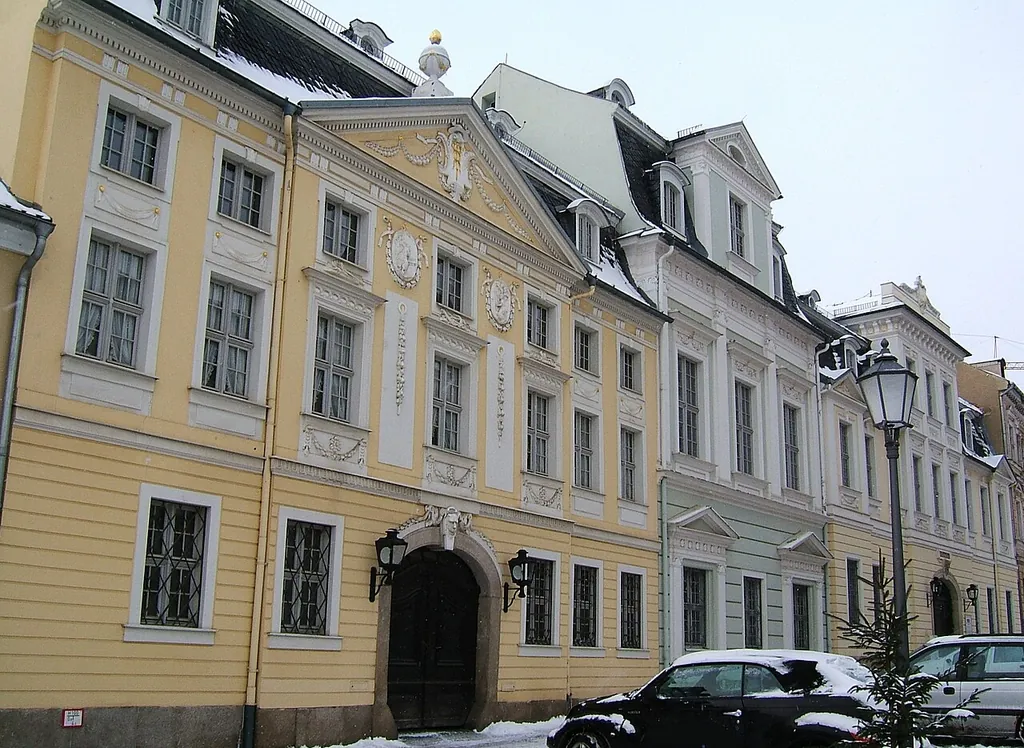
Regional museum of the Vogtland in three neoclassical townhouses in Plauen with a festival hall, period rooms, Napoleon Room, and Vogtland painting.
About the museum
The collection goes back to civic engagement in the late 19th century: in 1873 an antiquarian society was founded in Plauen, and in 1894 a museum society whose holdings were later merged. In 1923 the municipal museum emerged from this and has grown steadily since through purchases and donations.
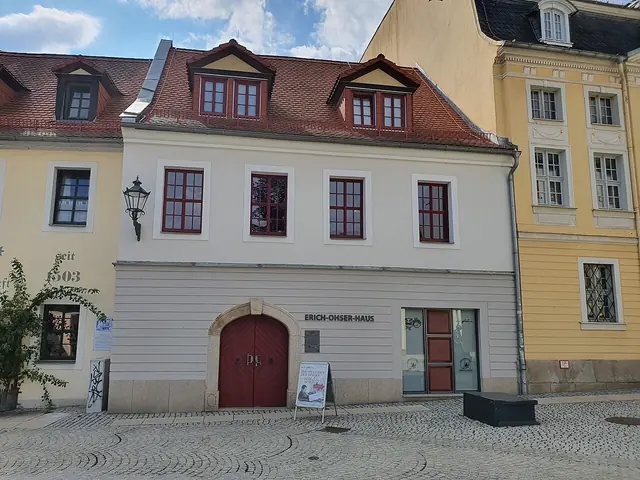
It is housed in three listed residential and commercial buildings on Nobelstraße, which Plauen cotton merchants had built in the late 18th century. Houses no. 9 and 11 were built from 1787 to 1789 for Johann Christian Baumgärtel, no. 13 shortly afterward for the merchant Johann Christian Kanz. Napoleon spent the night in his house in May 1812 on his way to Russia – the room has been preserved as the Napoleon Room. After war damage, the museum was able to reopen in 1946; the destroyed west wing was rebuilt by 1997.
The museum sees itself as the central regional museum for the historic Vogtland, which today includes parts of Saxony, Thuringia, Bavaria, and the Czech Republic. On view are early neoclassical period rooms and a festival hall with valuable stucco work, prehistory and early history, weapons, the "Raum der Vögte" (Room of the Bailiffs) on the history of the territorial bailiffs who gave the region its name, and a gallery with paintings from five centuries. The city's cultural operations also include the Fabrik der Fäden and the Hermann-Vogel-Haus in Krebes.
Highlights
- Festival hall in Louis XVI style from 1787–89
- Early neoclassical period rooms with stucco work
- Napoleon Room, where the emperor spent the night in 1812
- "Raum der Vögte" (Room of the Bailiffs) on the history of the region
- Gallery of Vogtland painting from five centuries
- Hands-on stations in the dialect classroom and the historic classroom
Permanent exhibitions
- Stilzimmer, Festsaal und Napoleonzimmer – Originally preserved bourgeois living rooms of the early neoclassical period with stucco, stoves, and the room where Napoleon spent the night in 1812.
- Raum der Vögte – Documents and objects tell who the medieval bailiffs were and how they shaped the region named after them.
- Galerie Vogtländische Malerei – Paintings from five centuries by artists with a connection to the Vogtland, including a large-format work by Hermann Vogel.
- Founded
- 1923
- Operated by
- Kulturbetrieb der Stadt Plauen
- Director
- Sebastian Dressel (Fachdirektor)
Admission & discounts
| Adults | €7 |
|---|---|
| Reduced | €5People with severe disabilities, unemployed people, holders of the Plauen-Pass/Ehrenamtskarte (volunteer card), schoolchildren, trainees and students (from outside Plauen), federal volunteers, groups of 10 or more people |
| Children & teens | freefree up to age 16 · Children and young people up to age 16 free |
| Visitors with disabilities | €5companion free |
| Students & apprentices | €5Schoolchildren, trainees, and students from outside Plauen; Plauen schools and Studienakademie free |
| Groups (10+ people) | €5 per personper person |
| Evening rate (from 1 hour before closing) | €3.5050% of regular admission |
| Combination ticket "Plauener Schätze" (Vogtlandmuseum + Galerie e.o.plauen, valid for 3 days) | €12reduced €8 |
| Combination ticket "Altstadt trifft Elsteraue" (Vogtlandmuseum or Galerie e.o.plauen + Fabrik der Fäden, valid for 5 days) | €19reduced €13 |
| Combination ticket "Kulturgenuss" (all three venues, valid for 5 days) | €24reduced €16 |
| Annual pass (all museums of the Kulturbetrieb Plauen, 12 months) | €45reduced €35 |
Reduced admission with proof for people with severe disabilities, unemployed people, holders of the Plauen-Pass or Ehrenamtskarte (volunteer card), schoolchildren, trainees, and students from outside Plauen, federal volunteers, and groups of 10 or more people. Free admission for children and young people up to age 16, schoolchildren, trainees, and students of Plauen schools and the Staatliche Studienakademie Plauen, and companions of people with severe disabilities ("B" marker). From one hour before closing, half the admission price applies.
Accessibility
- Wheelchair accessible
- Elevator: no information
- Accessible restroom: no information
- Accessible parking: no information
- Service dogs welcome: no information
- Tactile models & exhibits: no information
- Sign language tours: no information
- Easy-to-read materials: no information
- Audio description: no information
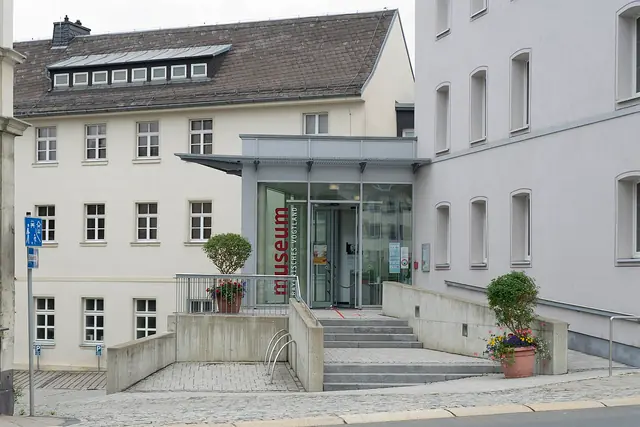
The route to the museum and the exhibition rooms are accessible without barriers.
Kids & families
Great for kids & families
| Kids’ admission | free up to age 16 |
|---|
- Family tours & workshops
- Activity booklet, scavenger hunt or kids’ audio guide
- Hands-on stations
Child-friendly tour with the museum marten Max, museum game, family tours by registration, and holiday programs (e.g., cellar tours, craft activities). Hands-on stations in the dialect room and the historic classroom. Awarded the "Familienurlaub in Sachsen" seal.
Getting there & parking
By public transit
Tunnel
From Oberer Bahnhof take tram lines 4, 5, or 6 to the stop "Tunnel," then follow the signs.
By car
Bus parking by arrangement with the museum team, as the route may change due to construction sites.
Amenities & dining
- Museum shop
Museum shop with publications and souvenirs.
Events & venue rental
The museum hasn’t published any information on this – please ask the museum directly.
Plan your visit
| Guided tours | yes · approx. 45 min |
|---|---|
| School programs | yes |
| Good to know | Guided tours (45 min.) with timely advance registration: €5 per person for groups of 10 to 30 people or €50 flat rate for small groups of up to 10 people; children and schoolchildren €2 per person or €20 flat rate. Special tours (60 min., in a foreign language or with a curator) €10 per person or €100 flat rate; outside opening hours a €5 surcharge per person. Maximum 30 people per tour. Extensive museum education program for school classes, including a historic school lesson, a tour of the cellar vaults, and an archaeology project. |