Archaeological Museum of Argostoli
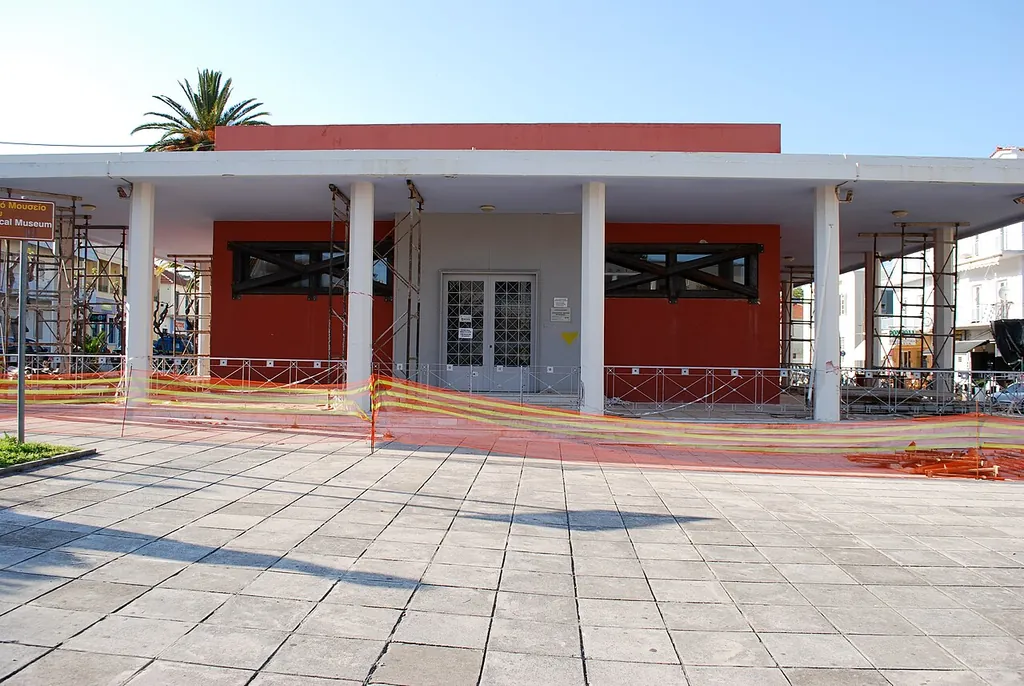
The Archaeological Museum of Argostoli, with finds from Kefalonia from the Palaeolithic to the Roman period, remains closed for reconstruction after the earthquakes of 2014.
Have only individual sections read aloud
About the museum
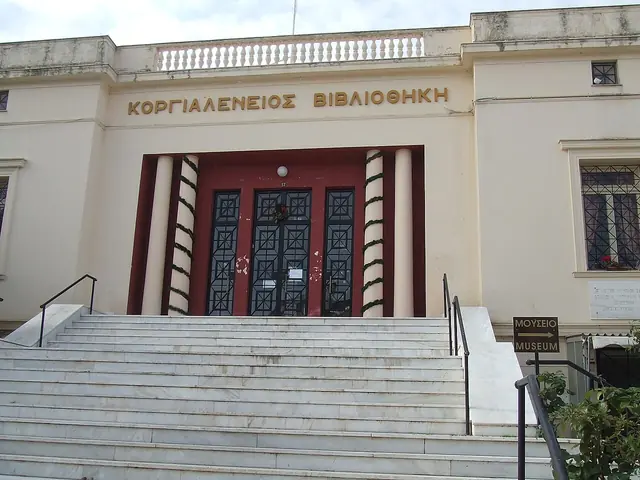
The Archaeological Museum of Argostoli was founded in 1957 to replace the Korgialeneion Archaeological Museum, which had been destroyed by the great earthquake of 1953. The plans were drawn up by the architect Patroklos Karantinos, in the form of a peripteral temple. The building had an entrance hall with a shop and three halls.
The exhibition presented finds from the island from the Palaeolithic to the Late Roman period. The first hall contained flint tools, Neolithic and Middle Helladic objects and Mycenaean finds from Kokkolata. The second was dedicated to the Mycenaean period, the most important for Kefalonia, with nine display cases. The third presented finds from the Kefallenian Tetrapolis of the 5th century BC (Pale, Krani, Pronnoi and Sami) and from the Roman cemetery at Fiskardo.
The strong earthquakes of 2014 caused serious damage, and since then the museum has remained closed to the public. The Ministry of Culture is proceeding with its reconstruction: the building is to be demolished and rebuilt in the same form and with the same volume, with significant changes to the interior.
Highlights
- Mycenaean collection from tombs on Kefalonia
- Finds from the Kefallenian Tetrapolis
- Objects from the Roman cemetery at Fiskardo
- Building by Patroklos Karantinos in the form of a peripteral temple
- Founded
- 1957
- Operated by
- Εφορεία Αρχαιοτήτων Κεφαλληνίας και Ιθάκης
Admission & discounts
The museum hasn’t published any information on this.
Accessibility
The museum hasn’t published any information on this.
Kids & families
The museum hasn’t published any information on this.
Getting there & parking
The museum hasn’t published any information on this.
Amenities & dining
The museum hasn’t published any information on this.
Events & venue rental
The museum hasn’t published any information on this.