Museo Civico di Paleontologia
Civic museum in the Palazzo Ghibellino with fossils and rocks from around the world and a tactile route; open for groups, schools and events.
Have only individual sections read aloud
About the museum
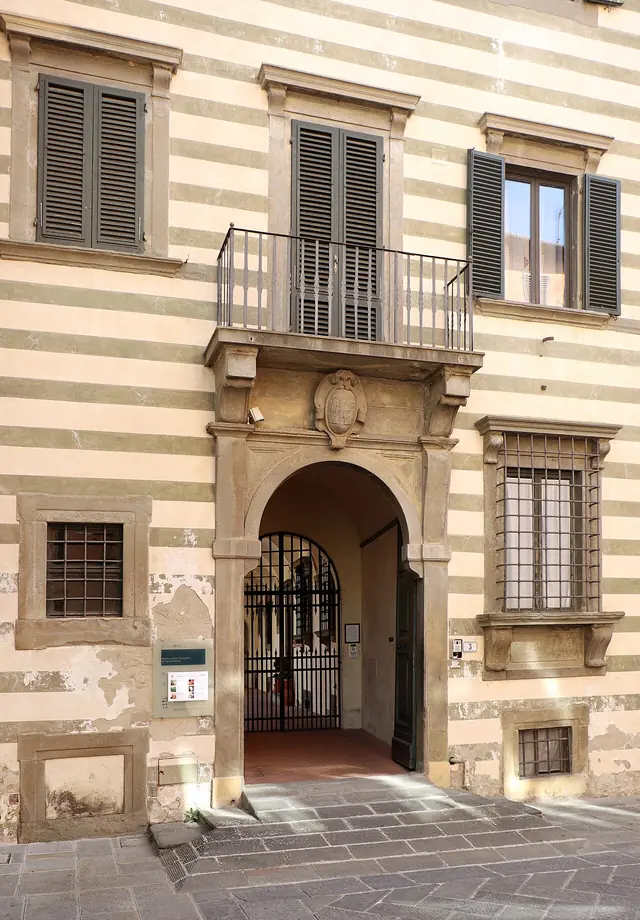
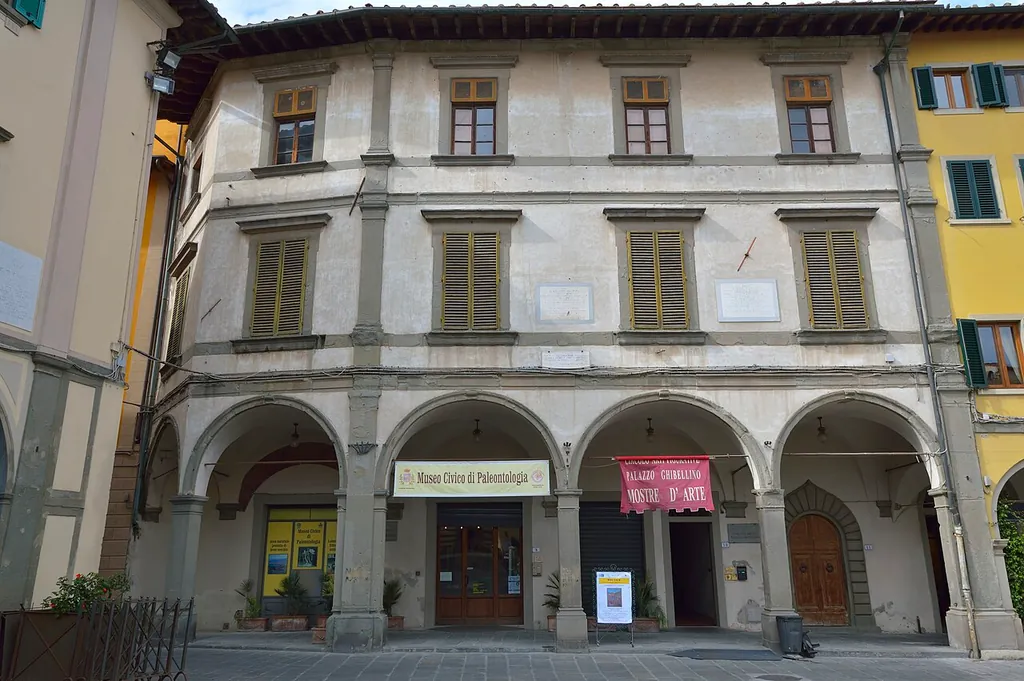
The Museo Civico di Paleontologia was established in 1988 by the Comune di Empoli on the initiative of members of the Gruppo Paleontologico e Mineralogico Empolese. It is housed in the historic Palazzo Ghibellino and from the outset has brought citizens closer to palaeontology, geology and environmental protection; in 1996 the Laboratorio di Educazione Ambientale (environmental education workshop) for schools was set up.
Initially made up of a single room, the museum was expanded into the current route of five rooms. The original core is the Sala delle Ere geologiche (geological eras room); in 1996 the Sala delle Scienze della Terra (earth sciences room) was opened, in 1999 a diorama showing a Velociraptor fighting a Protoceratops was added, and between 2000 and 2001 the room on the evolution of the Arno basin and on hominisation was re-set up.
The collections include fossils and rocks from every part of the world, documenting the last two billion years of Earth's history, with a core of Pliocene molluscs from Tuscany, including those from the former Spicchio quarry in the municipality of Vinci, and a tactile-sensory route.
Highlights
- Life-size diorama with Velociraptor and Protoceratops
- Tuscan Pliocene room with fossil molluscs
- Fossil skeleton of Ursus spelaeus and diorama of cave bear hunting
- Sala delle Ere geologiche from the Palaeozoic to the Quaternary
- Tactile-sensory route for partially sighted and blind visitors
Permanent exhibition
- Percorso espositivo in cinque sale – Earth sciences, geological eras, the Tuscan Pliocene and the evolution of the lower Arno valley and of humans, with dinosaur dioramas and a tactile route.
- Founded
- 1988
- Operated by
- Comune di Empoli – Musei di Empoli
- Visitors per year
- approx. 9,462
Admission & discounts
| Adults | €5 |
|---|---|
| Reduced | €3Under 18s, adults over 65, groups of at least 15 people, agreements |
| Children & teens | €3free up to age 5 · Free admission under 6; reduced rate up to age 18. |
| Visitors with disabilities | freecompanion free · Free admission for people with disabilities and one companion |
| Groups (15+ people) | €3 per personGroups of at least 15 people |
Admission is also free for school classes from Empoli, accompanying teachers (one per 15 pupils), students of art history, cultural heritage, architecture, academies and conservatories, ICOM members, tourist guides and journalists with a press card. Educational activities: free admission for Empoli schools, workshop €2 per student.
Accessibility
- Wheelchair accessible
- Elevator: no information
- Accessible restroom: no information
- Accessible parking: no information
- Service dogs welcome: no information
- Tactile models & exhibits
- Sign language tours: no information
- Easy-to-read materials: no information
- Audio description: no information
The museum is accessible to people with mobility impairments and offers a tactile route for partially sighted and blind visitors.
Kids & families
| Kids’ admission | free up to age 5 |
|---|
- Family tours & workshops
- Hands-on stations
Educational workshops for schools and families; for younger dinosaur fans there is the Velociraptor and Protoceratops diorama and the tactile-sensory route.
Getting there & parking
By public transit
Stazione di Empoli
By train: all Florence–Pisa–Livorno and Florence–Siena lines stop at Empoli station. By bus: connections from the municipalities of the Circondario Empolese-Valdelsa (piubus.it).
By car: from Florence, Pisa or Livorno take the FI-PI-LI expressway to the Empoli exit, then follow the signs for the centre.
Get directionsAmenities & dining
The museum hasn’t published any information on this.
Events & venue rental
The museum hasn’t published any information on this.
Plan your visit
| Guided tours | yes |
|---|---|
| School programs | yes |
| Good to know | Guided tours by reservation and educational workshops for schools and families; the educational programme for the 2026–27 school year includes activities of about two hours. |