Museo Nazionale Romano – Palazzo Massimo
Seat of the Museo Nazionale Romano with portraits, sculptures, frescoes, mosaics and the Medagliere, in a nineteenth-century palace near Termini station.
Have only individual sections read aloud
About the museum
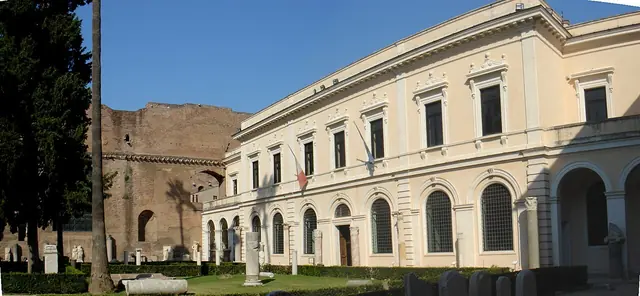
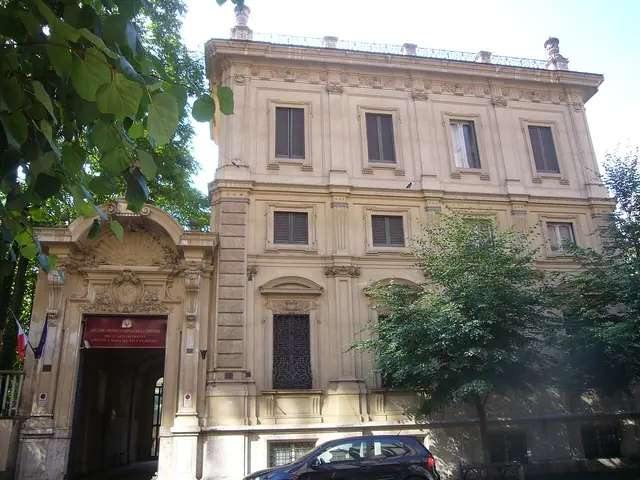
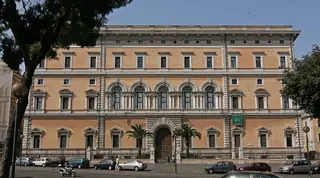
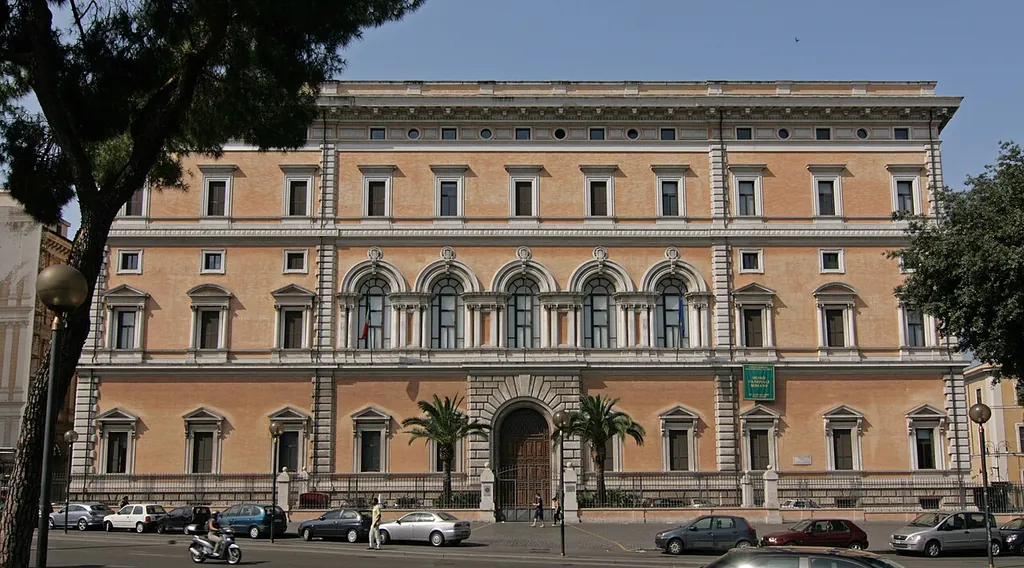
Palazzo Massimo was built between 1883 and 1887 by the Jesuit Massimiliano Massimo, to a design by Camillo Pistrucci and inspired by the great 16th-century palaces, to house the new seat of the Jesuit College. In 1981 it was purchased by the State to become one of the seats of the Museo Nazionale Romano; the radical renovation of the building was entrusted to Costantino Dardi, and the museum opened to the public in 1998.
The exhibition route follows a chronological and thematic approach and, referring to the contexts of discovery, evokes the accumulation of the 16th-century collections. The works come from excavations carried out in Rome and the surrounding area since 1870. It begins with the theme of portraiture and its evolution, with Greek originals such as the Niobide degli Horti Sallustiani, the Pugilatore and the Principe ellenistico, and continues on the first floor with copies and reworkings of ideal sculptures, such as the Discoboli Lancellotti and di Castel Porziano, and with large sarcophagi such as those of Portonaccio, Acilia and the Annona.
The second floor is devoted to frescoes, while the basement houses a selection from the Medagliere of the Museo Nazionale Romano, dedicated to the economy and the use of money, with coins, jewellery, household objects and documents on the cost of everyday life.
Highlights
- Roman portraits, including Augustus as pontifex maximus and the General of Tivoli
- Greek originals such as the Niobide, the Pugilatore and the Principe ellenistico
- Discoboli Lancellotti and di Castel Porziano
- Sarcophagi of Portonaccio, Acilia and the Annona
- Frescoes on the second floor
- Medagliere of the Museo Nazionale Romano in the basement
Permanent exhibitions
- Ritratti, sculture e sarcofagi – Ground and first floors: portraits from the Archaic age to the Empire, Greek originals in marble and bronze, copies of ideal sculptures and large sarcophagi.
- Affreschi – The second floor is entirely devoted to frescoes from the excavations of Rome and its surroundings.
- Medagliere del Museo Nazionale Romano – Basement: coins, jewellery, household objects and documents that tell the story of the economy and the use of money.
- Founded
- 1998
- Operated by
- Ministero della Cultura – Museo Nazionale Romano
- Visitors per year
- approx. 151,077
Admission & discounts
| Adults | €15 |
|---|---|
| Reduced | €2 |
| Groups | –Groups and school classes of up to 25 people, including the accompanying adult. |
| Musei in rete (agreement tickets) | €10 |
| MNR Card, unlimited access for one year | €30Reduced €20 |
Free admission: First Sunday of the month; free openings on 1 November and 4 November 2026.
The single ticket costs €15 and is valid for all seats of the Museo Nazionale Romano, with one entry to each seat within a week of the first entry (the Crypta Balbi site is temporarily closed). Tickets are non-refundable. Conditions for reduced and free admission are on the museum's website.
Accessibility
- Wheelchair accessible
- Elevator
- Accessible restroom
- Accessible parking: not available
- Service dogs welcome
- Tactile models & exhibits
- Sign language tours: no information
- Easy-to-read materials
- Audio description
The route is free of architectural barriers. Accessible entrance to the right of the staircase (ring the intercom); lifts and accessible toilets on the first floor. A wheelchair is available free of charge at each seat. There is no reserved parking, but you can ask to wait in the internal area during the visit, if this does not interfere with museum activities. Free tactile visits by reservation (mn-rm.servizioeducativo@cultura.gov.it), a guide in Braille, simplified-language guides from the “Musei per tutti” project and, in the “MNR su misura” app, audio-described routes and routes in LIS. Staff are trained to give simple directions in LIS.
Kids & families
- Family tours & workshops
The “MNR su misura” app offers routes for children and families. Changing tables at the Terme di Diocleziano and at Palazzo Altemps; pushchairs can be left at the cloakroom or the ticket office.
Getting there & parking
By public transit
Termini
Metro lines A and B, Termini station.
By car
- Accessible parking: not available
Amenities & dining
- Café
- Museum shop: not available
- Coat check
- Lockers: not available
Café Massimo, accessible from inside the museum and from via Giovanni Amendola 6. Unattended cloakroom, without lockers. No bookshop in the Museo Nazionale Romano seats.
Events & venue rental
The museum hasn’t published any information on this.
Plan your visit
| Guided tours | no |
|---|---|
| Audio guide | no |
| School programs | yes |
| Good to know | The museum does not organise guided tours and is temporarily without audio guides: you can book a licensed tourist guide. Entry with large backpacks, trolleys and umbrellas is prohibited. Only small animals in a carrier, guide dogs and pet-therapy animals are admitted. You can sketch from life with authorisation requested in advance at mn-rm@cultura.gov.it. |