Parco museo geologico ex cava del Monticino
Open-air geological museum in a former gypsum quarry in Brisighella: beds of selenite, fossils about 5.5 million years old and information panels, with free admission.
Have only individual sections read aloud
About the museum
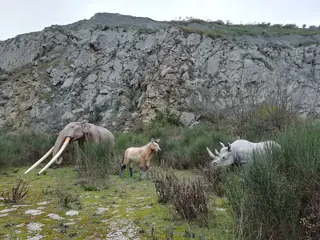
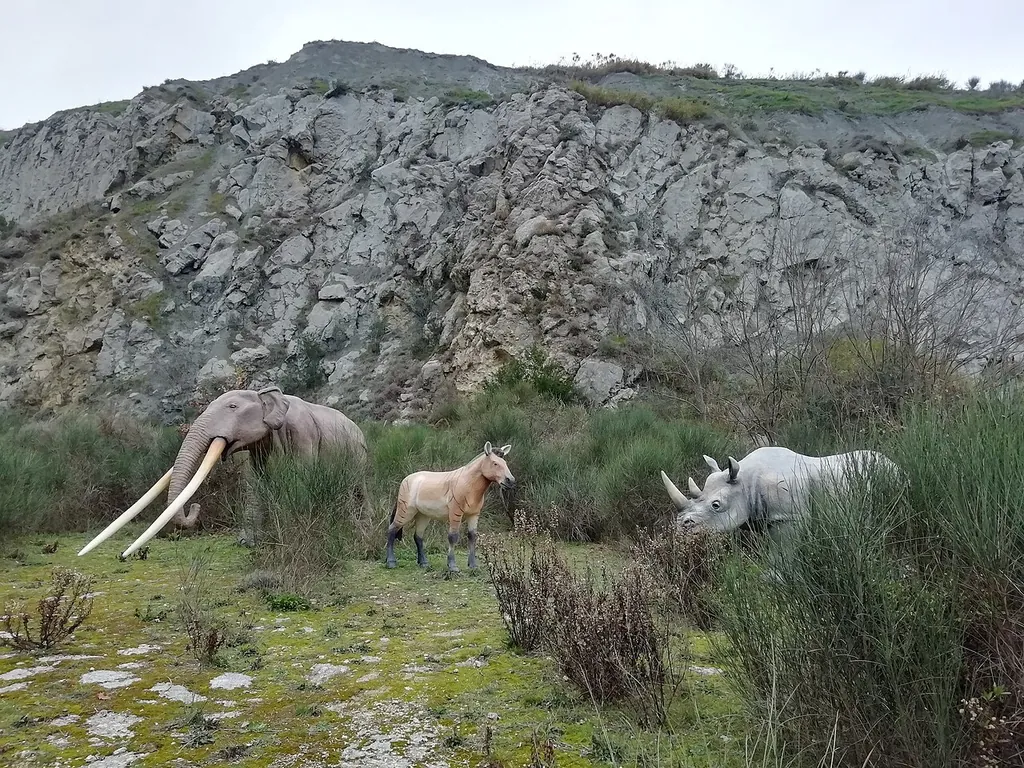
In Brisighella gypsum quarrying began in the late Middle Ages and left its mark on the landscape of the “tre colli” (three hills). In the 20th century the Monticino quarry, behind the village, was one of many active in the Vena del Gesso (gypsum ridge); quarrying was halted in the 1970s and 1980s. In 1985, in some fissures exposed by the works, a fossil deposit of exceptional richness was discovered, with remains of almost 60 species of vertebrates that lived about 5.4 million years ago, including rhinoceroses, monkeys, hyenas and antelopes.
In 1987 Gian Battista Vai proposed converting the quarry into an open-air geological museum. In 2001 the Regione Emilia-Romagna and the municipality of Brisighella signed an agreement for the first works, and between 2005 and 2006 the park-museum was created, with information panels prepared by the University of Bologna. Today the site is managed by the Consorzio di Bonifica della Romagna Occidentale and the Ente di gestione per i Parchi e la Biodiversità Romagna.
The park-museum is freely accessible and allows visitors to walk on an ancient erosion surface of the gypsum formed in the Messinian, and to observe the beds of selenite gypsum with their reflections, the palaeokarst cavities filled with sediment, and the remains of the structures used to extract and transport the gypsum, such as the cableway that carried it to the village. Most of the fossil finds are kept at the Museo civico di Scienze naturali di Faenza.
Highlights
- Beds of selenite gypsum from the Messinian
- Palaeokarst cavities with fossils about 5.5 million years old
- Route with information panels in the former quarry
- Traces of historic gypsum extraction, including the cableway
- Free admission, at the gateway to the Vena del Gesso Romagnola
Permanent exhibition
- Percorso geologico nella ex cava del Monticino – Open-air itinerary among beds of selenite gypsum, fossil-bearing cavities and panels on the Messinian salinity crisis.
- Founded
- 2006
- Operated by
- Consorzio di Bonifica della Romagna Occidentale; Ente di gestione per i Parchi e la Biodiversità Romagna
Admission & discounts
Admission is free.
Free admission.
Accessibility
The museum hasn’t published any information on this.
Kids & families
The museum hasn’t published any information on this.
Getting there & parking
From Brisighella station a signposted historical-geological trail of about 3.4 km, described as easy, leads to the park-museum.
Get directionsAmenities & dining
The museum hasn’t published any information on this.
Events & venue rental
The museum hasn’t published any information on this.
Plan your visit
| Guided tours | yes |
|---|---|
| Good to know | Guided tours with the Guides of the Parco della Vena del Gesso Romagnola, requested through the Ente Parchi Romagna. |