Villa Freischütz
House museum in Merano-Maia Alta: the villa of 1909 preserves the art collection and furnishings of the Fromm family, with over 10,000 original objects.
Have only individual sections read aloud
About the museum
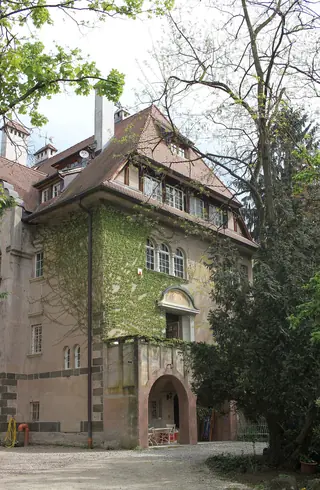
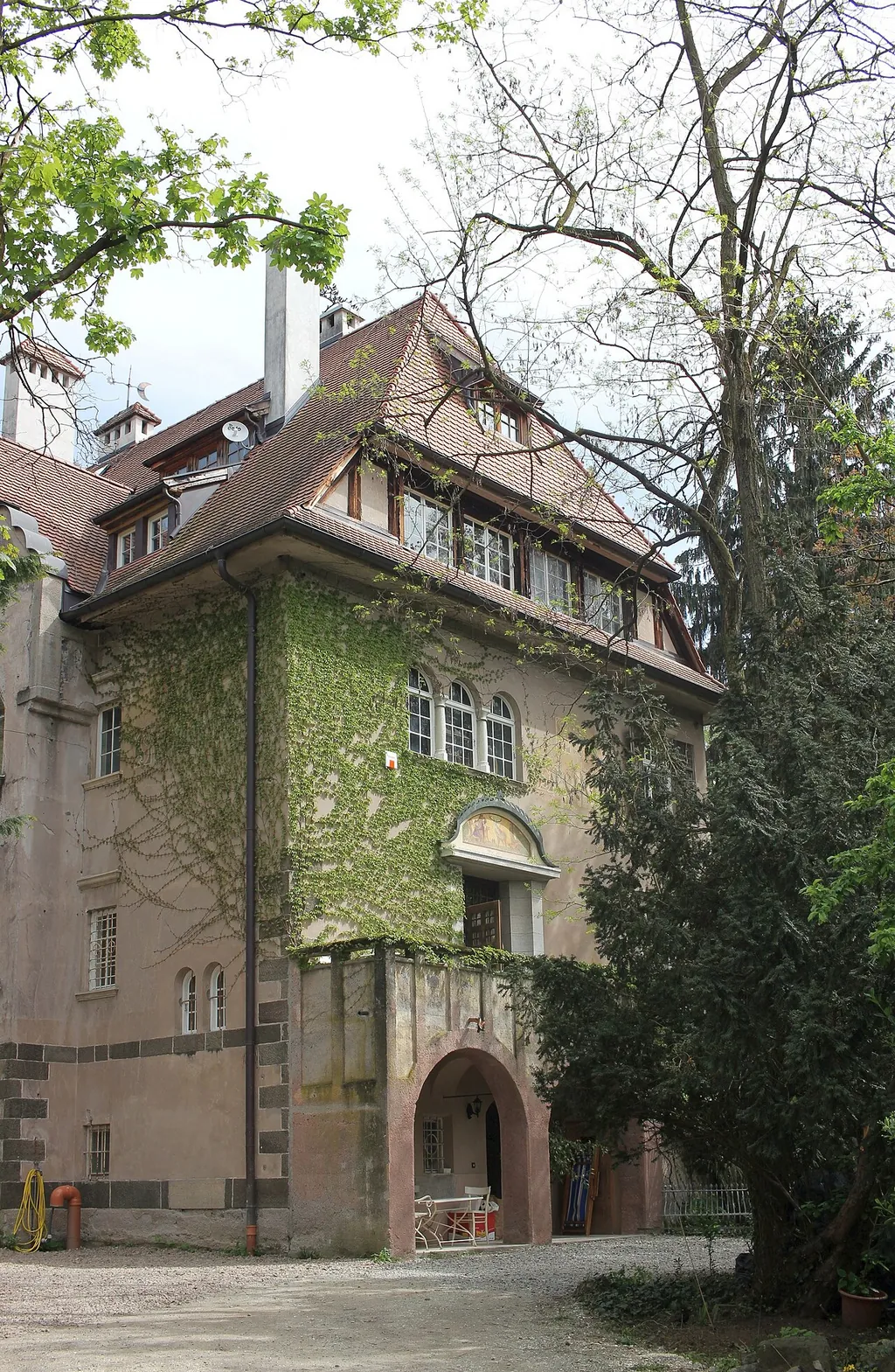
Villa Freischütz was built in 1909 as a summer residence in Merano-Maia Alta, in the golden age of the town as a health resort. In 1921 it was bought by the collector Franz Fromm (1854–1941), a wine merchant born in Prussia and living in Barcelona, who from 1905 had spent the winter seasons with his family in Merano. In the villa, set in a large park, he found a permanent home for himself and for his collection of art and applied arts.
His granddaughter Rosamaria Navarini (1926–2013), who lived in the villa for almost her whole life, provided in her will that her grandfather's collections should be made accessible to the public in a museum in the villa itself. To this end she created the Fondazione Navarini-Ugarte, whose board has worked since 2013 to realise this wish. In April 2019 the house museum opened its doors.
The museum holds over 10,000 original objects: furniture, photographs, clothing, notes and everyday items, still distributed through the rooms as in an inhabited house. The first floor offers two exhibition rooms on the lives of its inhabitants between 1922 and 1941 and allows visitors to see the study and the two sitting rooms of the Fromm family. The second floor, where Rosamaria Navarini lived alone from 1978 to 2013, can only be visited on a guided tour. Around the villa extends the “Giardino della quiete vivente” (garden of living tranquillity), a deliberately wild park with centuries-old trees.
Highlights
- Fromm family collection with over 10,000 original objects
- Study and two sitting rooms of the Fromms on the first floor
- Rosamaria Navarini's apartment on the second floor, guided tours only
- Villa of 1909 in the Heimatstil style
- “Giardino della quiete vivente” with centuries-old trees
- Nominated for the European Museum of the Year Award 2024
- Founded
- 2019
- Operated by
- Fondazione Navarini-Ugarte ETS
- Visitors per year
- approx. 1,061
Admission & discounts
| Adults | €10 |
|---|---|
| Reduced | €8Seniors over 65, young people up to 18, students, persons with disabilities |
| Guided tour of the second floor (by booking) | €10Reduced €8; duration about 1.5 hours |
Accessibility
- Partially wheelchair accessible
- Elevator
- Accessible restroom
- Accessible parking: no information
- Service dogs welcome: no information
- Tactile models & exhibits: no information
- Sign language tours: no information
- Easy-to-read materials: no information
- Audio description: no information
For fire-safety reasons, people with mobility impairments and wheelchair users may visit the villa only when accompanied by staff, and booking is required. A lift serves both floors. A gravel avenue leads to the museum and, as it is a historic villa, there are some thresholds.
Kids & families
Only partly suitable for kids
The museum notes that the exhibition is not suitable for young children.
Getting there & parking
By public transit
Brunnenplatz (Piazza Fontana) · 5-min walk
From the central station, buses 1/1A/1B towards Merano 2000/Giardini di Castel Trauttmansdorff to the Brunnenplatz (Piazza Fontana) stop (access from Via Priami), and line 3 towards Via Virgilio to the Kindergarten Obermais stop (access from Schönblickstraße).
By car
Parking available · 5-min walk to the entrance
Limited parking at the villa, with access from the private road Schönblickstraße 8; the underground car park in Piazza Fontana is about 5 minutes on foot along Via Priami.
Pedestrians and cyclists can also access the villa from Via Priami 7.
Get directionsAmenities & dining
The museum hasn’t published any information on this.
Events & venue rental
The museum hasn’t published any information on this.
Plan your visit
| Guided tours | yes · approx. 1.5 hrs |
|---|---|
| Good to know | The first floor can be visited freely; the second floor only on a guided tour for small groups, by booking, in German or Italian. The garden is accessible during opening hours, at one's own risk. |