Oscarsborg festning
Fortress on the Kaholmene islands off Drøbak with a fortress museum, the Kanonparken (Cannon Park) and the Torpedobatteriet (Torpedo Battery), known for the sinking of the Blücher in 1940.
Have only individual sections read aloud
About the museum
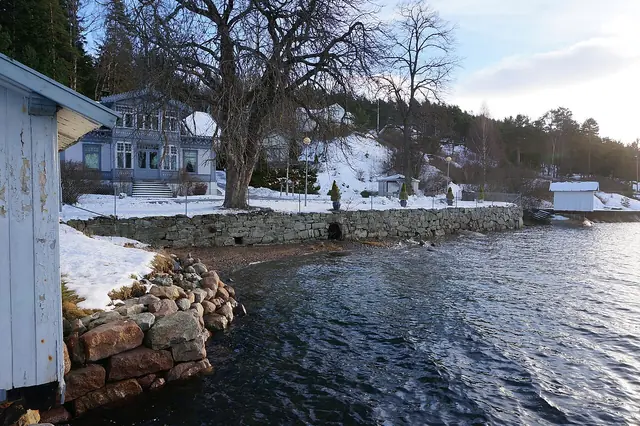
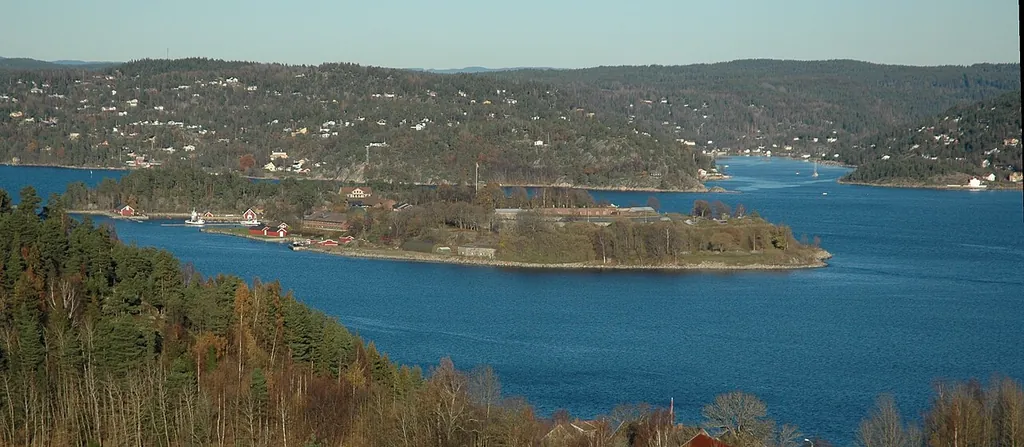
Oscarsborg fortress lies on the islands of Nordre and Søndre Kaholmen in the Oslofjord, just off Drøbak. In 1641 King Christian IV decided that a blockhouse should be built on the Kaholmene, and it was completed in 1643. In the 1830s, plans were discussed for the fortress that we know today. The Havnefortet (Harbour Fort), the round building where the ferry from Drøbak docks, was completed in 1847, the Hovedfortet (Main Fort) in 1853 and all the associated fortifications in 1856. In 1855 the king decided that the fortress should be named Oscarsborg.
The fortress was built to protect the capital against attacks from the sea. It is best known for its role on 9 April 1940, when it sank the German cruiser Blücher. This delayed the German advance and gave the government time to evacuate. After the war the fortress was used for various military purposes, and in 2004 it was opened to the public as a military cultural monument and visitor destination.
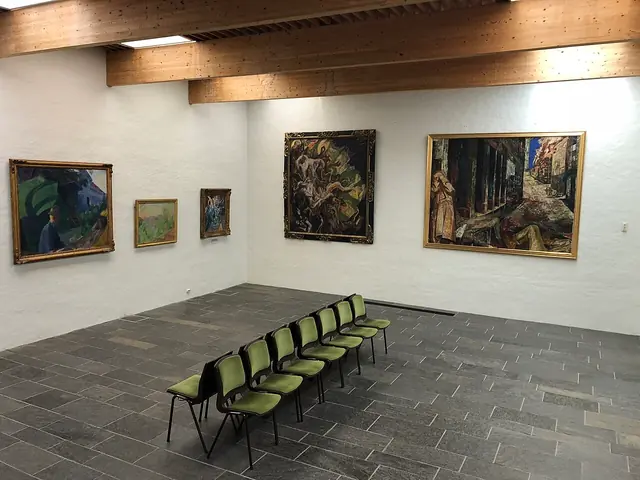
Today there are several museums on the site: the Festningsmuseet (Fortress Museum) shows the development from 1846 to 1905, the Kanonparken (Cannon Park) has guns used by the coastal artillery from 1945 to 1995, the Ildledningsmuseet (Fire Control Museum) shows orographs and fire control systems, and the Torpedobatteriet (Torpedo Battery), which was top secret for many years, can be experienced with a guide. The Kystartillerimuseet (Coastal Artillery Museum) is currently closed. The islands also have beaches, cafés and restaurants.
Highlights
- Festningsmuseet (Fortress Museum) on developments from 1846 to 1905
- Torpedobatteriet, which can be experienced with a guide
- Kanonparken with the coastal artillery's guns
- The story of the sinking of the Blücher on 9 April 1940
- Free admission to the Festningsmuseet
- Ferry crossing from Drøbak
Permanent exhibitions
- Festningsmuseet – Shows how the fortress developed from its beginnings in 1846 through its modernisation up to 1905.
- Torpedobatteriet – Top secret for many years; with a guide, visitors can see the torpedoes that helped sink the Blücher.
- Kanonparken – Collection of guns used by the coastal artillery along the coast from 1945 to 1995.
- Founded
- 1848
- Operated by
- Forsvarsbygg (festningen) og Forsvarshistorisk museum (festningsmuseet)
Admission & discounts
Admission is free.
| Guided tour, 1.5 hours with the Festningsmuseet (group) | NOK 2,500Price per group of up to 35 people. |
|---|---|
| Guided tour, 2 hours with the Festningsmuseet and Torpedobatteriet (group) | NOK 3,000Price per group of up to 35 people. |
Admission to the Festningsmuseet is free during opening hours. The Oscarsborg ferry fare is paid separately, and the ticket must be bought before boarding.
Accessibility
- Partially wheelchair accessible
- Elevator
- Accessible restroom
- Accessible parking: no information
- Service dogs welcome
- Tactile models & exhibits: no information
- Sign language tours: no information
- Easy-to-read materials: no information
- Audio description: no information
The fortress is not specially adapted for people with reduced mobility, but work on universal design is under way. Wheelchairs can be taken on board the ferry. The paths on the islands are partly gravel and partly asphalt, with steep stretches in places and alternative paths to the main sights. The Festningsmuseet in the Hovedfortet and the eating places have a lift or wheelchair access. A separate building has an accessible toilet. A companion with a companion card travels free on the ferry.
Kids & families
Great for kids & families
Oscarsborg has open lawns, cannons and several beaches, and the Festningsmuseet suits children well. Guided tours for school classes are especially tailored to 9th grade.
Getting there & parking
By public transit
Grande
The ferry to Oscarsborg runs all year from Sundbrygga in the north of Drøbak and takes about five minutes. At Sundbrygga the bus stops at the Grande stop. There is also a boat from Oslo (Ruter).
By car
Paid parking
Forsvarsbygg's car park at Husvikveien 37/31, with paid parking about 300 metres from Sundbrygga and HC spaces. One space for people with mobility impairments at Sundbrygga. No charging facilities for electric cars.
Ferry tickets must be bought in advance (a QR code is shown when boarding). Cycling is not permitted on the fortress. Dogs are welcome on a lead but must stay outdoors on the ferry.
Get directionsAmenities & dining
- Café
- Restaurant
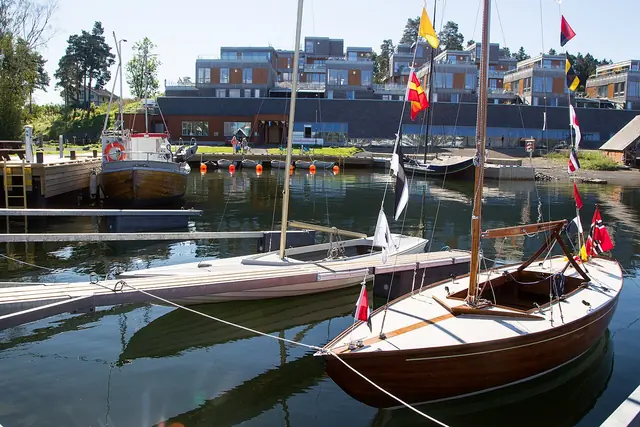
Oscarsborg spiseri, Havnekroa and Oscarsborg hotel & resort serve food. Food brought from home is allowed, but barbecuing is not.
Events & venue rental
The museum hasn’t published any information on this.
Plan your visit
| Guided tours | yes · approx. 1.5 hrs |
|---|---|
| Audio guide | yes |
| School programs | yes |
| Good to know | Visitors can log in on their mobile phone in the museum for a self-guided tour, and earplugs are recommended. Guided tours last from 1 to 2 hours; in summer there are open group tours from 23 June to 17 August, otherwise a guide must be booked for the group. The meeting point is the helipad, or the Borggården (inner courtyard) for the tour “Blüchers hemmeligheter” (Blücher's Secrets). |