Muzeum Archeologiczne w Poznaniu
Museum in the Renaissance Górka Palace, with an exhibition on the prehistory of Greater Poland, collections from Sudan and an obelisk of Ramesses II in the courtyard.
Have only individual sections read aloud
About the museum
The museum has its origins in the Poznań Society of Friends of Learning, which on 23 September 1857 set up the Museum of Polish and Slavic Antiquities in the Grand Duchy of Posen. In 1882 the collections were given the name Mielżyński Museum, and in 1885 an Archaeological Commission was set up within the Society, encouraging excavations and publications. At the end of the 19th century the museum had the largest archaeological collections among the scholarly societies of the Prussian state.
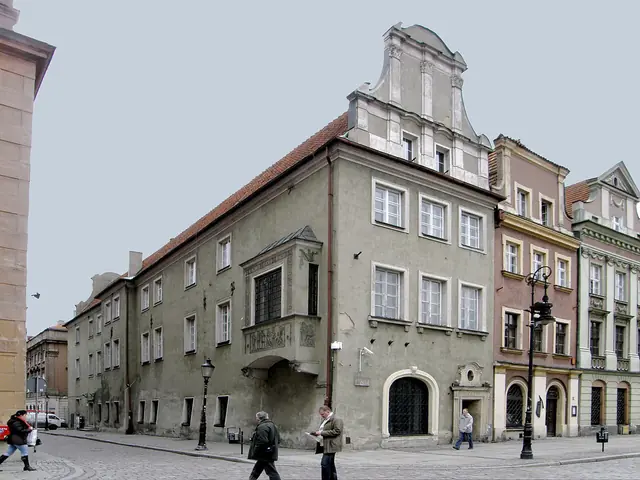
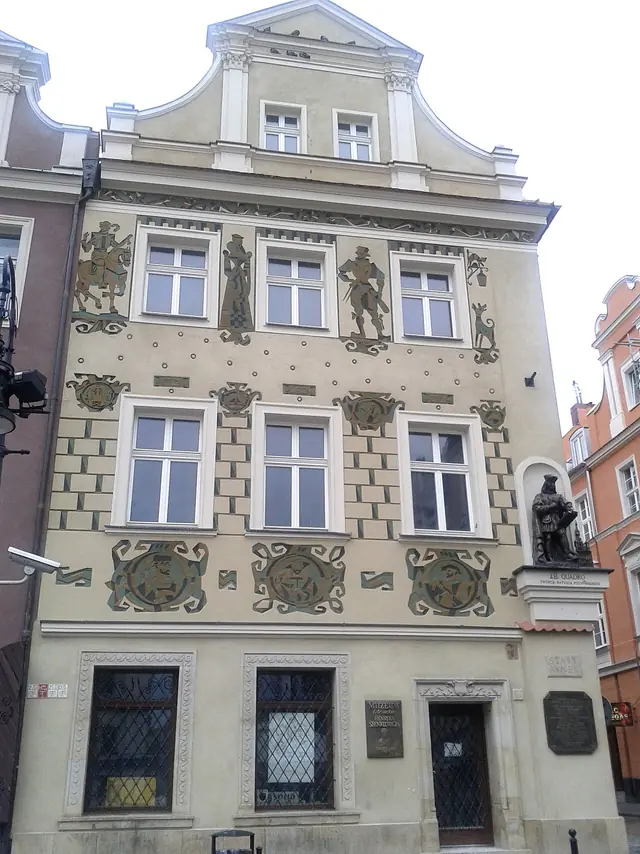
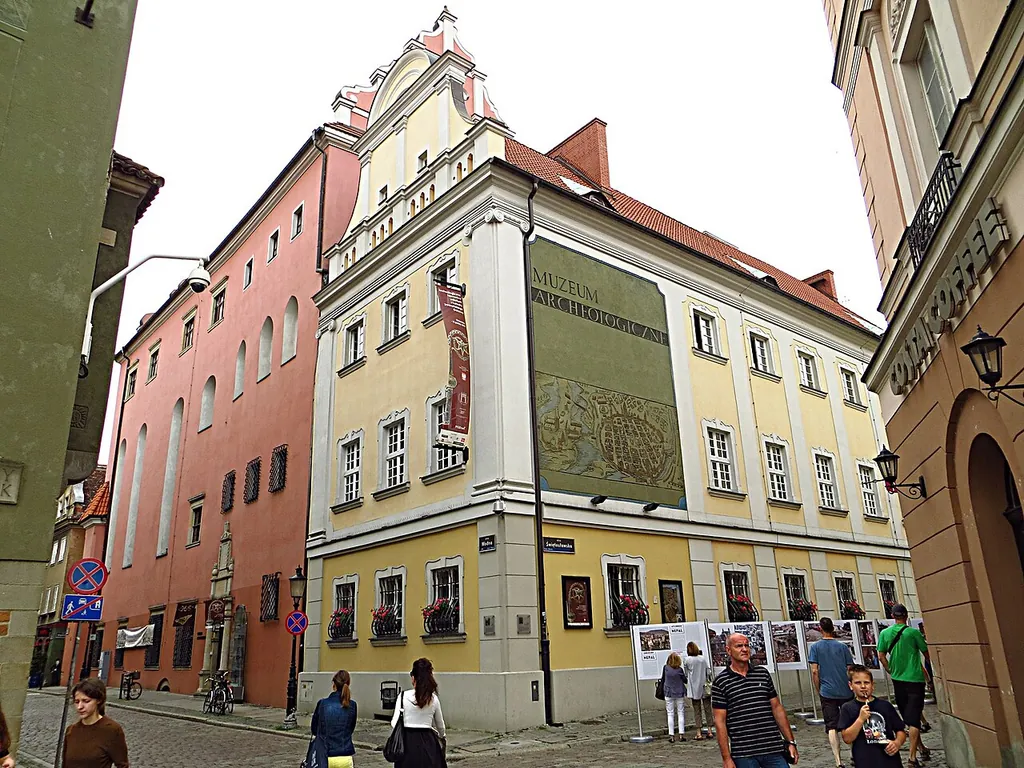
The museum’s seat is the Górka Palace at ul. Wodna. The complex of buildings arose on the estate of the castellan Piotr Szamotulski, and after 1509 Łukasz II Górka and his son Andrzej extended it into a Renaissance palace with an arcaded courtyard. In the 17th century the building was taken over by Benedictine nuns; in the 19th century it housed a girls’ school and a tenement house, and in 1945 it was destroyed. In 1954 it was designated as the seat of the museum and rebuilt according to a design by Aleksander Holas, using a drawing from 1833; the museum opened there on 8 June 1968.
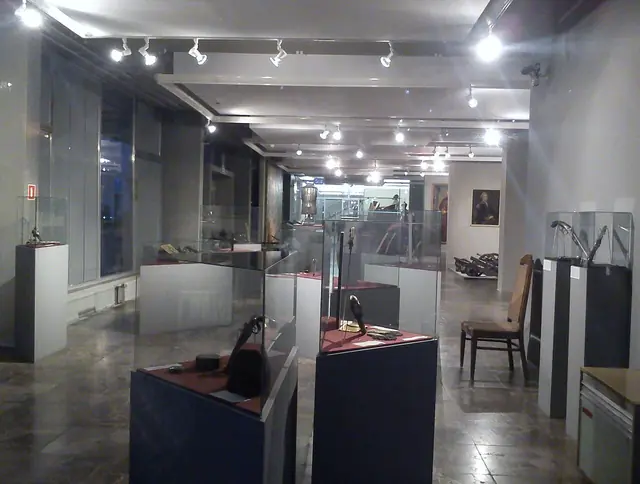
The permanent exhibition includes, among other things, the exhibition ‘Pradzieje Wielkopolski’ (Prehistory of Greater Poland), opened in October 1997, collections from Sudan from Polish research at Kadero and on the Fourth Cataract of the Nile, and rock art of North Africa. In the courtyard stands an obelisk of the Pharaoh Ramesses II.
Highlights
- Obelisk of the Pharaoh Ramesses II in the Renaissance courtyard
- Exhibition ‘Pradzieje Wielkopolski’ with reconstructions of settlements, graves and workshops
- Collections from Sudan from research at Kadero and on the Fourth Cataract of the Nile
- Rock art of North Africa
- Renaissance Górka Palace with a portal from 1548
Permanent exhibitions
- Pradzieje Wielkopolski – The exhibition shows the history of the region from the beginnings of settlement to the end of antiquity, with reconstructions of huts, graves and workshops and multimedia touch kiosks.
- Archeologia Sudanu – The display presents finds from Polish research at Kadero and on the Fourth Cataract of the Nile, and a deposit from the National Museum in Khartoum.
- Obelisk faraona Ramzesa II – An Egyptian obelisk of the Pharaoh Ramesses II stands in the Renaissance courtyard of the museum.
- Founded
- 1857
- Operated by
- Muzeum Archeologiczne w Poznaniu
Admission & discounts
| Adults | 20 zł |
|---|---|
| Reduced | 15 złpersons with disabilities and their carers, and other persons entitled, on presentation of a supporting document (e.g. an ICOM/ICOMOS membership card or Karta Polaka). |
| Visitors with disabilities | 15 złPersons with disabilities and their carers buy the reduced ticket. |
| Groups (11+ people) | 14 zł per personPrice per person for groups of more than 10 people. |
| Families | 50 złFamily ticket for up to six people: up to two adults and four children. |
| Combined ticket Górka Palace and Genius Loci Reserve – standard | 30 zł |
| Combined ticket Górka Palace and Genius Loci Reserve – reduced | 25 zł |
| Family combined ticket (Górka Palace and Genius Loci) | 80 zł |
| Workshops for children | 15 zł |
| Guided tour in Polish (group of up to 25 people, plus admission tickets) | 75 zł |
| Guided tour in English (group of up to 25 people, plus admission tickets) | 100 zł |
| Museum lesson in Polish (group of up to 25 people) | 180 zł |
| Museum lesson in English (group of up to 25 people) | 240 zł |
Free admission: Admission to the museum at ul. Wodna 27 is free every Tuesday.
Ticket prices for the Górka Palace and the Genius Loci Archaeological Reserve are the same; a combined ticket is also available. Audio guides for the permanent exhibitions are free from Tuesday to Sunday, and groups can book them by phone (+48 61 628 55 62).
Accessibility
- Wheelchair accessible
- Elevator
- Accessible restroom
- Accessible parking: no information
- Service dogs welcome
- Tactile models & exhibits
- Sign language tours: no information
- Easy-to-read materials: no information
- Audio description: no information
The building is adapted for wheelchair users: on the ground floor there is a ramp leading to a spacious lift, and a stair-climbing device also operates between the floors. The most convenient entrance is from ul. Klasztorna through the courtyard, which can be reached by car; at the door from ul. Wodna there is a button to call staff. There are no thresholds in the exhibition rooms. The accessible toilet is on level -1 next to the cloakroom. Larger groups of wheelchair users are asked to register at the ticket office (tel. +48 61 852 82 51 ext. 206). Guide dogs are welcome, and a water bowl is provided for them. The Little Explorer Museum (Muzeum Małego Odkrywcy) has Braille descriptions and tactile copies of artefacts.
Kids & families
Great for kids & families
| Family ticket | 50 zł · Family ticket for up to six people: up to two adults and four children. |
|---|
- Family tours & workshops
- Hands-on stations
The museum runs children’s workshops (PLN 15), museum lessons and the Little Explorer Museum; a family ticket is available. The exhibition ‘Pradzieje Wielkopolski’ has multimedia touch kiosks.
Getting there & parking
The museum hasn’t published any information on this.
Amenities & dining
- Museum shop
- Coat check
The building houses a museum shop with the ticket desk; the cloakroom is on level -1.
Events & venue rental
The museum hasn’t published any information on this.
Plan your visit
| Guided tours | yes |
|---|---|
| Audio guide | yes (PL, EN) |
| School programs | yes |
| Good to know | Guided tours take place Tuesday to Friday; on Saturdays only in special cases, with notice given one month in advance; booking under +48 61 628 55 62. Touch-screen multimedia kiosks stand in each period section of the exhibition ‘Pradzieje Wielkopolski’. |