Muzeum Tkactwa w Kamiennej Górze
Museum in a Baroque townhouse with the richest collection in Lower Silesia of flax-processing and weaving equipment, plus middle-class interiors.
Have only individual sections read aloud
About the museum
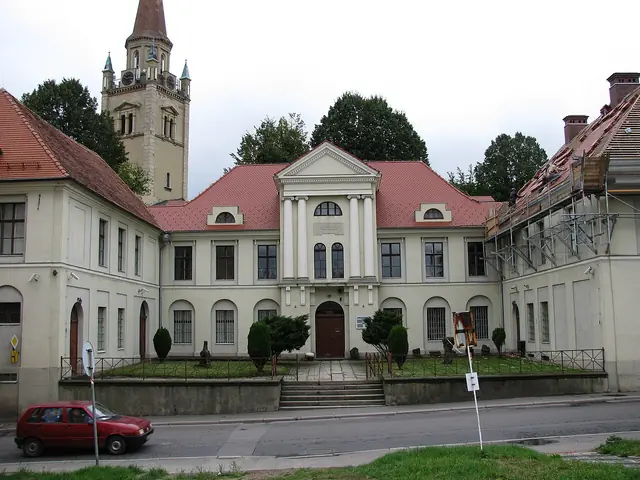
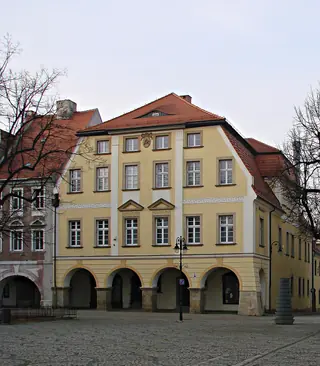
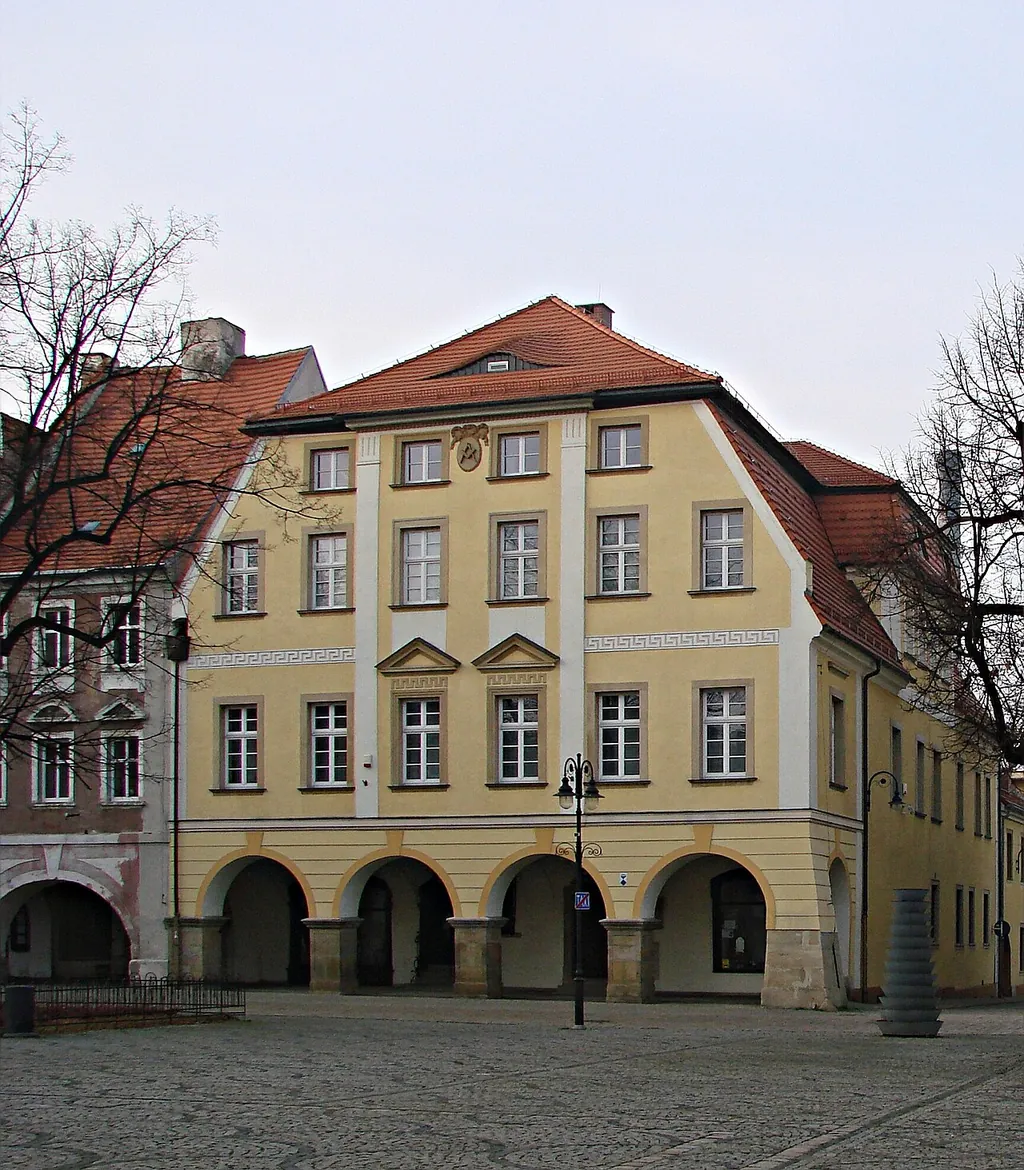
The museum was founded in the 1930s by a group of regional enthusiasts. In 1932 the Towarzystwo Muzeum Regionalnego powiatu kamiennogórskiego (Society of the Regional Museum of the Kamienna Góra District) set up a commission to gather and study the collections, and the solemn opening of the Muzeum Regionalne took place in June 1939. Its seat became the middle-class townhouse on Plac Wolności (Freedom Square), which in the 18th century belonged to the merchant Johann David Fischer; the museum took over the premises of a dissolved Masonic lodge. From the outset it was intended that the leading profile would be weaving and textiles.
After the war the museum resumed its activity in 1947; from 1969 it operated as the Muzeum Tkactwa Dolnośląskiego (Lower Silesian Weaving Museum), and since 2011 it has carried its present name. In 2008 a thorough renovation was carried out with funds from the commune and the European Union. The courtyard of the townhouse was covered with a glass roof, and the museum occupies the entire Baroque townhouse together with a three-winged annex, adapted for people with disabilities.
The collections are divided into sections: weaving (tools for processing fibres, looms, fabrics, elements of folk costume and contemporary art weaving), historical and numismatic (maps, documents, coins, banknotes), and art (paintings, graphics, Silesian reverse glass paintings, folk furniture). The institution also runs a library with more than 3,500 volumes and 136 early printed books, as well as museum lessons and workshops.
Highlights
- The richest collection in Lower Silesia of flax-processing and weaving equipment
- Jacquard loom with a perforated pattern tape
- Room with Silesian painted furniture and reverse glass paintings
- Middle-class salon with portraits of merchants and manufacturers
- Baroque townhouse with a glazed courtyard
- Free admission on Mondays
Permanent exhibitions
- Z dziejów tkactwa ludowego – The richest collection in Lower Silesia of flax-processing and weaving equipment: looms, spinning wheels, spindle whorls and a Jacquard loom.
- W izbie – Interior with household items and work tools, painted folk furniture, reverse glass paintings and Silesian folk costume.
- W salonie – Middle-class salon with furniture and equipment, and portraits of merchants, industrialists and well-known residents of Kamienna Góra.
- Founded
- 1939
- Operated by
- Miasto Kamienna Góra
- Director
- Małgorzata Ogonowska
Admission & discounts
| Adults | 15 zł |
|---|---|
| Reduced | 10 złpupils, students, pensioners and disability pensioners |
| Seniors | 10 złReduced ticket for pensioners and disability pensioners. |
| Students & apprentices | 10 złReduced ticket for pupils and students. |
| Museum lesson (preschool group or class of up to 24 people) | 100 zł |
| Pass for 5 museum lessons | 450 zł |
Free admission: On Mondays admission to the museum is free of charge.
Accessibility
- Wheelchair accessible
- Elevator: no information
- Accessible restroom: no information
- Accessible parking: no information
- Service dogs welcome: no information
- Tactile models & exhibits: no information
- Sign language tours: no information
- Easy-to-read materials: no information
- Audio description: no information
After the 2008 renovation the building was adapted to the needs of people with disabilities.
Kids & families
Great for kids & families
- Family tours & workshops
- Hands-on stations
Museum lessons and workshops have been prepared for children and young people, and weaving and spinning demonstrations for tourists.
Getting there & parking
The museum hasn’t published any information on this.
Amenities & dining
The museum hasn’t published any information on this.
Events & venue rental
The museum hasn’t published any information on this.
Plan your visit
| School programs | yes |
|---|---|
| Good to know | The museum organises museum lessons and workshops for school and preschool groups, and weaving and spinning demonstrations for tourists. |