Państwowe Muzeum Etnograficzne w Warszawie
A museum of world cultures in the historic building at ul. Kredytowa; permanent exhibitions on Africa, Asia and Korea and collections from all continents.
Have only individual sections read aloud
About the museum
The State Ethnographic Museum in Warsaw dates back to the end of the 19th century. The tradition began with the expedition of Stefan Szolc-Rogoziński and Leopold Janikowski to Africa in 1882–1884; the objects collected then came to Warsaw and became the basis of the collection. In 1886, on the initiative of Jan Maurycy Kamiński, an organising committee for the museum was set up, and on 14 April 1888 the Ethnographic Museum was opened next to the Warsaw Zoological Garden.
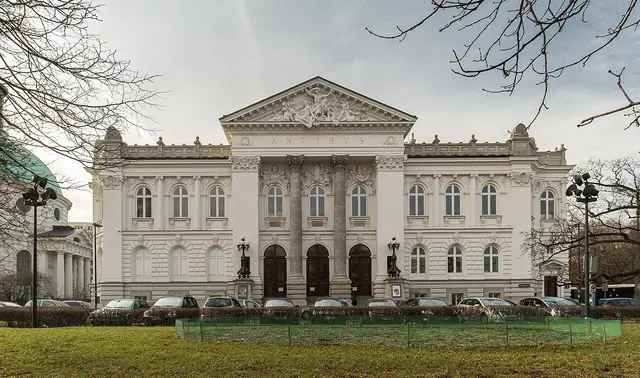
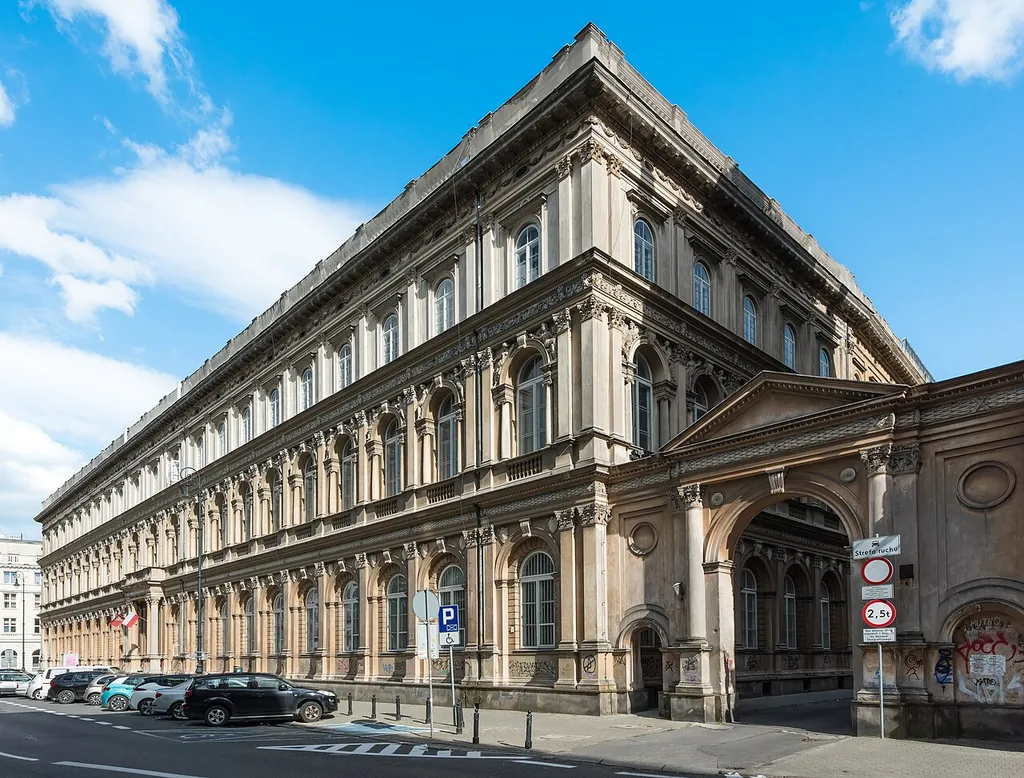
When the garden was closed in 1890, the collections were threatened with removal to Petersburg. A group of Polish researchers and philanthropists, headed by Jan Karłowicz, bought them at their own expense. As the tsarist authorities did not agree to the institution being legalised, the “Stała wystawa etnograficzna” (Permanent Ethnographic Exhibition) was opened in 1892. The collections changed location several times, and in time the museum gave rise to the present institution, which today is housed in the historic building at ul. Kredytowa 1.
The collections cover the cultures of all continents: the African collections number more than 11,700 objects, and the American and Asian collections about 5,000 each. The museum presents them in permanent exhibitions, including “Afrykańskie wyprawy, azjatyckie drogi” (African Expeditions, Asian Roads), the Korean Gallery and “Porządek rzeczy” (The Order of Things). Today it focuses on a critical look at the history of its own collections and on cooperation with the communities whose cultures are represented in them.
Highlights
- Permanent exhibition “Afrykańskie wyprawy, azjatyckie drogi” on two floors
- Korean Gallery with domestic interiors and contemporary design
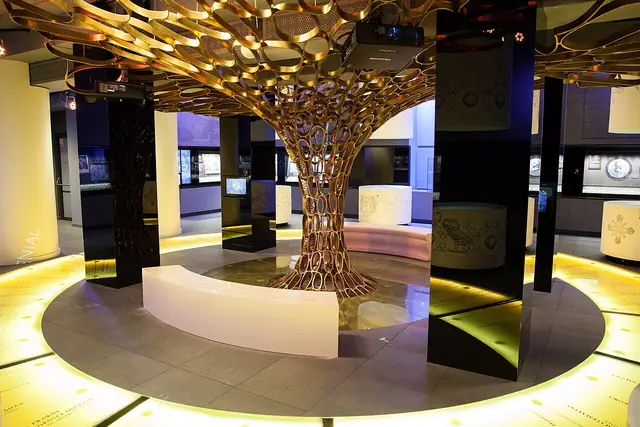
- “Porządek rzeczy” – a storage-style exhibition of tools and crafts
- Collections from all continents, including more than 11,700 objects from Africa
- Free Thursday admission and a café in the building
- Guided tours in PJM, with audio description and in easy language
Permanent exhibitions
- Afrykańskie wyprawy, azjatyckie drogi – Permanent exhibition on the cultural heritage of Africa and Asia from the museum’s collections, shown on two floors; it presents the continents as seen through the collections of the 19th and 20th centuries.
- Galeria Koreańska – An intimate exhibition combining 19th-century design with contemporary Korean design, shown as a domestic space with a men’s and a women’s part.
- Porządek rzeczy – An exhibition in the form of a museum storeroom with tools for farming, fishing, beekeeping and crafts, and a digital inventory of the collections.
- Founded
- 1888
Admission & discounts
| Adults | 21 zł |
|---|---|
| Reduced | 16 złPeople studying beyond the age of 26, people from the age of 65, pensioners, disability pensioners, people with disabilities and their carers, teachers, veterans and holders of the Euro26 card. |
| Children & teens | 5 złfree up to age 7 · Children up to the age of 7 enter free of charge; pupils up to the age of 26 pay PLN 5. |
| Visitors with disabilities | 16 złPeople with disabilities living in Masovia, together with their carers, may buy a ticket for PLN 1 under the programme “Wsparcie osób z niepełnosprawnościami na Mazowszu” (Support for People with Disabilities in Masovia). |
| Students & apprentices | 5 złPupil and student ticket, PLN 5, for people up to the age of 26 on presentation of a student ID. |
Free admission: Every Thursday – free admission to all current exhibitions.
Prices apply to the permanent exhibitions and the family exhibition. Holders of the Karta Dużej Rodziny receive a 25% discount on individual tickets, and passengers of Koleje Mazowieckie 20% until the end of 2026 (on presentation of a rail ticket). On selected days the “Płać, ile możesz” (Pay What You Can) campaign applies (PLN 5, 10, 15, 20, 30, 50 or 90).
Accessibility
- Wheelchair accessible
- Elevator
- Accessible restroom
- Accessible parking
- Service dogs welcome
- Tactile models & exhibits
- Sign language tours
- Easy-to-read materials
- Audio description
At the main entrance there is a lift platform (load capacity 300 kg), which is used after calling staff by intercom; a wheelchair can be borrowed in the foyer. The building has two lifts, threshold-free entrances to the rooms and an adapted toilet on level −1. There is an induction loop at the ticket office and remote PJM interpretation (Migam app). Tactile plans, 14 Totupoint voice markers and Braille texts in some exhibitions are available. There is a parking space for people with disabilities in front of the entrance. Renovation is under way at present: steps with handrails temporarily lead to the main entrance, and the lift platform remains in use. Accessibility contact: tel. 512 940 167 (Mon–Fri 8:00–16:00).
Kids & families
Great for kids & families
| Time needed | approx. 2 hrs |
|---|---|
| Kids’ admission | free up to age 7 |
- Family tours & workshops
- Kids’ birthday parties
The museum has the family exhibition “Спільні домівки / Domy wspólne” (Shared Homes), runs museum lessons and workshops for families, including for children on the autism spectrum. Birthday parties at the museum for children aged 5–12 (up to 20 children) take place at weekends and last 2.5 hours. Pushchairs can be taken into the museum using the lift platform and the lifts.
Getting there & parking
By public transit
Królewska
Metro: Świętokrzyska (M1), Nowy Świat (M2). Buses: Królewska stop (151, 171, 520), Uniwersytet (106, 111, 116, 128, 175, 178, 180, 503, 518, E-2), Plac Małachowskiego (107). Trams: Królewska and Metro Świętokrzyska stops (4, 15, 16, 18, 36).
By car
Paid parking
In front of the entrance there are a dozen parking spaces (including for people with disabilities), paid Monday to Friday. During the renovation parking by the building is restricted; the museum recommends the underground car park at Plac Powstańców Warszawy.
- Accessible parking
The Veturilo city bike station “plac Małachowskiego” is about 150 m from the museum. Bicycle racks in front of the building are temporarily out of use.
Get directionsAmenities & dining
- Café
- Coat check
- Lockers
The café on the ground floor serves speciality coffee, pastries, breakfasts and lunches. The cloakroom is free of charge, with lockable lockers; backpacks, bags, suitcases and umbrellas are left in the cloakroom.
Events & venue rental
The museum hasn’t published any information on this.
Plan your visit
| Guided tours | yes |
|---|---|
| School programs | yes |
| Good to know | The museum recommends at least two hours to see all the exhibitions carefully. Individual tickets are bought at the ticket office or online (no booking required); only museum lessons and groups are booked (rezerwacje@ethnomuseum.pl). The museum runs regular tours in PJM, with audio description and in simple Polish. Visitors may enter with a dog on a lead (muzzled if necessary). |