Zamek Golubski
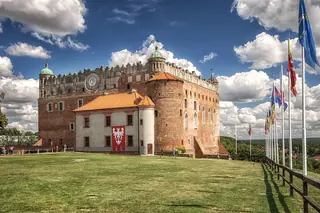
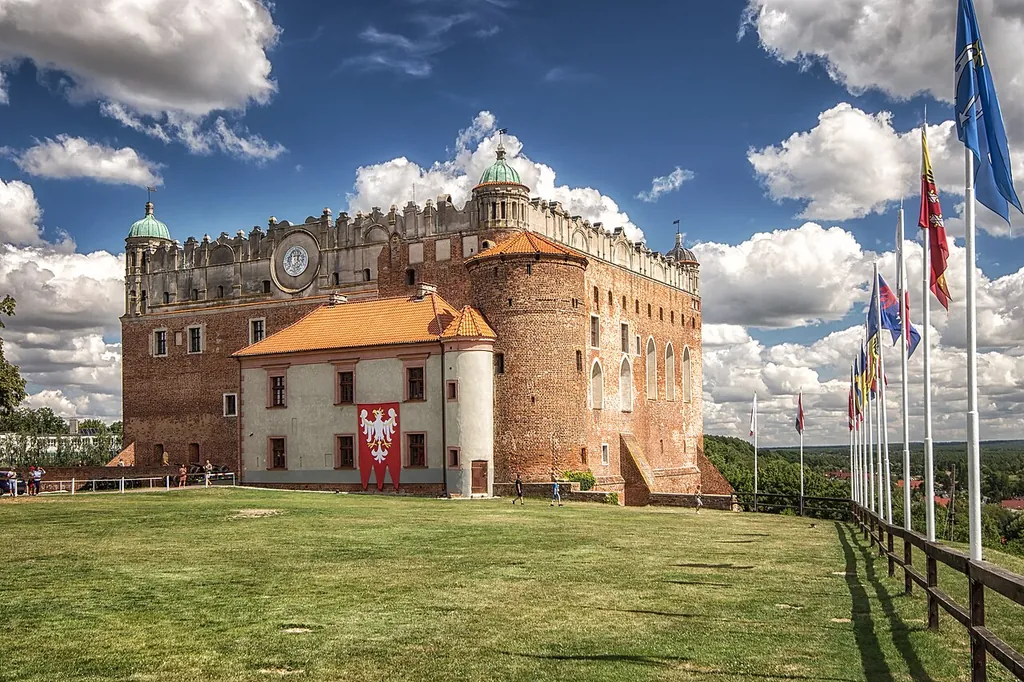
Teutonic Order castle in Golub-Dobrzyń, later the Renaissance residence of Anna Vasa, with the Centre of Herbalism, a stable and a hussar banner.
Have only individual sections read aloud
About the museum
Construction of the stone Teutonic Order castle began around 1300 under the commander Konrad von Sack. It was meant to combine a monastery with a fortress, and the high castle was completed around 1330. For centuries it guarded the Polish–Teutonic border: in 1410, after the death of the commander Mikołaj de Roder at Grunwald, the garrison surrendered the castle to the Poles almost without a fight, and in 1422 Władysław Jagiełło besieged it during the Golub War. After the Second Peace of Thorn in 1466 the castle came under Polish rule and was administered by royal starostas.
Around 1623 Anna Vasa, sister of Sigismund III, rebuilt the monastery-castle into a Renaissance residence, replacing defensive elements with decorative ones. She was interested in botany and herbal medicine, and gardens were laid out on the southern slopes. After 1772 the castle belonged to Prussia and served as an office and a residence, falling into ruin; from 1883 a school was housed in it, and in 1920 a regional museum opened.
In 1939–1944 the castle was occupied by the German authorities, and it was damaged during and after the war. After the Second World War it was rebuilt and gradually furnished, emphasising Polish history and its Renaissance character. Today the castle is run by the Golub-Dobrzyń branch of the PTTK (Polish Tourist and Sightseeing Society), named after Zygmunt Kwiatkowski; it can be visited individually or with a guide, and on the premises there are the Kuyavian-Pomeranian Centre of Herbalism named after Anna Vasa (Kujawsko-Pomorskie Centrum Zielarstwa), the castle stable and a hussar banner.
Highlights
- Teutonic Order castle from the early 14th century, later the Renaissance residence of Anna Vasa
- Kuyavian-Pomeranian Centre of Herbalism named after Anna Vasa
- Hussar banner and the castle stable “Pałasz”
- Individual visits with a map or guided tours
- Knights' tournaments, balls and other recurring events
Permanent exhibition
- Kujawsko-Pomorskie Centrum Zielarstwa im. Anny Wazówny – The exhibition in the former reception and the tower presents herbs, herbals and equipment for making herbal preparations; its patron is Anna Vasa.
- Operated by
- Oddział PTTK im. Zygmunta Kwiatkowskiego w Golubiu-Dobrzyniu
Admission & discounts
| Adults | 30 zł |
|---|---|
| Reduced | 20 złstudents, seniors, people with disabilities |
| Children & teens | 15 złChildren and young people up to 16. |
| Groups (5+ people) | –A guide for organised groups costs PLN 80; guided tours are possible for groups of 5 or more people. |
| Families | 15 złHolders of the Large Family Card pay PLN 15 per person. |
Parking: cars up to 10 minutes free, first hour PLN 5, second hour PLN 10, maximum PLN 20 per day; coach or motorhome PLN 50. On event days a flat fee applies.
Accessibility
- Wheelchair accessible: no information
- Elevator: no information
- Accessible restroom: no information
- Accessible parking: no information
- Service dogs welcome: no information
- Tactile models & exhibits: no information
- Sign language tours: no information
- Easy-to-read materials: no information
- Audio description: no information
The castle's website does not describe accessibility; people with disabilities buy the reduced ticket. Details can be obtained by calling +48 56 683 24 55.
Kids & families
| Family ticket | 15 zł · Holders of the Large Family Card pay PLN 15 per person. |
|---|
Children and young people up to 16 pay PLN 15; holders of the Large Family Card also pay PLN 15 per person.
Getting there & parking
By car
Paid parking
Paid unguarded car park: up to 10 minutes free, first hour PLN 5, second hour PLN 10, maximum PLN 20 per day; coach or motorhome PLN 50.
The castle lies in Golub, part of the town of Golub-Dobrzyń, on the River Drwęca.
Get directionsAmenities & dining
- Restaurant
The castle has the Herbarium restaurant; accommodation in the castle is also available.
Events & venue rental
The museum hasn’t published any information on this.
Plan your visit
| Guided tours | yes |
|---|---|
| Good to know | Individual visitors can walk around the castle independently with a map from reception. Guided tours are available for groups of 5 or more people. |