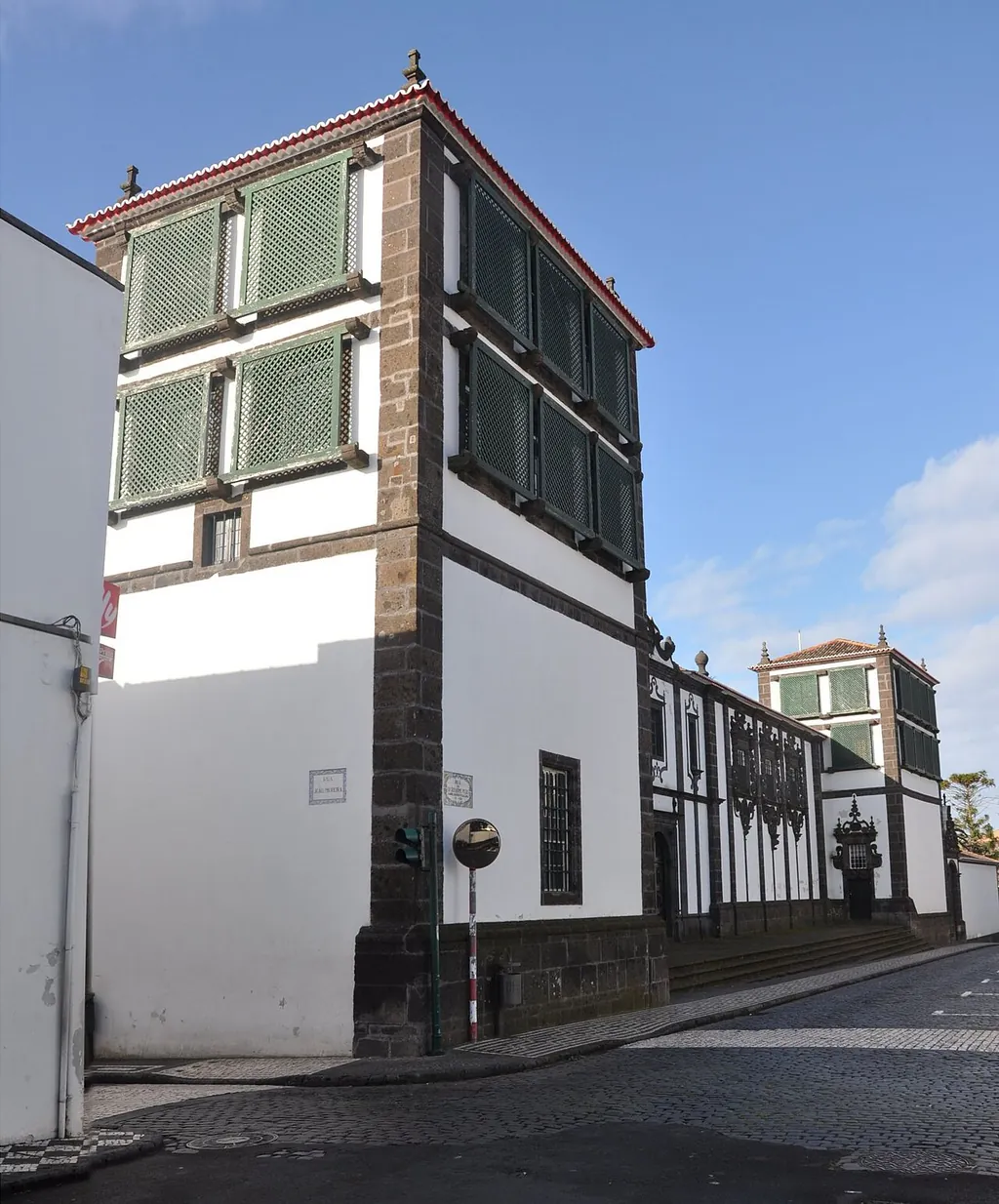
Museu Carlos Machado
Museum in Ponta Delgada with four units: natural history and the convent of Santo André, sacred art, Santa Bárbara and the autonomy of the Azores.
Have only individual sections read aloud
About the museum
The Museu Açoreano was created in 1876 by the physician Carlos Machado and opened to the public on 10 June 1880, in the premises of the former Liceu Nacional de Ponta Delgada, with collections of zoology, botany, geology and mineralogy. In 1890 it came under the municipality and, from 1914, took the name of its founder. It began as a school museum, but its natural history collections attracted the interest of the international scientific community. The second director, Colonel Francisco Afonso de Chaves, continued the work from 1901.
Over the 20th century sections of art, from 1912, and of regional ethnography were added, and later collections of toys. In 1930, with the purchase of the Convento de Santo André, it became possible to bring together in one place collections that were scattered across several buildings, which also made it possible to develop sacred art and convent ethnography. In 1976 the museum passed to the Regional Secretariat for Education and Culture and, in 2005, to the Regional Directorate of Culture of the Azores Government.
Today the museum has four units in Ponta Delgada. The Santo André unit, in the former convent of the Poor Clares founded in 1567, has the Natural History and Convent Memory circuits. Sacred Art has occupied the Church of the Jesuit College since 2006. The Santa Bárbara unit opened in 2010 in a former recolhimento (house of retreat), and the most recent, the Azores Autonomy unit, in the Palácio da Conceição, tells the story of the autonomy won in 1976.
Highlights
- Natural history circuit in eight rooms, with zoology, geology, mineralogy and botany
- Convent Memory circuit, in the former Poor Clares convent of Santo André
- Paintings and sculptures of the 17th and 18th centuries in the College Church, including the Coronation of the Virgin by Vasco Pereira Lusitano
- Azores Autonomy unit in the Palácio da Conceição, free admission
- Convent church with frescoes of 1820 and gilded woodwork
Permanent exhibitions
- Circuito de História Natural – Collection of a naturalist base, which gave rise to the museum, spread across eight rooms with zoology, geology, mineralogy and botany.
- Circuito Memória do Convento – Route through the spaces of the former Poor Clares convent of Santo André, with the porter's lodge, the parlours, the choirs and the church.
- Circuito de Arte Sacra – Paintings and sculptures of the 17th and 18th centuries in the Baroque church of the former Jesuit College.
- Founded
- 1876
- Operated by
- Direção Regional da Cultura, Governo dos Açores
Admission & discounts
| Adults | €2 |
|---|---|
| Reduced | €1Holders of the Cartão Jovem Municipal, young people aged 15 to 25, pensioners and people over 65, teachers at any level of education, and groups of more than 10 people. |
| Children & teens | freefree up to age 14 · Free admission up to age 14. |
| Seniors | –Discount for pensioners, retirees and people over 65. |
| Students & apprentices | –Discount for young people aged 15 to 25 and for teachers. |
| Groups (11+ people) | –Discount for groups of more than 10 people. |
| Combined ticket for the Santo André, Sacred Art and Santa Bárbara units | €5Valid on the day of purchase. |
| Azores Autonomy unit | freeFree admission. |
Free admission: Free admission on Sundays and on International Museum Day.
The price of €2 is per unit. Free admission also for holders of the Cartão Interjovem, members of APOM and ICOM, researchers, journalists and tourism professionals on duty, and students and teachers on study visits scheduled with the museum.
Accessibility
- Wheelchair accessible
- Elevator
- Accessible restroom: no information
- Accessible parking: no information
- Service dogs welcome: no information
- Tactile models & exhibits: no information
- Sign language tours: no information
- Easy-to-read materials: no information
- Audio description: no information
The three units of Santo André, Santa Bárbara and Sacred Art are accessible to people with reduced mobility, with lifts at Santo André and Santa Bárbara and access ramps; the exception is the temporary exhibition rooms on the first floor of the Sacred Art unit. The education service works with associations to design visits for audiences with specific needs.
Kids & families
| Kids’ admission | free up to age 14 |
|---|
- Family tours & workshops
Free admission up to age 14 and on Sundays; the education service runs visits and activities for children and schools. The collection includes toys.
Getting there & parking
The museum hasn’t published any information on this.
Amenities & dining
The museum hasn’t published any information on this.
Events & venue rental
The museum hasn’t published any information on this.
Plan your visit
| School programs | yes |
|---|---|
| Good to know | The museum has an education service and the projects Museu Móvel and De Fenais a Fenais, which take the museum to parishes of São Miguel. |