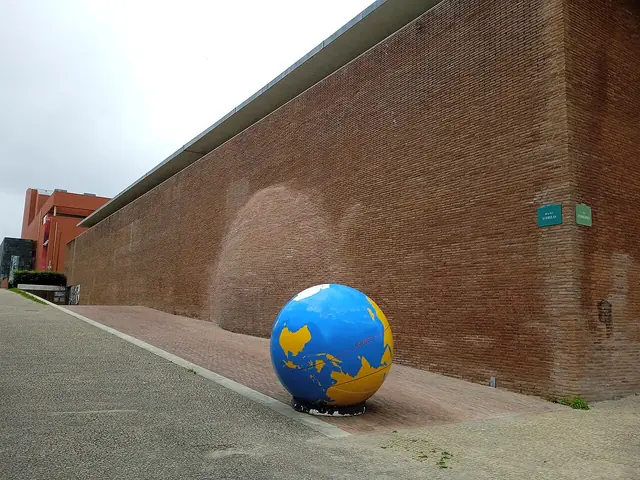
Reservatório – Museu do Porto
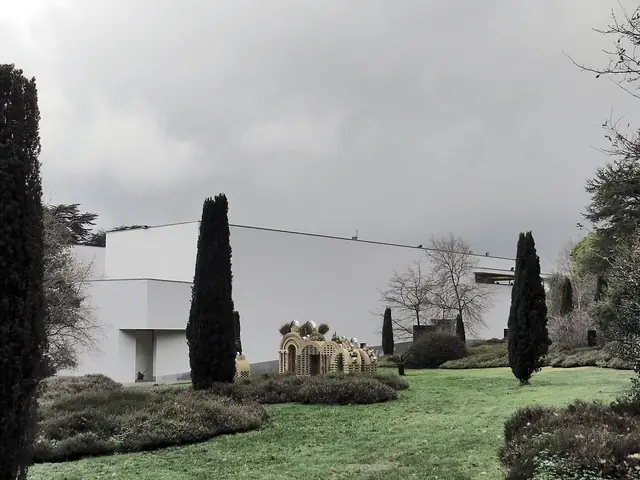
Former water reservoir in the Parque da Pasteleira, converted into an archaeological station of the Museu do Porto with traces of the city's history.
Have only individual sections read aloud
About the museum
The Reservatório is the first station of the Museu da Cidade do Porto, now called the Museu do Porto. The space, a former water reservoir in the Parque da Pasteleira, was renovated to a design by the architects Alexandre Alves Costa and Sérgio Fernandez, with a museographic design by João Mendes Ribeiro.
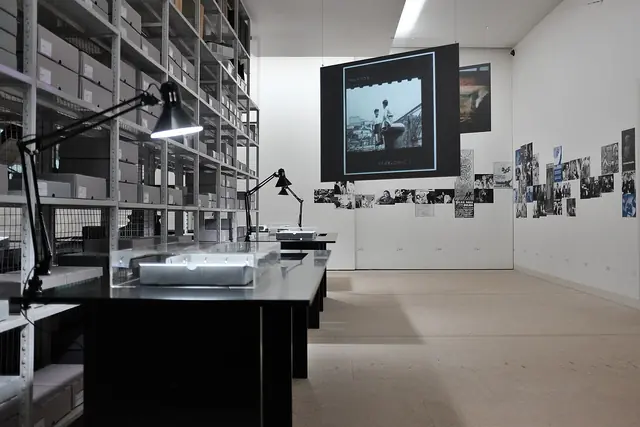
It works at the same time as a museum, a workspace and a mediation space, and as a living reserve where archaeological remains are kept. The space was conceived as a labyrinth of time: it does not follow a linear order and is organised along two axes, one horizontal and topographic, the other vertical and stratigraphic.
The topographic axis runs through the exhibition wings and corresponds to areas of the city where excavation campaigns of the 20th and 21st centuries revealed forms of settlement from various periods: the Barra do Rio and Plataforma Litoral, the Frente Ribeirinha and Areias Altas, the Morro da Penaventosa and the Estradas e Caminhos. As the visitor descends vertically, they go back in time, from the contemporary era to the Palaeolithic, passing through the modern, medieval, Roman and Iron and Bronze Age periods. The Reservatório also has a sound project by João Pais Filipe.
Highlights
- Former water reservoir converted into an archaeological station
- Route along topographic and stratigraphic axes, from the Palaeolithic to the contemporary era
- Remains from excavations carried out in the city during the 20th and 21st centuries
- Museographic design by João Mendes Ribeiro and sound project by João Pais Filipe
- Located in the Parque da Pasteleira
Permanent exhibition
- Reservatório – estação arqueológica – Labyrinthine route through the layers of Porto's history, organised by areas of the territory and by periods, with archaeological remains from excavations in the city.
- Operated by
- Município do Porto – Museu do Porto
Admission & discounts
| Adults | €4 |
|---|---|
| Reduced | €2People over 65, people with proven unemployment, groups of more than 10 visitors and partner organisations. |
| Children & teens | freefree up to age 17 · Free admission for under 18s. |
| Seniors | €2Over 65s. |
| Visitors with disabilities | –companion free · Companions of people with disabilities enter free. |
| Students & apprentices | freeFree admission upon proof of status. |
| Groups (11+ people) | €2 per personGroups of more than 10 visitors. |
| Museu da Cidade ticket (valid at the stations for 7 consecutive days) | €8 |
Free admission: Admission is free on Sundays. There is also free admission on commemorative dates: National Day of Historic Centres, International Museum Day and Night, International Day of Monuments and Sites and European Heritage Days.
Free admission also for holders of the Cartão Porto (tax residence in Porto) and the Porto Card, teachers, journalists and tourism operators on duty, museum professionals and holders of the ICOM and APOM cards, employees of the Municipality of Porto and its municipal companies, veterans, volunteer firefighters and members of senior universities. Admission is also free when access to the space is restricted.
Accessibility
The museum hasn’t published any information on this.
Kids & families
The museum hasn’t published any information on this.
Getting there & parking
By public transit
Buses 200, 204, 207 and 504.
By car
Free parking
Free parking spaces next to the Parque da Pasteleira.
The entrance is on the west side of the Parque da Pasteleira.
Get directionsAmenities & dining
The museum hasn’t published any information on this.
Events & venue rental
The museum hasn’t published any information on this.
Plan your visit
| Guided tours | yes |
|---|---|
| School programs | yes |
| Good to know | Guided visits and educational activities are booked by email (educativo.museudoporto@cm-porto.pt), giving the name of the person in charge, the number of visitors and the characteristics of the group. |