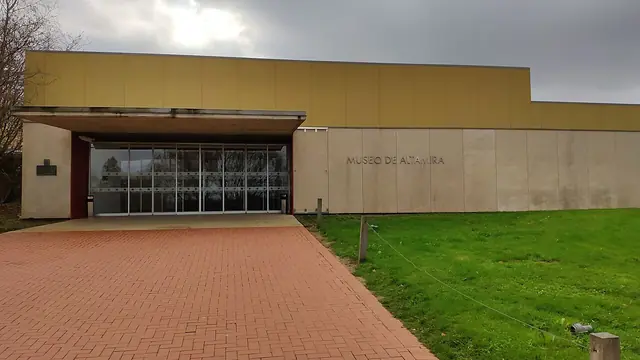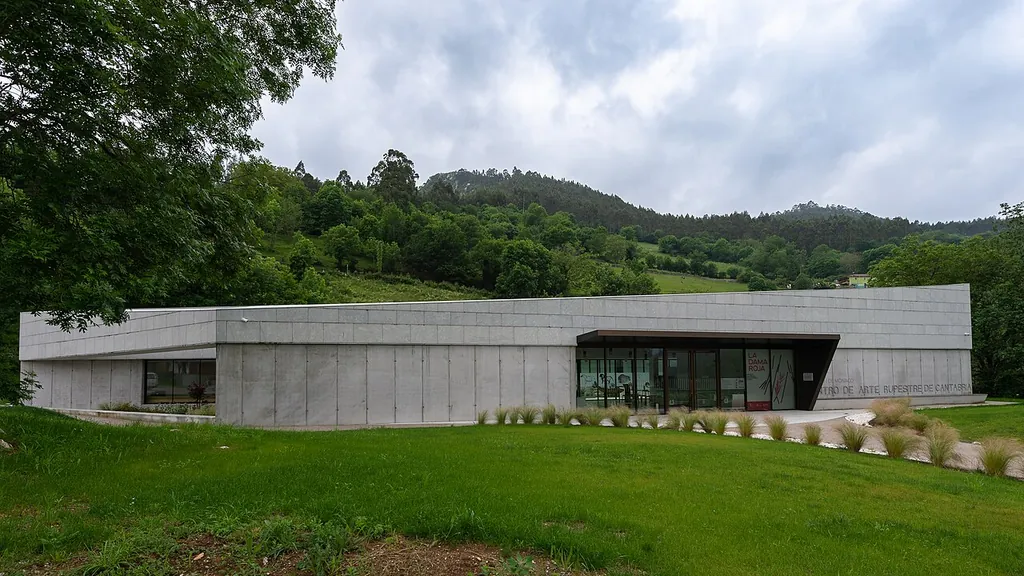
Centro de Arte Rupestre de Cantabria
Interpretation centre for Palaeolithic cave art of Cantabria, at the foot of Monte Castillo, with a 500 m² permanent exhibition and access to the caves.
Have only individual sections read aloud
About the museum
The Centro de Arte Rupestre de Cantabria Alberto I de Mónaco is a space for learning about Palaeolithic cave art and serves as the gateway to the caves of the region. It is in Puente Viesgo, on the slope of Monte Castillo, where several cavities with Palaeolithic art are found, of which the caves of El Castillo and Las Monedas can be visited. Its name commemorates Prince Albert I of Monaco, who supported the first research in the caves of this mountain in the early 20th century.
The building, the work of an architecture studio from Asturias, dates from 2022. The centre seeks to contribute to better management of the archaeological and rock-art heritage of the region, with particular attention to the ten Cantabrian caves declared World Heritage Sites by UNESCO.
The permanent exhibition occupies 500 square metres in the main wing and is organised into three rooms around the great questions about Palaeolithic art: what it is, who made it, when, where, how and why. It allows visitors to learn about caves that are closed to the public and corners of the visitable caves that are not part of the route. It is complemented by temporary exhibitions, prehistory workshops and a lecture room.
Highlights
- Permanent exhibition of 500 m² in three rooms on Palaeolithic art
- The ten Cantabrian caves that are UNESCO World Heritage Sites, including those closed to the public
- Starting point for visiting the caves of El Castillo and Las Monedas
- Prehistory workshops for all audiences
- Free or guided visit at no extra cost
Permanent exhibition
- Exposición permanente sobre el arte paleolítico – Route through three rooms presenting Palaeolithic art in relation to its natural setting, with the ten Cantabrian caves that are UNESCO World Heritage Sites as the core of the story.
- Operated by
- Gobierno de Cantabria (Consejería de Cultura, Turismo y Deporte)
Admission & discounts
| Adults | €4 |
|---|---|
| Reduced | €2Children aged 4 to 12, large families, people aged 65 or over or pensioners, unemployed people, student card holders and people with a 65% disability, with accreditation. |
| Children & teens | €2free up to age 3 · Free admission for ages 0 to 3; reduced rate for ages 4 to 12. |
| Groups (11+ people) | €2 per personGroups of 11 or more people; school groups also pay €2. |
Permanent exhibition rates. Free admission, on production of accreditation, for those who visit the El Castillo or Las Monedas caves on the same day, members of ICOMOS, official guides of Cantabria and holders of the Pasaporte Cultural. Visiting the exhibition is free, and it can also be made as a guided visit at no extra cost.
Accessibility
The museum hasn’t published any information on this.
Kids & families
| Kids’ admission | free up to age 3 |
|---|
- Family tours & workshops
The centre organises prehistory workshops for all audiences.
Getting there & parking
By car
Parking available
Car and bus parking.
Amenities & dining
- Museum shop
Shop, vending machines and toilets.
Events & venue rental
The museum hasn’t published any information on this.
Plan your visit
| Guided tours | yes |
|---|---|
| Good to know | Visiting the permanent exhibition is free; guided visits are offered at fixed times and can be booked online or by telephone. The caves of El Castillo and Las Monedas have their own entrances. |