El Born, Museu d'Història de Barcelona
Former 19th-century iron market with an archaeological site from the La Ribera district, buried in 1714, and an exhibition on Barcelona in 1700.
Have only individual sections read aloud
About the museum
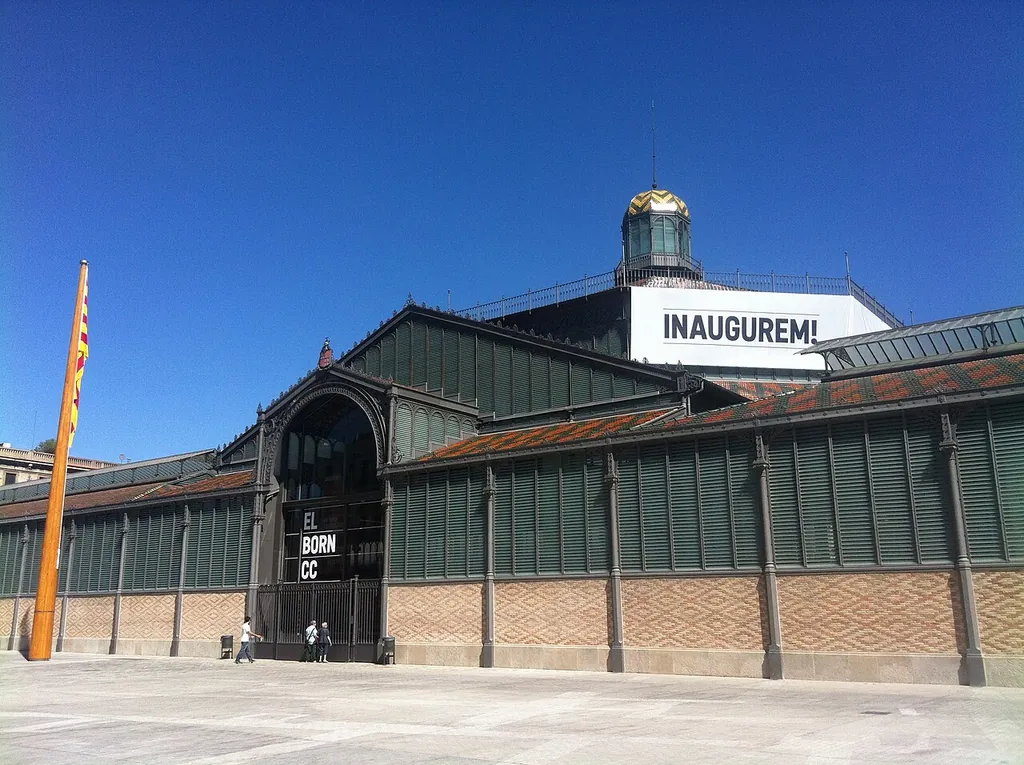
El Born, opened in 1876, was the first major iron-architecture building in Barcelona. It first operated as a neighbourhood market and, from 1921, as the central fruit and vegetable market, until its final closure in 1971. For decades its future was debated, until it became a cultural space; today it is listed as a cultural heritage site of local interest.
Beneath the market lie the remains of the La Ribera district, razed after the War of the Spanish Succession to make way for the Ciutadella fortress. The archaeological site shows parts of around nine streets, out of the 42 that were destroyed, and the remains of about 60 houses across 11 blocks. Among them is the Rec Comtal, which shaped the urban layout and the crafts of the district between the 13th and 18th centuries.
The centre opened in 2013 as El Born Centre de Cultura i Memòria and became part of the network of the Museu d'Història de Barcelona (MUHBA). It combines the site, which can be seen from a walkway or on a guided tour, with exhibition rooms, an auditorium and a free-access cultural street. Its permanent exhibition “Barcelona 1700. De les pedres a les persones” is being renovated to present the history of the city from 1519 to the early modern period.
Highlights
- La Ribera archaeological site with remains of around 60 houses and 18th-century streets
- Building of the Born market, the first major iron-architecture work in Barcelona
- Permanent exhibition on Barcelona in 1700
- Cultural street and square with free access
- Guided tours of the site in several languages
Permanent exhibitions
- Barcelona 1700. De les pedres a les persones – Permanent exhibition on life in early 18th-century Barcelona, which is being renovated to cover the history of the city from 1519.
- Conjunto arqueológico del Born – Remains of the La Ribera district beneath the former market: streets, houses and the Rec Comtal, between the 13th and 18th centuries.
- Founded
- 2013
- Operated by
- Museu d'Història de Barcelona (MUHBA), Ayuntamiento de Barcelona
- Director
- Montserrat Iniesta González
Admission & discounts
| Adults | €3 |
|---|---|
| Reduced | €2.10People under 29 and over 65, holders of the Barcelona Libraries card, unemployed people or holders of the reduced Targeta Rosa, holders of the large-family or single-parent family card, and holders of the BCN Card Express or the Tourist Bus ticket. |
| Children & teens | freefree up to age 15 · Free admission for children under 16. |
| Seniors | €2.10Reduced admission from age 65. |
| Visitors with disabilities | –Free admission for holders of the metropolitan companion pass for a person with a disability. |
| Groups (10+ people) | €2.10 per personExhibitions: €2.10 per person for groups of 10 or more people. |
| Combined ticket for both exhibitions | €4.50Reduced: €3.15. |
| Guided tour of the archaeological site | €4.20Reduced: €2.90. |
Free admission: The first Sunday of each month and every Sunday from 15:00.
Access to the building, the square and the cultural street is free, but does not include the archaeological site or paid exhibitions. Free admission also for friends of the museum, holders of the free Targeta Rosa, Gaudir+BCN and BCN Card holders, members of ICOM and the Associació de Museòlegs de Catalunya, accredited teachers, journalists and accredited tour guides. The Bo Cultural Jove is accepted. Purchases are non-refundable, except in documented cases of force majeure.
Accessibility
- Wheelchair accessible
- Elevator
- Accessible restroom
- Accessible parking: no information
- Service dogs welcome
- Tactile models & exhibits
- Sign language tours
- Easy-to-read materials
- Audio description
Centre with no architectural barriers, with level entrances, ramps and counters, adapted doors and toilets; a lift leads to a wooden walkway with a partial view of the site. For conservation reasons, wheelchair users cannot take the interior route through the site; two wheelchairs are available on loan. Induction loop in the Sala Moragues and in the auditorium, and two portable loops at the ticket offices. Guide dogs and assistance dogs are admitted. Tactile orientation map in the Plaza Comercial and a tactile model of the building at the entrance on Calle Comercial. Braille leaflets, easy-read and large-print materials, and multimedia guides with Catalan and Spanish sign language, audio description and subtitles. Guided tours for people with intellectual disabilities are available by prior booking, with a sign language interpreter on request.
Kids & families
| Kids’ admission | free up to age 15 |
|---|
- Family tours & workshops
The museum's programme includes family visits devoted to Barcelona in 1700. Children under 16 enter free.
Getting there & parking
By public transit
Jaume I (L4)
Metro: L4, stations Jaume I and Barceloneta; L1, station Arc de Triomf. Buses: 59, D20, 47, V15, V17, V19, 120, H14 and H16. Bus Turístic: red route, Pla de Palau stop. Bicing: stations on carrer del Comerç and avinguda del Marquès de l'Argentera, with docking points for folding bicycles and scooters.
The centre's offices are at Calle Comercial, 5.
Get directionsAmenities & dining
The museum hasn’t published any information on this.
Events & venue rental
The museum hasn’t published any information on this.
Plan your visit
| Guided tours | yes |
|---|---|
| Audio guide | yes |
| Good to know | Guided tours of the archaeological site in Catalan (Tuesday to Saturday, 17:30), Spanish (Tuesday to Saturday, 16:30; Sunday, 12:30), English (Tuesday to Friday, 15:00; Saturday and Sunday, 10:30) and French (Saturday, 11:30). Bookings at reservesmuseuhistoria@bcn.cat or on +34 932 562 122. Accessible multimedia guides are available. |