Museo de Arte Africano Arellano Alonso
University of Valladolid museum of sub-Saharan African art: terracottas, traditional currencies and the Kingdom of Oku.
Have only individual sections read aloud
About the museum
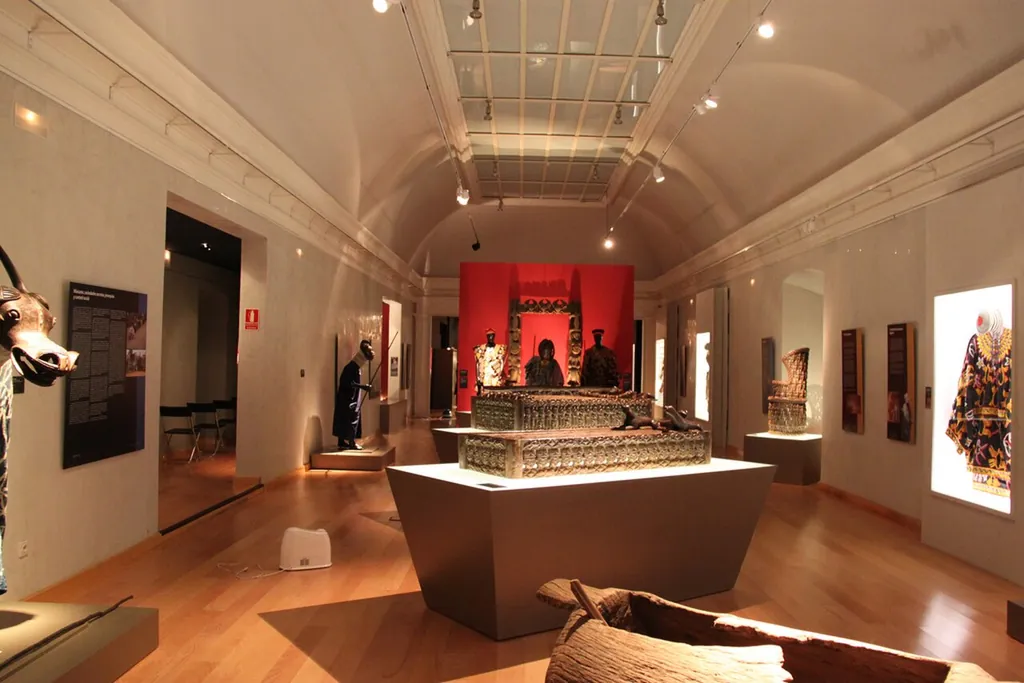
The museum belongs to the Fundación Alberto Jiménez-Arellano Alonso, linked to the University of Valladolid, and is housed in the Palacio de Santa Cruz, the former Colegio de Santa Cruz, in the heart of the city. It presents itself as the only museum in Spain dedicated to this subject and as a European reference, thanks to its collection of terracotta sculptures, traditional currencies and the Kingdom of Oku in Cameroon.
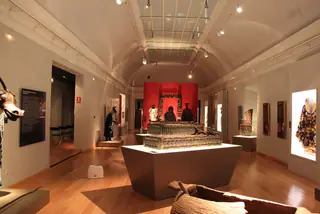
The route is spread over three spaces. The Salón de Rectores displays traditional African currencies, from non-metallic money to worked metals. The Sala Renacimiento, with original coffered ceilings from the late 15th century, houses one of the largest public collections of sub-Saharan terracottas, from cultures such as Nok, Ife, Edo, Djenné, Bura, Komaland, Jukun, Ewe, Mambila, Mangbetu and Bakongo, and an exceptional group of six horse riders. The Sala de San Ambrosio is devoted to the Kingdom of Oku, with regalia, a royal portico, masks of secret societies, musical instruments and utensils of traditional medicine.
The foundation completes the visit with an educational programme, publications, a library and the podcast “África Inspira”, which offers a view of the continent free of clichés.
Highlights
- One of the largest public collections of sub-Saharan terracottas
- Group of six terracotta horse riders, a very unusual set
- Collection of traditional African currencies in the Salón de Rectores
- Kingdom of Oku (Cameroon) with regalia, royal portico and masks
- Sala Renacimiento with original coffered ceilings from the 15th century
- Free admission
Permanent exhibitions
- Salón de Rectores: monedas tradicionales africanas – Traditional money of sub-Saharan Africa, from agricultural products, shells and salt to ingots, bars and worked metal objects.
- Sala Renacimiento: terracotas africanas tradicionales – Terracotta sculptures from the cultures of the Niger and Congo rivers, including Nok, Ife, Edo and Djenné, with a group of six horse riders.
- Sala de San Ambrosio: Reino de Oku (Camerún) – Regalia, royal portico, masks of secret societies, musical instruments and utensils of traditional medicine of the Kingdom of Oku.
- Founded
- 2004
- Operated by
- Fundación Alberto Jiménez-Arellano Alonso (Universidad de Valladolid)
- Director
- Cristina Bayo
Admission & discounts
Admission is free.
Free admission.
Accessibility
- Partially wheelchair accessible
- Elevator: no information
- Accessible restroom: no information
- Accessible parking: no information
- Service dogs welcome
- Tactile models & exhibits: no information
- Sign language tours: no information
- Easy-to-read materials: no information
- Audio description: no information
The Salón de Rectores and the Sala Renacimiento are fully accessible. The Sala de San Ambrosio (Kingdom of Oku) is accessible only from Monday to Friday, with prior contact with the museum, and the gallery of the Sala de San Ambrosio (ethnographic objects) is not accessible. Visitors can enter with a wheelchair or pushchair, and guide dogs are admitted.
Kids & families
- Family tours & workshops
- Stroller-friendly
The educational programme includes educational routes and workshops for children and families, and the foundation organises activities such as “Narradores de historias para toda la familia”.
Getting there & parking
By public transit
Plaza del Colegio de Santa Cruz
Auvasa city buses: lines 1 and 2 (stop at Plaza de la Universidad, corner of calle López Gómez) and lines 7 and 8 (Plaza del Colegio de Santa Cruz).
By car
Parking available
Regulated on-street parking (ORA) on nearby streets. Public car parks in Plaza de Portugalete (400 m), El Campillo (700 m), calle Real de Burgos next to the Hospital Clínico (700 m) and Plaza Mayor (900 m).
On foot, the museum is a couple of minutes from Plaza de la Universidad along calle de la Librería. There is a taxi rank on the square itself, bicycle parking and a municipal bicycle hire point (Biki).
Get directionsAmenities & dining
The museum hasn’t published any information on this.
Events & venue rental
The museum hasn’t published any information on this.
Plan your visit
| Guided tours | yes |
|---|---|
| School programs | yes |
| Photography | Photographs may be taken, preferably without flash. |
| Good to know | The information leaflet and room sheets (in Spanish, English and French, also with QR codes) can be downloaded free of charge. Guided visits are offered for the general public, associations and groups; arranged visits and workshops are requested at educa.jimenez-arellano@uva.es. Animals (except guide dogs), shopping trolleys, scooters, bicycles and other wheeled devices are not admitted to the rooms. |
Museums nearby
Casa-Museo de Colón
Museo Diocesano y Catedralicio de Valladolid
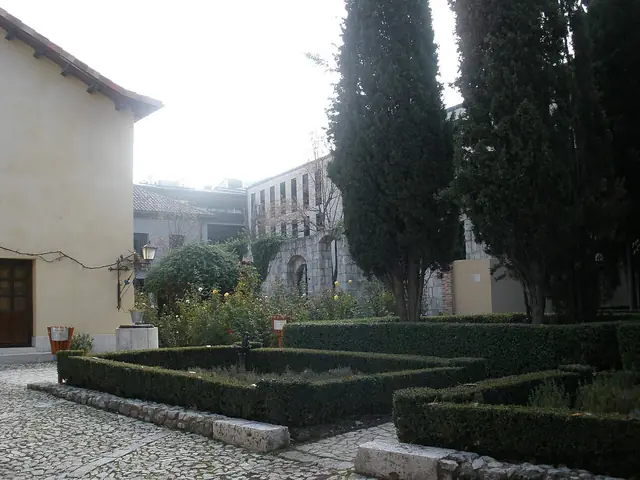
Casa de Zorrilla
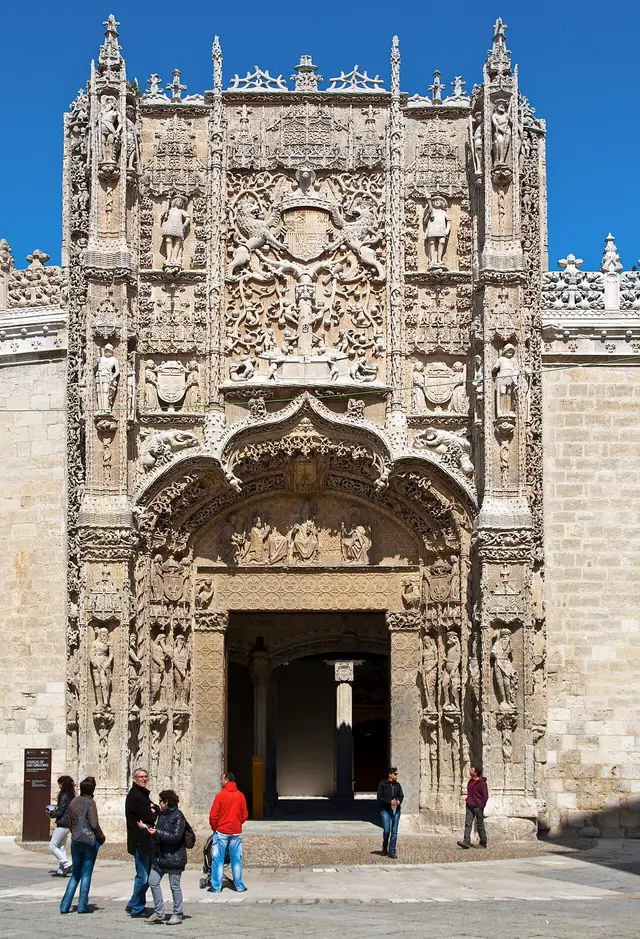
Museo Nacional de Escultura
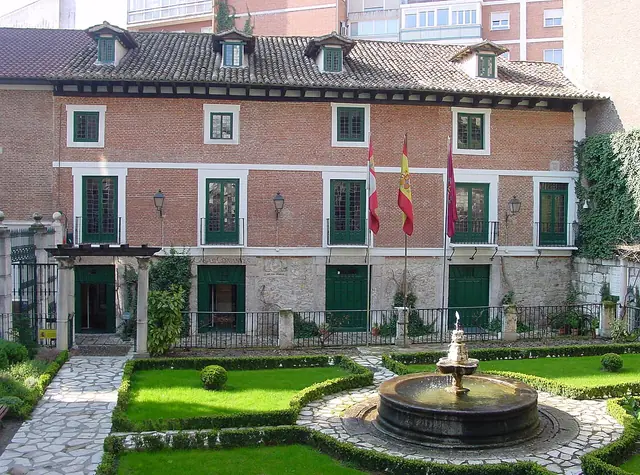
Museo Casa de Cervantes
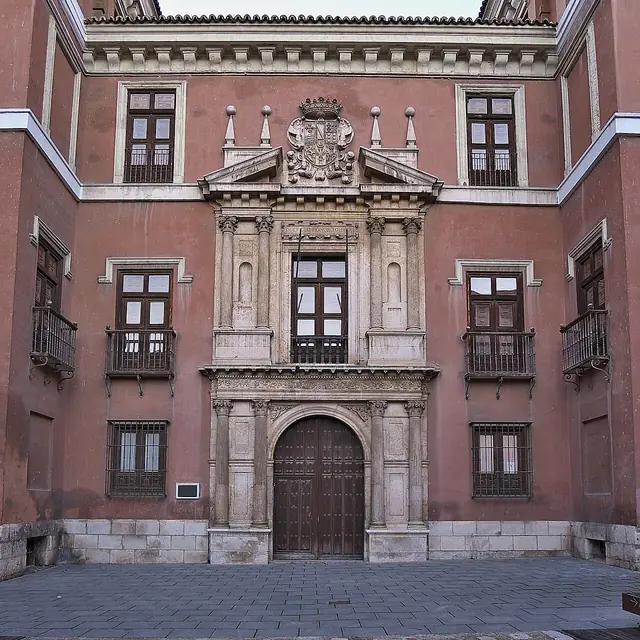
Museo de Valladolid
All 10 museums in Valladolid All museums in Castile and León