MUBAG, Museo de Bellas Artes de Alicante
Fine arts museum of the Diputación de Alicante in the 18th-century Gravina palace, with a permanent 19th-century collection; free admission.
Have only individual sections read aloud
About the museum
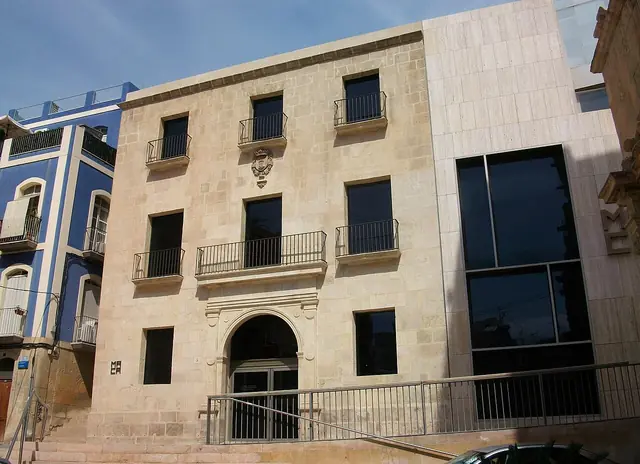
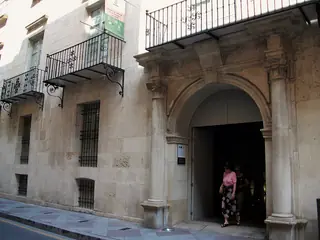
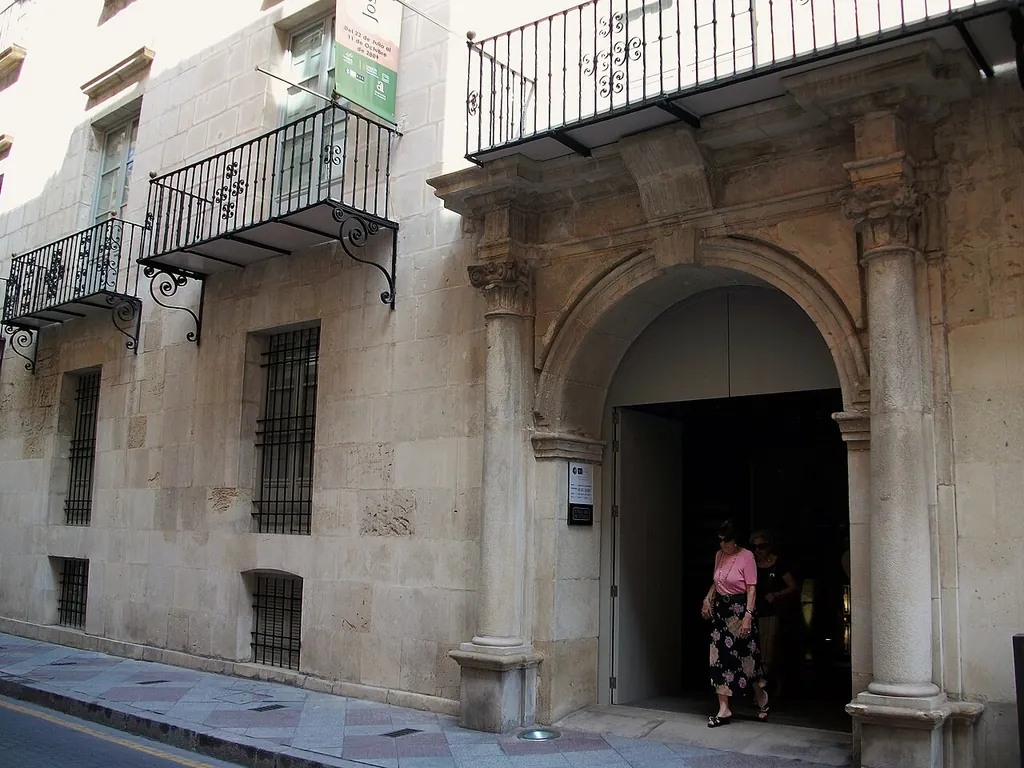
The MUBAG occupies the Gravina palace, the main 18th-century noble residence in Alicante, between the Postiguet city wall and the Santa María steps. The building, constructed of stone from the Sierra de San Julián on plots left in ruins by the War of the Spanish Succession, belonged to the family of Antonio Valcárcel, Count of Lumiares.
The Diputación de Alicante acquired part of it in 1975, when it was in ruins. After its declaration as a Bien de Interés Cultural in 1985 it was restored and used as the provincial archive and an exhibition hall. Between 1996 and 2000 the Diputación received the other part of the palace, and a renovation designed by the architects Rafael Pérez, Elena Albajar and Joaquín Maseres turned it into a museum. It opened on 14 December 2001 with a collection focused on 19th- and 20th-century painting from Alicante.
In 2012 the permanent exhibition “El siglo XIX”, with holdings from the Museo Nacional del Prado, was launched; it was renewed in March 2022 under the title “El siglo XIX. La colección a la luz”. In April 2023 the museum was officially recognised as the Museo de Bellas Artes de Alicante and integrated into the Valencian Museum System (Sistema Valenciano de Museos).
The permanent collection brings together more than 80 pieces, including paintings, sculptures and decorative arts by artists such as Antonio Gisbert, Joaquín Agrasot and Emilio Sala. The museum also organises temporary exhibitions and educational activities.
Highlights
- Palacio Gravina, an 18th-century Baroque noble residence
- Permanent exhibition “El siglo XIX. La colección a la luz”
- Works by Antonio Gisbert, Joaquín Agrasot and Emilio Sala
- Works from the Museo Nacional del Prado included in the permanent exhibition
- Free admission
Permanent exhibition
- El siglo XIX. La colección a la luz – Permanent exhibition with more than 80 works (painting, sculpture and decorative arts) that reviews the themes of 19th-century Spanish art.
- Founded
- 2001
- Operated by
- Diputación de Alicante
Admission & discounts
Admission is free.
Free admission.
Accessibility
- Wheelchair accessible
- Elevator
- Accessible restroom
- Accessible parking: no information
- Service dogs welcome
- Tactile models & exhibits: no information
- Sign language tours: no information
- Easy-to-read materials: no information
- Audio description: no information
The museum has lifts and ramps to access the galleries, and toilets for people with reduced mobility. Only guide dogs are admitted. There is a public lift on the avenida Juan Bautista Lafora, opposite the Postiguet beach.
Kids & families
Great for kids & families
- Family tours & workshops
The museum organises educational visits and activities for families and babies (the Mus’n’babies cycle). Minors must be accompanied by an adult.
Getting there & parking
By public transit
Puerta del Mar
Bus: lines 2, 5, 12, 21 and 22 (Puerta del Mar) and lines 8, 10 and 13 (Rambla). Tram: line L5 (Puerta del Mar). Taxis at Puerta del Mar and at Portal de Elche.
Address: calle Gravina, 13–15. Vehicles access via the calle Vázquez de Mella; the old town is best explored on foot.
Get directionsAmenities & dining
- Café: not available
- Coat check
- Lockers
Cloakroom service, compulsory for umbrellas, backpacks and large bags (leaving luggage is not permitted). The museum has a rest area with drink and coffee machines.
Events & venue rental
The museum hasn’t published any information on this.
Plan your visit
| Guided tours | yes |
|---|---|
| School programs | yes |
| Photography | Photography and video recording are not permitted. |
| Good to know | To visit the museum as a group without a guide, an appointment must be requested at mubag@diputacionalicante.es. Guided tours are requested through the website, at mubag@esatur.com or on +34 663 568 834 (Tuesday to Friday, 9:00–14:00). There are also educational visits during the school year and theatrical visits. Mobile phones may not be used in the galleries, and eating or drinking is not allowed; minors must be accompanied by an adult. |