Museo de Navarra
Public museum in Pamplona in a former 16th-century hospital, with collections of archaeology and art from Navarre from prehistory to the present.
Have only individual sections read aloud
About the museum
The collections of the Museo de Navarra come from the holdings gathered by the Commission of Historical and Artistic Monuments of Navarre, created in 1844. In 1910 a first museum opened in the building now occupied by the Cámara de Comptos and, after the creation of the Institución Príncipe de Viana in 1940, the Diputación Foral continued this work. The present museum opened its doors on 24 June 1956, and in 2026 it celebrates its 70th anniversary.
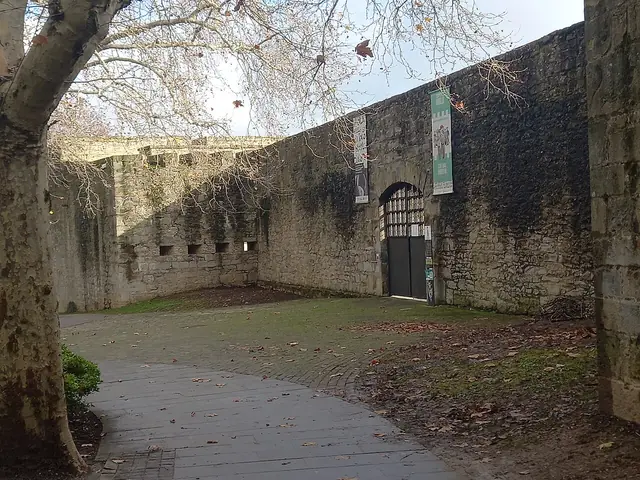
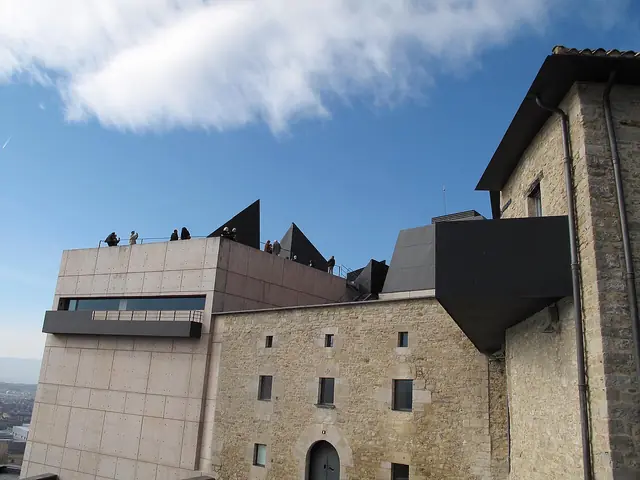
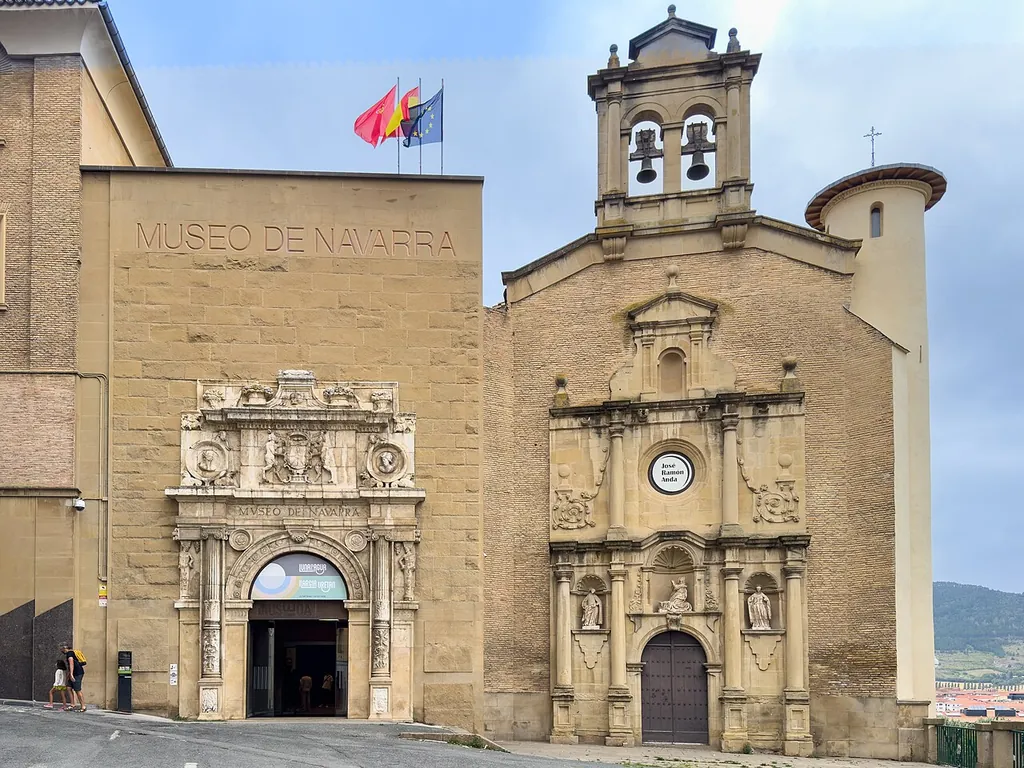
Its seat is the former Hospital de Nuestra Señora de la Misericordia, located next to the city walls at the north-western end of the old town of Pamplona. The façade and the church of that hospital, both from the 16th century, have been preserved. The former chapel is now used as a room for long-term temporary exhibitions and for concerts, with good acoustics and a capacity of 120 people.
After a comprehensive refurbishment, the museum was reinaugurated in 1990 by Queen Sofía. In 2011 the Prehistory room reopened with updated content and the removal of architectural barriers, and in 2019 the project “Todo el Arte es Contemporáneo” completely renewed the third and fourth floors of the permanent exhibition. Between 2024 and 2026 energy-efficiency works were carried out on the roofs and external openings, and new museographies are announced for the Gigantes de piedra, the Prehistory room and the section devoted to coinage in Navarre.
The collections range from prehistory to the 21st century and combine pieces of Navarrese, national and international scope, with particular attention to the archaeological and artistic heritage of Navarre.
Highlights
- Hand of Irulegi, a bronze hand with an inscription in the Vasconic language
- Man of Loizu, an almost complete skeleton from around 9400 BC
- Togate statue of Pompelo, a Roman bronze found in 1895
- Casket of Leire, an ivory casket from Medina Azahara
- Capital of Job, a Romanesque capital from Pamplona Cathedral
- Portrait of the Marquis of San Adrián, a work by Goya (1804)
Permanent exhibitions
- Sala de Prehistoria – Room renovated in 2011 with pieces such as the Hand of Irulegi, the Man of Loizu and the Abauntz Map, as well as the menhirs and stelae of the Blue Gallery (“Gigantes de piedra”).
- Todo el Arte es Contemporáneo – 2019 project that renewed the permanent exhibition on the third and fourth floors, with contemporary works in dialogue with pieces from earlier centuries, including Goya's portrait of the Marquis of San Adrián.
- Antigüedad y Edad Media – Tour of pieces such as the Togate statue of Pompelo, the funerary stela of Lerga, the Capital of Job, the Casket of Leire and the painting of the Passion of Christ (1335) by Juan Oliver, from the cathedral refectory.
- Founded
- 1956
- Operated by
- Gobierno de Navarra (Dirección General de Cultura – Institución Príncipe de Viana)
- Director
- Mercedes Jover Hernando
Admission & discounts
Admission is free.
Free admission.
Accessibility
- Wheelchair accessible
- Elevator
- Accessible restroom
- Accessible parking: no information
- Service dogs welcome
- Tactile models & exhibits: no information
- Sign language tours: no information
- Easy-to-read materials
- Audio description: no information
All visit areas are wheelchair accessible; there are ramps, lifts, seats and adapted toilets (on the ground floor, next to the assembly hall and next to the lift). Two wheelchairs are lent free of charge at the ticket office in the lobby, and the museum has folding chairs for resting. An accessible plan is handed out at the ticket office. The ticket office and the assembly hall have an induction loop for hearing aids (T position). There are easy-read guides for the Prehistory room, “Seis obras maestras”, “Todo el Arte es Contemporáneo” and the temporary exhibitions (free at the ticket office), and braille editions of “Seis obras maestras” and “Todo el Arte es Contemporáneo”. Guide dogs and assistance dogs are admitted. People with specific needs can write to museo@navarra.es before the visit.
Kids & families
Great for kids & families
- Family tours & workshops
- Baby changing facilities
The museum organises children's workshops, for example in summer and during Holy Week. There is a baby-changing table in the adapted toilet on the ground floor, next to the lift.
Getting there & parking
The museum is at Calle Santo Domingo, 47, next to the city walls, at the north-western end of Pamplona's old town.
Get directionsAmenities & dining
The museum hasn’t published any information on this.
Events & venue rental
- Spaces for rent
Up to 180 guests.
The assembly hall seats 180 people and has a simultaneous translation booth; content must relate to art, history or cultural heritage. Information and bookings Monday to Friday 10:00–14:00. The former chapel (120 people) is used for exhibitions and concerts.
Plan your visit
| Guided tours | yes |
|---|---|
| School programs | yes |
| Good to know | The museum offers guided tours of the permanent collection (in previous summers free of charge in July and August; check the current programme). School groups enjoy free admission, activities and teaching materials, in Spanish or Basque (guided visits, dramatised visits, workshops and loanable teaching suitcases). School bookings by phone on +34 848 423 630 and +34 848 426 493 (Monday to Friday, 8:00–12:00) or at didactica.museo.navarra@navarra.es. |