Museo de Palencia
Archaeological museum in the Casa del Cordón in Palencia, with pieces from Prehistory to the Early Modern period and the Roman mosaic of Dueñas.
Have only individual sections read aloud
About the museum
During the second half of the 19th century two archaeological collections were formed in Palencia, one by the Provincial Monuments Commission and another by the City Council. When they came together they gave rise to the first institutional museum, opened in 1921 in the Palacio de la Diputación Provincial, where it remained, with ups and downs and a partial fire, until 1979. That year it closed to the public and its holdings were stored while a building of its own was sought.
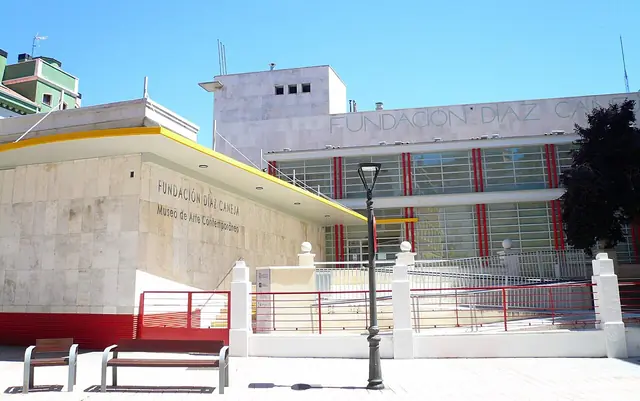
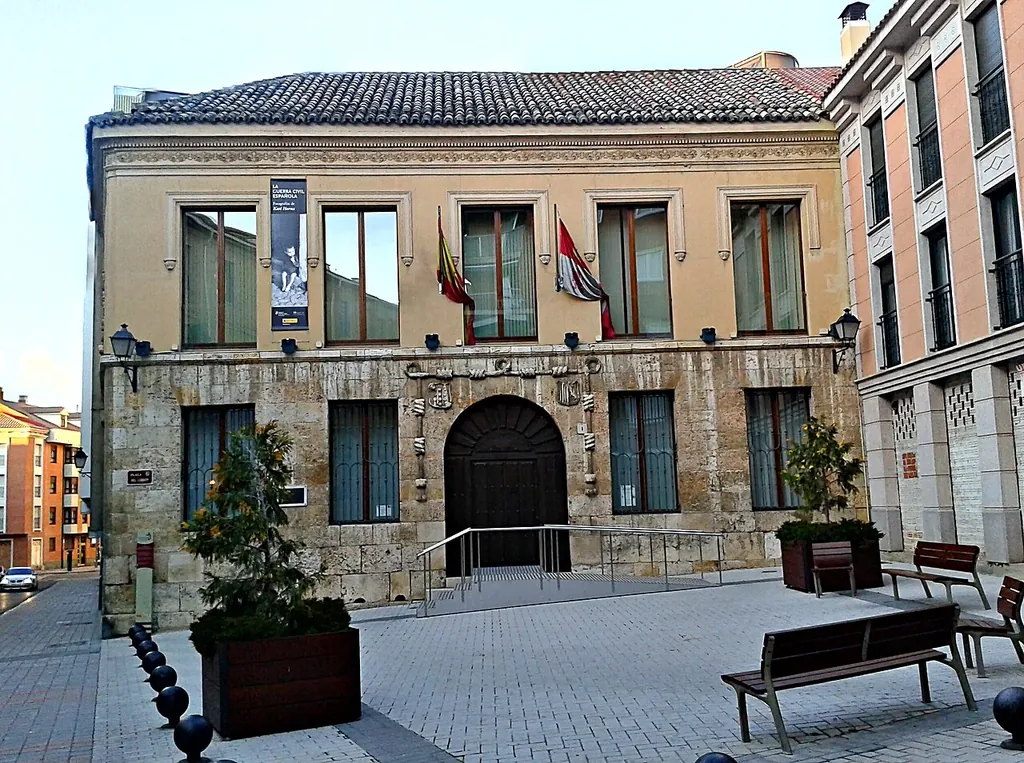
In 1981 the Provincial Council acquired the Casa del Cordón and its adjoining buildings and handed them over to the Ministry of Culture to house the new museum, which finally opened in October 1997. The house, with a stone portal framed by the Franciscan cord that gives it its name, was built in the first half of the 16th century and is the only civil architecture building of that period surviving in the capital. Luis Arranz Algueró designed the interior remodelling and a new body of glass and reinforced concrete in the brutalist style, organised around a central skylight.
The collections trace the archaeological sequence of the province from the Palaeolithic to the Early Modern period, with particular attention to the Vaccaean world and abundant Roman pieces, including those from Herrera de Pisuerga, the city of Palencia itself and the late Roman villas, with the mosaic of Dueñas. The museum is state-owned and is managed by the Junta de Castilla y León.
Highlights
- Roman mosaic of Dueñas, from a late Roman villa
- Capitals from Frómista and sarcophagi from Benevívere and Santa María de la Vega
- Visigothic pieces from San Juan de Baños and Herrera de Pisuerga
- Altarpiece from the Hospital de Los Palmeros in Amusco in the sacred art room
- 16th-century Casa del Cordón with contemporary extension
Permanent exhibition
- Exposición permanente – Chronological route: Prehistory in the basement, the Roman world on the ground floor (with a view of the Dueñas mosaic), the Middle Ages and sacred art on the first floor.
- Founded
- 1997
- Operated by
- Junta de Castilla y León
Admission & discounts
| Adults | €1 |
|---|---|
| Children & teens | freefree up to age 17 · Minors enter free, on presentation of proof. |
| Seniors | freePeople over 65 and retirees: free admission, on presentation of proof. |
| Visitors with disabilities | freecompanion free · People with a disability of 33 % or more and, where essential, their companion. |
| Students & apprentices | freeUniversity students and holders of a Carné Joven: free admission. |
| Certain temporary exhibitions | €0.60 |
Free admission: Saturdays, Sundays and national or regional public holidays, and on 23 April, 9 May, 18 May, 12 October and 6 December.
The €1 admission applies to the permanent exhibition. Free admission applies, on presentation of proof of entitlement, to EU citizens and legal residents who are minors, people with disabilities, large, single-parent and multiple-birth families, unemployed people, people over 65, pensioners, university students, teachers, tour guides, holders of a Carné Joven, volunteers, members of ICOM, CEHA and the Spanish Federation of Friends of Museums, holders of the Tarjeta de Amigos del Patrimonio and of the Carné 60 CyL, and friends of the museum.
Accessibility
The museum hasn’t published any information on this.
Kids & families
The museum hasn’t published any information on this.
Getting there & parking
The museum hasn’t published any information on this.
Amenities & dining
The museum hasn’t published any information on this.
Events & venue rental
The museum hasn’t published any information on this.
Plan your visit
| School programs | yes |
|---|---|
| Good to know | The museum offers a free information leaflet in Spanish, French and English, and an educational activities programme with prior registration. |