Museo Paleontológico de Elche
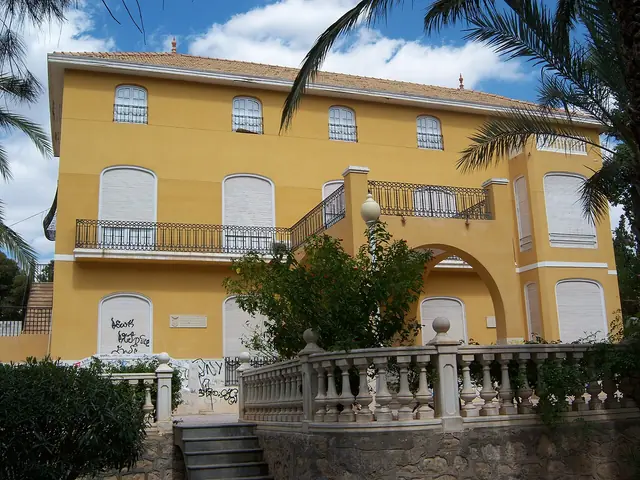
Museum with fossils from around the world and from the palaeontological heritage of the province of Alicante, with dinosaur replicas; it is run by the Fundación Cidaris.
Have only individual sections read aloud
About the museum
The Museo Paleontológico de Elche (MUPE) opened its doors on 3 December 2004 on the Plaza de Sant Joan, after more than twenty years of work by the Grupo Cultural Paleontológico de Elche, formed in the 1980s by amateur enthusiasts who pooled their collections. The Generalitat Valenciana recognised that collection as a museum collection in 1996, and the museum obtained administrative recognition in October 2003.
Since 2007 it has been run by the Fundación Cidaris, created to research, conserve and disseminate palaeontological heritage. The centre also runs its own educational project, didacPAL, with guided visits and workshops on excavation and mineral identification.
The exhibition occupies two floors. The lower floor is devoted to fossils from around the world, with an audiovisual on the origin of the universe and three rooms arranged by age. The upper floor presents the geological history and palaeontological heritage of the province of Alicante and of nearby areas such as Morella, Ribesalbes, Las Hoyas and Quibas.
Highlights
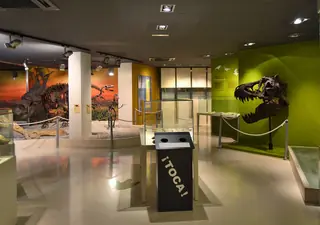
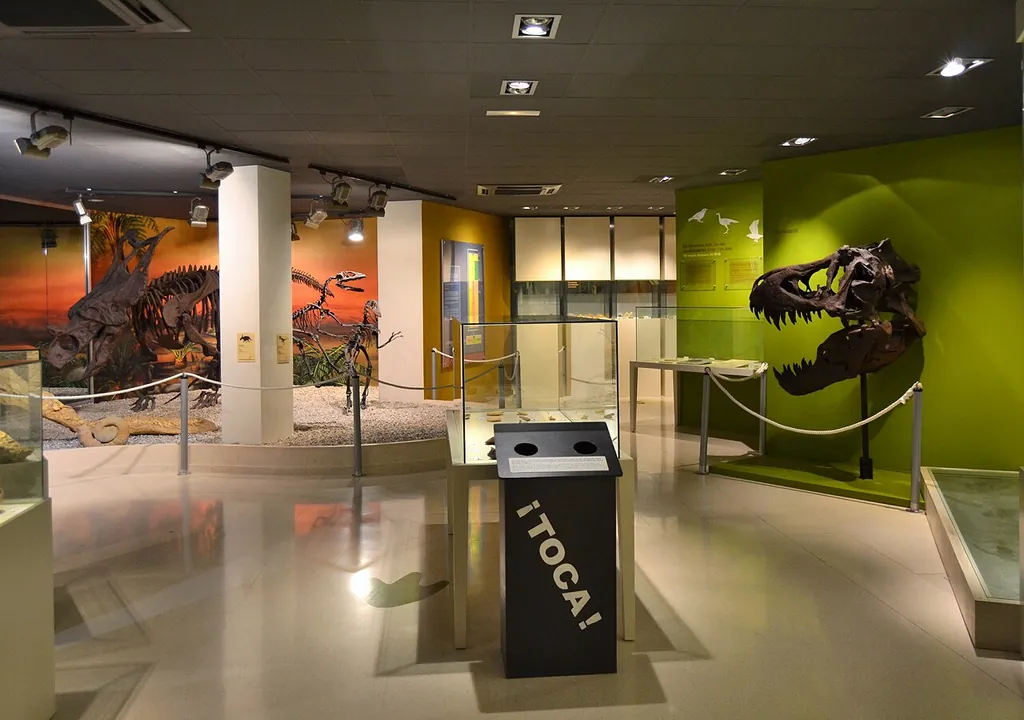
- Dinosaur replicas, including a life-size T. rex skull
- Scale reconstruction of Spinophorosaurus nigerensis, from Niger and on temporary loan to Elche
- Trilobites, ammonites and a mosasaur
- Mastodon remains and fossil fish from the province of Alicante
- Entrance hall with a recreation of the cabinet of Pedro Ibarra
Permanent exhibitions
- Fósiles de todo el mundo (planta inferior) – Audiovisual on the origin of the universe and three rooms arranged by age, with trilobites, ammonites, a mosasaur and dinosaur replicas.
- Patrimonio paleontológico de Alicante (planta superior) – Geological and palaeontological history of the province of Alicante, with mastodon remains, sea urchins and fossil fish.
- Founded
- 2004
- Operated by
- Fundación Cidaris
Admission & discounts
| Adults | €2 |
|---|---|
| Reduced | €1Groups of 15 or more people with a visit confirmed in advance, and students (under 16 years old, or adults enrolled in an official educational centre) |
| Children & teens | freefree up to age 5 · Free admission for children under 6. |
| Seniors | –Retirees and pensioners with accreditation: free admission. |
| Visitors with disabilities | –Free admission for people with physical or mental disabilities with an official document. |
| Students & apprentices | €1Under 16 years old, or adults with proof of enrolment in an official educational centre. |
| Groups (15+ people) | €1 per personGroups of 15 or more people with a visit confirmed in advance. |
Free admission: Every Sunday of the year, 18 May, 15 August, 9 October and 6 December
Free admission also for holders of the golden card (tarjeta dorada), practising tour guides with a licence, accredited teachers and instructors, museum members, and student groups taking part in the museum's or the town council's educational campaigns.
Accessibility
- Wheelchair accessible
- Elevator
- Accessible restroom
- Accessible parking: no information
- Service dogs welcome
- Tactile models & exhibits
- Sign language tours: no information
- Easy-to-read materials: no information
- Audio description
Access is by a ramp with a gentle gradient, and the lift takes a wheelchair or a pushchair. The toilets are spacious, with height-adjustable washbasins and toilets with grab rails. The lower room has QR codes with audio description and videos in sign language, display cases with tactile information and, at reception, a small guide with pictograms.
Kids & families
Great for kids & families
| Kids’ admission | free up to age 5 |
|---|
- Family tours & workshops
- Hands-on stations
- Stroller-friendly
- Baby changing facilities
The didacPAL educational project offers guided visits and workshops (excavation, mineral identification) and a palaeo-urban route, with activities also outside school hours and at weekends. Baby-changing facilities in the common area of the toilets.
Getting there & parking
By public transit
Urban buses: lines E and F.
By car
No on-site parking at the museum.
The museum has no car park of its own; there are free and paid car parks in the vicinity.
The museum is in the traditional Raval district, 450 m from the town hall (Ayuntamiento), opposite the church of Sant Joan and next to the Centro Municipal de Exposiciones. Coaches cannot reach the museum and can drop passengers on Juan Ramón Jiménez street, opposite the Zoilo furniture shop.
Get directionsAmenities & dining
The museum hasn’t published any information on this.
Events & venue rental
The museum hasn’t published any information on this.
Plan your visit
| Guided tours | yes |
|---|---|
| School programs | yes |
| Photography | Photographs without flash are allowed for personal, non-commercial use. |
| Good to know | The fossils, replicas and minerals may not be touched, except in the places indicated. Minors must always be accompanied by an adult. Eating and drinking are not allowed inside the museum, and only guide dogs are admitted as animals. |