Museu d'Història de la Immigració de Catalunya
Museum in the Can Serra farmhouse on migration from prehistory to the present, with a carriage of the Sevillano train and the outdoor space [MIGRAR].
Have only individual sections read aloud
About the museum
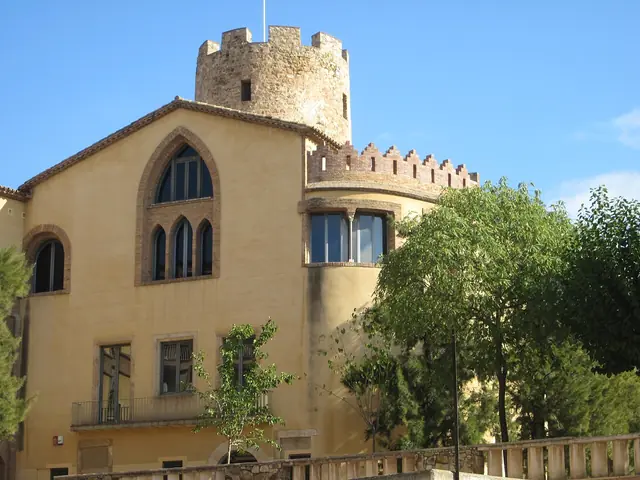
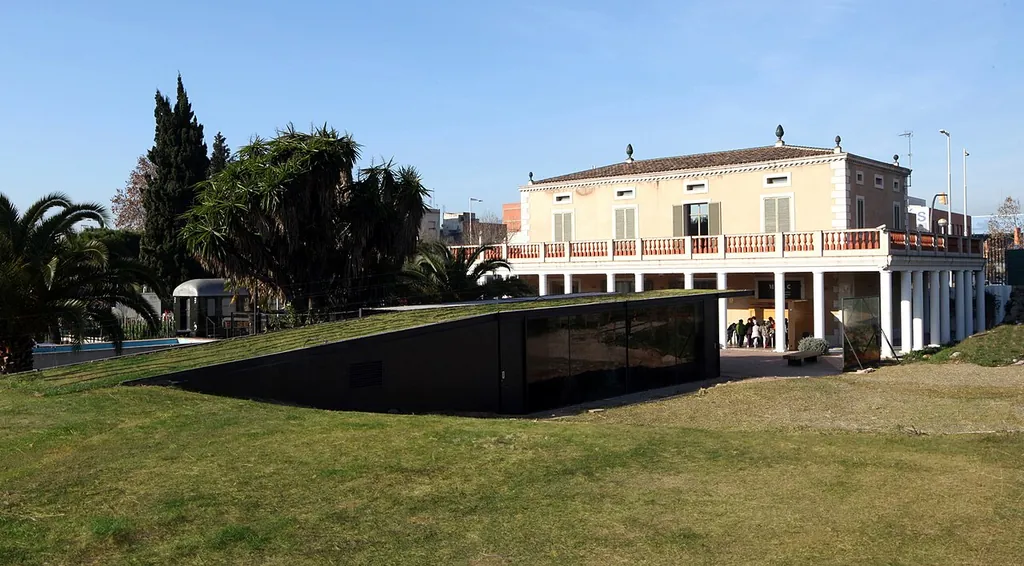
The Museu d’Història de la Immigració de Catalunya (MhiC) opened on 20 November 2004 in Sant Adrià de Besòs. The architectural project includes a new building for the museum and the rehabilitation of the 19th-century Can Serra farmhouse, by David Ferrer, which houses the research and documentation centre, the reception and the temporary exhibition room.
The museum was born with a clear educational purpose and an open, participatory collection, fed by objects and testimonies contributed by visitors, schools, community groups and associations. It is run by the Culture department of the Sant Adrià de Besòs City Council and forms part of the Catalan Ethnology Museums Network and of the Local Museums Network of the Diputació de Barcelona.
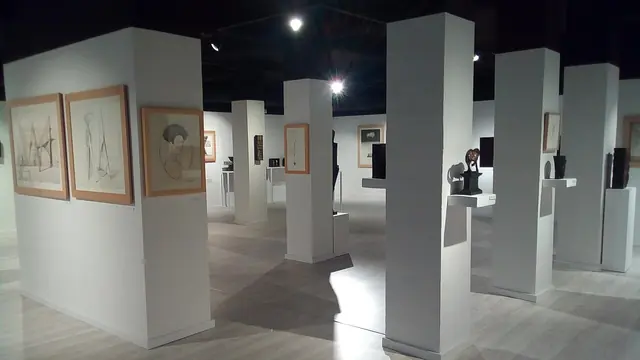
The permanent exhibition traces human migrations from prehistory to the 21st century: a welcome space on current migratory movements, the historical line “Humans en moviment”, the interior of a mid-20th-century train carriage (the Sevillano), with testimonies from those who arrived in Catalonia, and the outdoor space [MIGRAR], devoted to the present. The Placeta Macià Air-Raid Shelter serves as a complementary venue.
Highlights
- Mid-20th-century train carriage (the Sevillano) with testimonies from migrants
- Outdoor space [MIGRAR] on 21st-century migration
- “Humans en moviment” route: migration from prehistory to the 20th century
- Can Serra farmhouse, from the 19th century, with public gardens
- Placeta Macià Air-Raid Shelter, with free visits by prior booking
Permanent exhibitions
- Humans en moviment – Historical line of migration from prehistory to the 20th century, with interactive elements on nomadism, prejudice, territory and identity, and the reasons for migration.
- Sevillano – Barcelona – Termino – Interior of a mid-20th-century train carriage paying tribute to the people who arrived in Catalonia during the 20th century, with testimonies about the journey, arrival and everyday life.
- Espai [MIGRAR] – Outdoor space devoted to 21st-century migration and globalisation, with objects, letters and interactive resources on the border, arrival and settlement.
- Founded
- 2004
- Operated by
- Ayuntamiento de Sant Adrià de Besòs
Admission & discounts
The museum hasn’t published any information on this.
Accessibility
- Wheelchair accessible: no information
- Elevator: no information
- Accessible restroom: no information
- Accessible parking: no information
- Service dogs welcome: no information
- Tactile models & exhibits: no information
- Sign language tours: no information
- Easy-to-read materials: no information
- Audio description: no information
The Placeta Macià Air-Raid Shelter is adapted so that anyone, with or without a disability, can visit on equal terms.
Kids & families
- Hands-on stations
The exhibition includes interactive and educational elements and a children's play area in the [MIGRAR] space. The museum offers educational activities for schools.
Getting there & parking
By public transit
La Verneda – Polígon Montsolís (H10, B25, V33) · 2-min walk
Metro: L2, La Verneda station; L2 and L4, La Pau station. Bus: H10, B25 and V33 (stop La Verneda – Polígon Montsolís), 42 (Extremadura – Carretera de Mataró), 60 (Via Trajana – Guipúscoa), B20 and B23 (Ricart) and M30 (Sant Adrià Centre).
By car
Parking available
The museum has its own car park area, and there is space to park next to it.
By car: Ronda Litoral (B-10), exit 29 Sant Adrià de Besòs–Guipúscoa.
Get directionsAmenities & dining
Public gardens and documentation centre.
Events & venue rental
The museum hasn’t published any information on this.
Plan your visit
| Guided tours | yes |
|---|---|
| Audio guide | yes |
| School programs | yes |
| Good to know | Guided visits are free and require prior booking; the group must be 10 to 25 people (telephone +34 933 812 606, email, or the form on the website). Free urban routes are also offered, such as the Carrer Bolívia route, and a sign-language guide. The roof terrace of the building can be visited on request. |