Museu de Tortosa
History museum in Tortosa, housed in the Modernist former slaughterhouse of Pau Monguió, with a permanent exhibition from prehistory to the 20th century.
Have only individual sections read aloud
About the museum
The museum dates back to 1900. The urban transformation of Tortosa at the end of the 19th century, with the demolition of the city walls and the appearance of numerous archaeological remains, led to the creation of a municipal museum, provisionally opened in the former Mercè schools. Its driving force was Joan Abril, a diocesan and later municipal architect, who privately kept a collection of finds; together with the member of the Cortes Teodoro González he promoted the creation of the Museo Arqueológico de la Ilercavonia.
In 1910 the collections moved to the former church of Sant Domènec, where from 1911 they shared space with the library and the historical archive, until the archive moved to the Reales Colegios in 1997. After a comprehensive inventory of the collections, the fitting-out of a storage room and a new museum project, the museum reopened in 2012 at its current site under the name Museu de Tortosa.
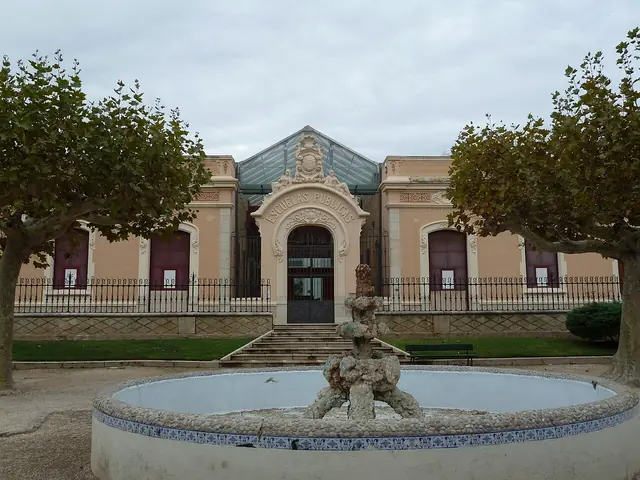
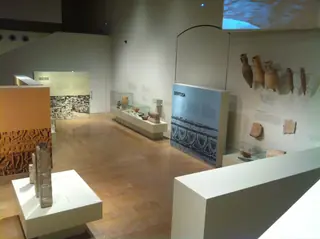
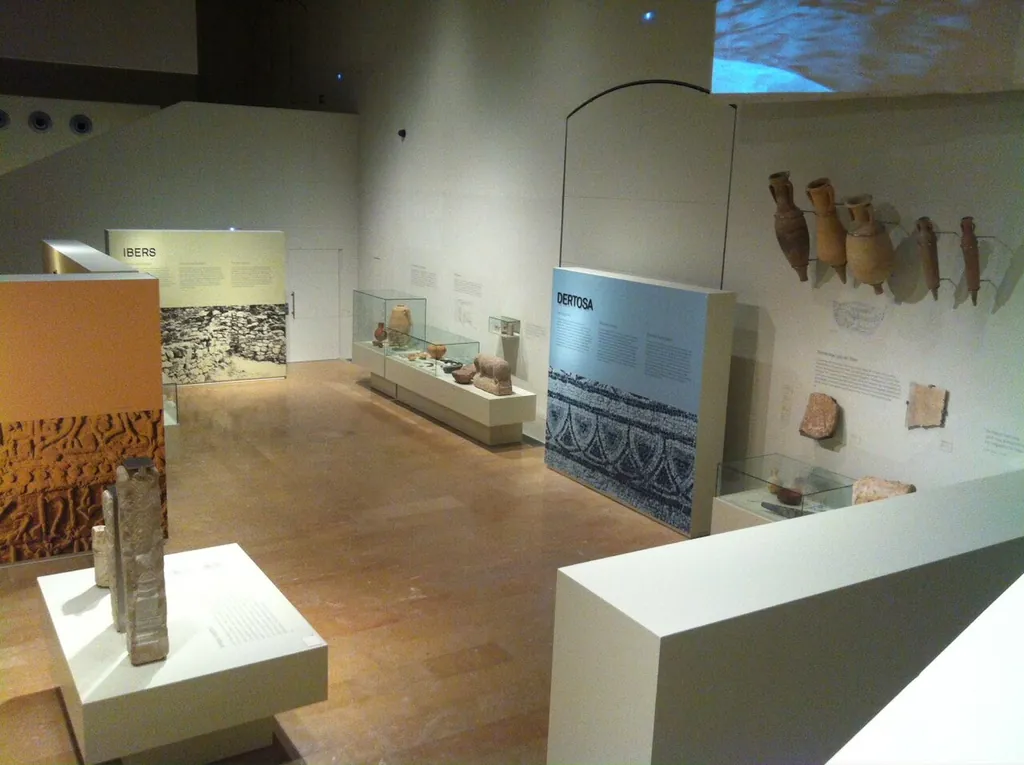
The site is the city's former slaughterhouse, a Modernist building by Pau Monguió i Segura built between 1906 and 1908 on land reclaimed from the Ebro, in the Sant Jaume district. It is organised into eleven pavilions and an enclosure of 5,500 m², and its Mudéjar inspiration is visible in the combined use of exposed brick, ceramics and glazed tiles. The permanent exhibition brings together, across six sections, pieces from the museum's own collection and from other museums that have lent them on deposit.
Highlights
- Permanent exhibition in six sections, from the origins to modernity
- Pieces on deposit from the Museo del Prado, the MNAC and the Museu Nacional Arqueològic de Tarragona
- Art installation by Leonardo Escoda
- Former Modernist slaughterhouse by Pau Monguió (1906–1908)
- Sala Antoni Garcia for temporary exhibitions
- Free audio guide on your phone via QR code
Permanent exhibition
- Exposición permanente: Tortosa y su territorio, de la prehistoria al siglo XX – Six sections (origins, Iberians, Dertosa, Turtuxa, Tortosa and modernity) tell the story of the city and its region with pieces from the museum's own collection and loans from other museums, plus an art installation by Leonardo Escoda.
- Founded
- 1900
- Operated by
- Ayuntamiento de Tortosa
Admission & discounts
| Adults | €3 |
|---|---|
| Reduced | €2Over 65s, large and single-parent families, holders of the disability card, students with a student card, holders of the Sefarad Card and of the Privilegium card issued in Morella or Alcañiz |
| Children & teens | freefree up to age 13 · Free admission for children under 14. |
| Seniors | €2Over 65s; with the Tortosa Sénior card, €1. |
| Visitors with disabilities | €2Reduced rate with the disability card. |
| Students & apprentices | €2Reduced rate with a student card. |
| Groups (15+ people) | €2 per personGroups of 15–49 people: €2 per person; groups of 50 or more people: €1 per person. |
| Families | €2Reduced rate for large and single-parent families. |
| Holders of the Tortosa Sénior card | €1 |
| Groups of 50 or more people (per person) | €1 |
Free admission: Last Sunday of every month, 18 May (International Museum Day) and the weekend of the European Heritage Days
Admission is valid all day. Free admission also for members of Club Súper 3, accredited teachers, officially accredited tourist guides, ICOM members and holders of the Tortosa Card (purchased at the Tortosa Tourist Office). The audio guide is free.
Accessibility
- Wheelchair accessible
- Elevator: no information
- Accessible restroom
- Accessible parking
- Service dogs welcome
- Tactile models & exhibits: no information
- Sign language tours: no information
- Easy-to-read materials: no information
- Audio description: no information
The permanent and temporary exhibitions are wheelchair accessible. There are two parking spaces for people with reduced mobility, an accessible toilet and an induction loop at the reception desk. The museum has an Accessibility Plan 2026–2030.
Kids & families
| Kids’ admission | free up to age 13 |
|---|---|
| Family ticket | €2 · Reduced rate for large and single-parent families. |
Baby buggies are permitted. The museum offers educational services for early childhood, primary, secondary and upper secondary (bachillerato) education.
Getting there & parking
By car
- Accessible parking
Amenities & dining
- Museum shop
Shop with products inspired by heritage elements. Eating and drinking are not permitted inside the museum.
Events & venue rental
- Spaces for rent
The museum offers hire of spaces, including a multipurpose room.
Plan your visit
| Audio guide | yes |
|---|---|
| School programs | yes |
| Photography | Photography without flash or tripod is permitted. |
| Good to know | The free audio guide works on your mobile phone via QR code. Children under 14 must be accompanied by an adult. Backpacks, suitcases, sports or travel bags, sharp objects, scooters, tricycles and folding bicycles are not permitted; only guide dogs are admitted. Smoking, eating and drinking are prohibited in the building. |