Bungemuseet
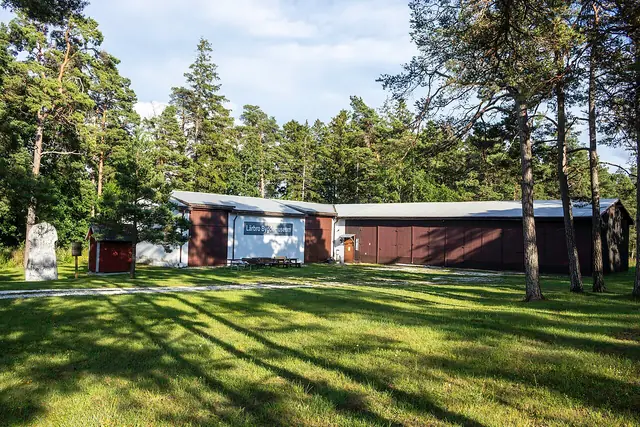
Open-air museum next to Bunge church on northern Gotland, with farmsteads from the 17th, 18th and 19th centuries, a fishing village, a lime kiln, mills and a school museum.
Have only individual sections read aloud
About the museum
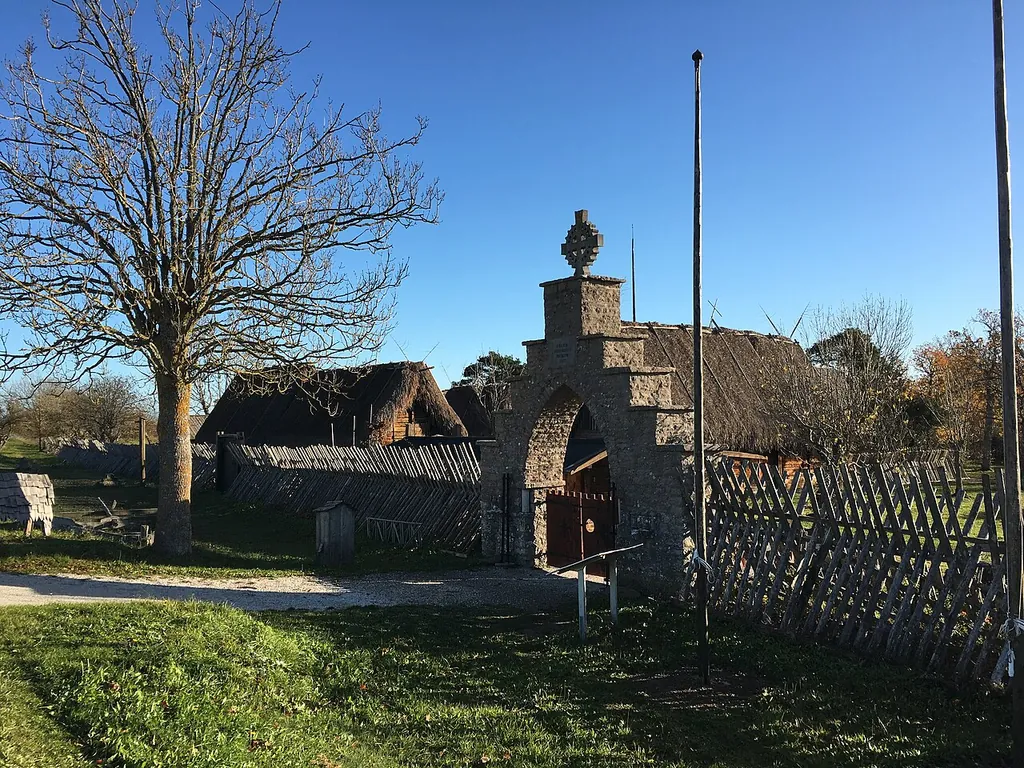
Bungemuseet was founded in 1907 by the schoolteacher Theodor Erlandsson, who collected threatened buildings and built up credible settings on a seven-hectare area next to Bunge church. The museum was designed on the same ideals as Skansen in Stockholm, so that visitors can walk through history in one and the same place. Over time the area grew to some seventy buildings of cultural-historical importance.
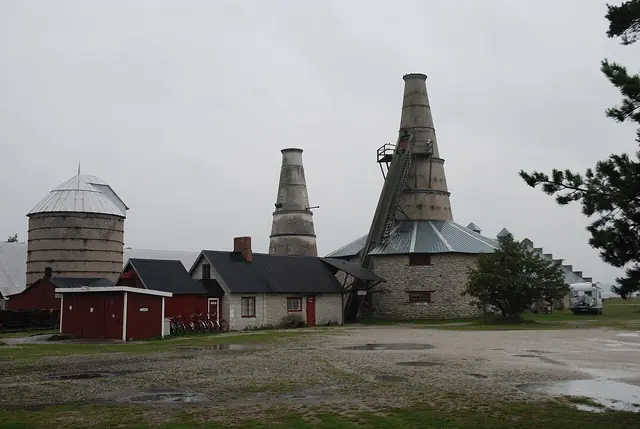
At the centre are three complete farmsteads from the 17th, 18th and 19th centuries, but the surrounding installations are at least as important: a fishing village, a lime kiln, a charcoal kiln (mila), a sojde (a traditional Gotlandic structure), as well as mills and sawmills. In addition there are picture stones and graves, a boatsman’s croft (båtsmanstorp) and a school museum showing the development of the folk school from 1842 to 1920. Several buildings stand as so-called annexes out on the island.
The Kulturhistoriska föreningen i Bunge (Bunge Cultural History Society), which was also founded by Erlandsson, ran the operations on a voluntary basis until 31 March 2016. Since 1 April 2016 operations have been run by Bungemuseet AB, while the association leases out the area and buildings and is responsible for maintenance. Gotlands Museum and the association are represented on the company’s board. The museum is a member of Riksförbundet Sveriges museer, the network FRI and Arbetsam.
Highlights
- Three complete farmsteads from the 17th, 18th and 19th centuries
- Fishing village, lime kiln, charcoal kiln (mila), sojde, mills and sawmills
- School museum on the folk school from 1842 to 1920
- The Barnladan (children’s barn) with Barnens handelsbod (children’s shop) and a play area with Gutnish games
- Food and coffee house with Gotlandic saffron pancake (saffranspannkaka)
Permanent exhibitions
- Gårdarna från 1600-, 1700- och 1800-talen – Three complete farmyard settings show life in the Gotland countryside over three centuries, including the 17th-century farmstead, the 18th-century farmstead and the 19th-century farmstead.
- Skolmuseet – The school museum shows the development of the folk school from 1842 to 1920.
- Fiskeläget och industrianläggningarna – Fishing village, lime kiln, charcoal kiln, sojde, mills and sawmills show early industry and livelihoods on Gotland.
- Founded
- 1907
- Operated by
- Bungemuseet AB (arrenderar området av Kulturhistoriska föreningen i Bunge)
Admission & discounts
| Adults | SEK 175 |
|---|---|
| Reduced | SEK 120Students with a student card |
| Children & teens | freefree up to age 17 · Children under 18 accompanied by an adult enter free. |
| Students & apprentices | SEK 120With a student card. |
| Groups (10+ people) | SEK 150 per personGroups of at least 10 people (with their own guide or without a guide); pre-booked tour from 15 people, minimum price SEK 2,250 per tour. |
| Annual pass | SEK 350Unlimited visits during the year; accompanying children under 18 enter free. |
Admission prices 2026. With the Kulturarvskortet, half the admission price applies. Subject to price changes at events.
Accessibility
- Partially wheelchair accessible
- Elevator: no information
- Accessible restroom
- Accessible parking: no information
- Service dogs welcome: no information
- Tactile models & exhibits: no information
- Sign language tours: no information
- Easy-to-read materials: no information
- Audio description: no information
The outdoor toilet at the car park is wheelchair-accessible. The museum area consists of grass and paths, which limits accessibility, and many buildings have high thresholds. A ramp to borrow is at the entrance. Dogs are welcome on a lead.
Kids & families
Great for kids & families
| Kids’ admission | free up to age 17 |
|---|
- Family tours & workshops
- Hands-on stations
- Playground / play area
The Barnladan (children’s barn) has the learning environments Barnens handelsbod (children’s shop), Hemmet (the Home) and Höhoppet (Jumping Up). On the playground you can try Gutnish games such as herre på stang, throwing varpa, walking on stilts and playing kubb; there is also an area for the youngest.
Getting there & parking
By car
Free parking
Free parking next to the food and coffee house.
Bungemuseet lies next to Bunge church on road 148, about 55 kilometres from Visby; signs are placed along the road.
Get directionsAmenities & dining
- Café
- Restaurant
- Museum shop
The food and coffee house serves the day’s lunch, filled baguettes, pies, salads and fika with saffron pancake. It is open daily 11:00–16:00 in May and June, 10:00–17:00 in July, and 11:00–16:00 from 17 August to 13 September. Outdoor toilets are at the café, by the car park and at the 19th-century farmstead. Visitors may eat their own packed lunch on the grounds.
Events & venue rental
The museum hasn’t published any information on this.
Plan your visit
| Guided tours | yes |
|---|---|
| School programs | yes |
| Good to know | Tours in Swedish, English and German can be pre-booked by groups (by email or phone). School visits and time-travel experiences are offered. A fire ban applies, so you may not bring your own barbecue. |