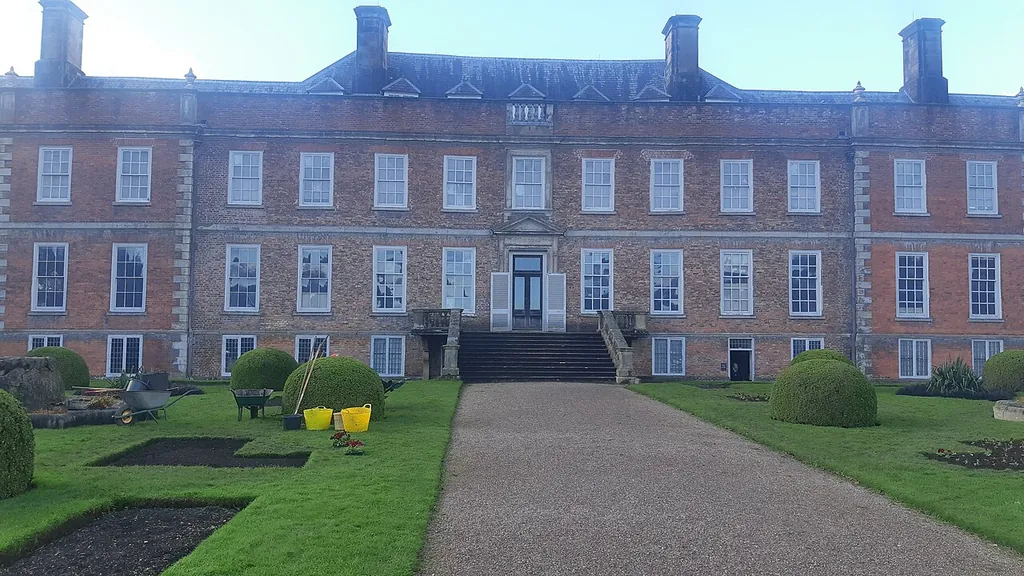
Erddig Hall and Garden
National Trust country house near Wrexham with preserved servants’ quarters and portraits, a restored walled garden and a 1,200-acre estate.
Have only individual sections read aloud
About the museum
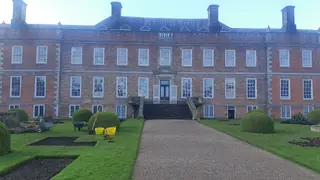
Erddig was built between 1683 and 1687 by the Cheshire mason Thomas Webb for Joshua Edisbury, High Sheriff of Denbighshire. Edisbury’s building plans ruined him financially after Elihu Yale called in his loans. In the 1720s the lawyer John Meller added two wings and created a suite of formal reception rooms.
The house later became the home of the Yorke family. Over roughly 250 years the family kept an unusually close record of its servants, with a large collection of portraits in oil and photographs and a poem dedicated to each member of staff. The rooms below stairs have been kept as they were in the early twentieth century, while the upstairs rooms hold fine furniture, textiles and Chinese wallpaper.
By the early 1970s the house was close to ruin: it was sinking, the roof leaked and decay had set in. A four-year restoration project saved it. Today visitors can also see the working outbuildings of the estate, including the joiners’ workshop, smithy, sawmill and stables, as well as the restored eighteenth-century walled garden and a landscape park designed by William Emes.
Highlights
- Servants’ portraits and poems, with preserved rooms below stairs
- State Bedroom with a Chinese silk bed
- Eighteenth-century Chinese wallpaper and a chapel with late eighteenth-century fittings
- Working estate outbuildings: joiners’ workshop, smithy, sawmill and stables
- Restored walled garden and a 1,200-acre landscape park
Permanent exhibitions
- Servants’ portraits and rooms below stairs – Preserved rooms that show life below stairs in the early twentieth century, together with a collection of servants’ portraits and the poems written for them.
- State rooms and neo-classical interiors – Upstairs rooms with fine furniture, textiles and wallpaper, including Chinese wallpaper, a chapel and the State Bedroom with its embroidered Chinese silk bed.
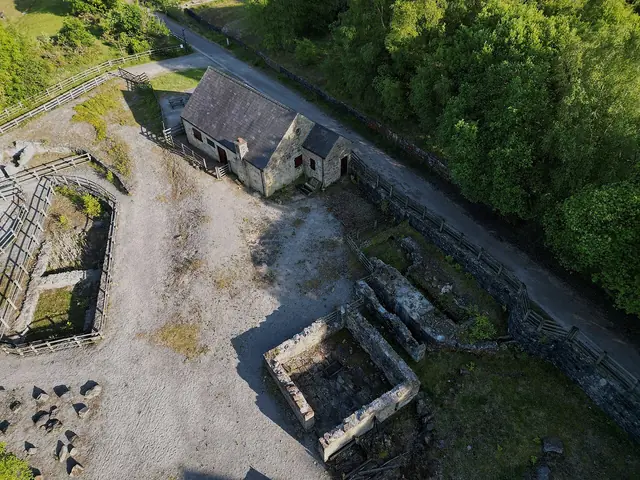
- Estate outbuildings – Surviving buildings of the working estate, including the joiners’ workshop, smithy, sawmill and stables.
- Operated by
- National Trust
Admission & discounts
| Adults | £19 |
|---|---|
| Children & teens | £9.50free up to age 4 · Children aged 5 to 17. Children under 5 are free. |
| Groups (15+ people) | £18.05 per personAdult group rate per person for the whole property; children in a group pay £9.03. Groups should book in advance. |
| Families | £47.502 adults and up to 3 children, whole property. |
| Garden only: adult | £12Admission to the garden without the house |
| Garden only: child (5 to 17) | £6 |
| Garden only: family (2 adults and up to 3 children) | £30 |
| Whole property: family (1 adult and up to 3 children) | £28.50 |
| Garden only: family (1 adult and up to 3 children) | £18 |
The prices are for standard admission without Gift Aid; paying with Gift Aid adds about 10 per cent (adult whole property £20.90). Access to the wider estate and parkland is free; admission is charged for the house, garden, restaurant and shop. National Trust members enter free. Car parking is free.
Accessibility
- Partially wheelchair accessible
- Elevator: no information
- Accessible restroom
- Accessible parking
- Service dogs welcome
- Tactile models & exhibits: no information
- Sign language tours: no information
- Easy-to-read materials: no information
- Audio description: no information
Blue Badge parking and a drop-off point are available. Of the four floors in the house, only the lower ground floor is fully accessible, with level stone floors; some corridors are narrow. The ticket office and shop have level access, as does most of the garden apart from two small sets of steps. There are cobbles in the Midden Yard and Stables Courtyard. A lift serves the Hayloft Restaurant. Wheelchairs can be borrowed, and two powered mobility vehicles can be booked in advance by phone. Dogs are not allowed in the house or garden except registered assistance dogs.
Kids & families
Great for kids & families
| Kids’ admission | free up to age 4 |
|---|---|
| Family ticket | £47.50 · 2 adults and up to 3 children, whole property. |
- Family tours & workshops
- Activity booklet, scavenger hunt or kids’ audio guide
- Baby changing facilities
- Playground / play area
Wolf’s Den is a natural play area of nearly two acres with a rope swing, stepping logs, bridges and a den-building area. The garden and parkland have “50 things to do before you’re 11¾” activities, and seasonal family trails and events run in school holidays. Baby-changing facilities are in the Midden Yard. Pushchairs are allowed only on the lower ground floor of the house and can be left at the entrance.
Getting there & parking
By public transit
Felin Puleston, Rhostyllen (bus)
Arriva buses on routes 2 (Oswestry and Cefn Mawr to Wrexham), 4 (Penycae) and 5 (Llangollen) stop at Felin Puleston, Rhostyllen, about one mile from the house through Erddig Country Park. The nearest railway stations are Wrexham Central (1.7 miles) and Wrexham General (1.9 miles).
By car
Free parking
Free all-weather car park about 200 yards from the main entrance. Cycle parking is at the visitor welcome building.
- Accessible parking
The postcode is not always recognised by satnavs; the National Trust advises following the brown signs from the A525 Whitchurch Road or the A483, leaving at junction 3 through Rhostyllen and turning right at Felin Puleston on Hafod Road. There is no electric vehicle charger. Erddig holds the Good Journey mark for welcoming visitors who arrive without a car.
Get directionsAmenities & dining
- Café
- Restaurant
- Museum shop
- Lockers
Hayloft Restaurant, a tea garden and parlour at peak times, a gift shop, a plant shop and a second-hand bookshop. Large bags and backpacks must be left in lockers in the stables before entering the house.
Events & venue rental
The museum hasn’t published any information on this.
Plan your visit
| Guided tours | yes |
|---|---|
| School programs | yes |
| Good to know | Outdoor guided tours run daily from March to October and at weekends in November, but depend on volunteers and may not run every day. Educational and group visits should be booked in advance. |