Special exhibition
The Art of Deception
Over a hundred objects show how forged scientific instruments entered collections, who made them and why, and how experts exposed the fakes.

Free University of Cambridge museum of scientific instruments, globes, models and calculating devices in a Jacobean school hall.
Special exhibition
Over a hundred objects show how forged scientific instruments entered collections, who made them and why, and how experts exposed the fakes.
The museum is named after Robert Stewart Whipple (1871–1953), an instrument maker and manager at the Cambridge Scientific Instrument Company, who gave his collection of about 1,000 scientific instruments and a similar number of rare books to the University of Cambridge in 1944. The university wanted the museum to be much more than a store of old apparatus: it was to serve as a teaching tool and as a cultural support for research in the new subject of the history of science.
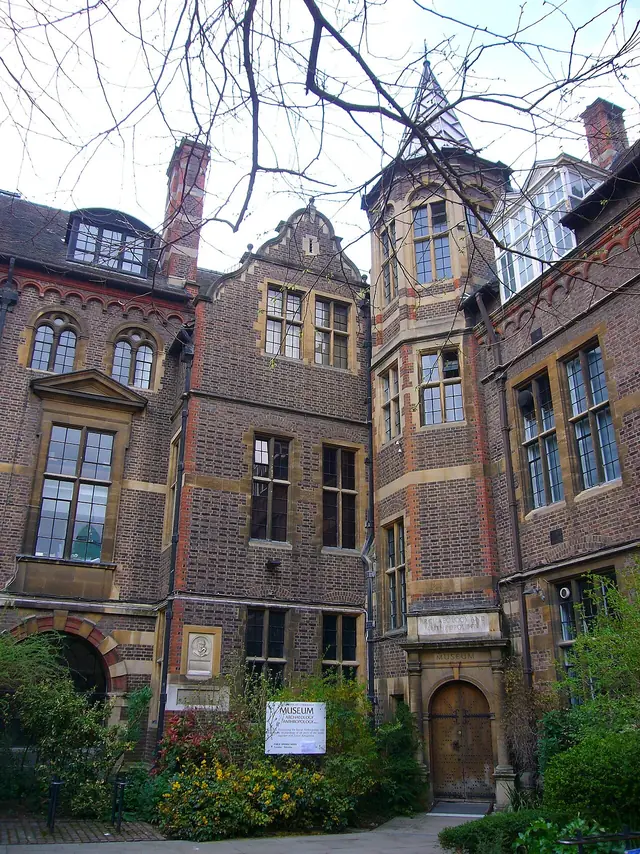
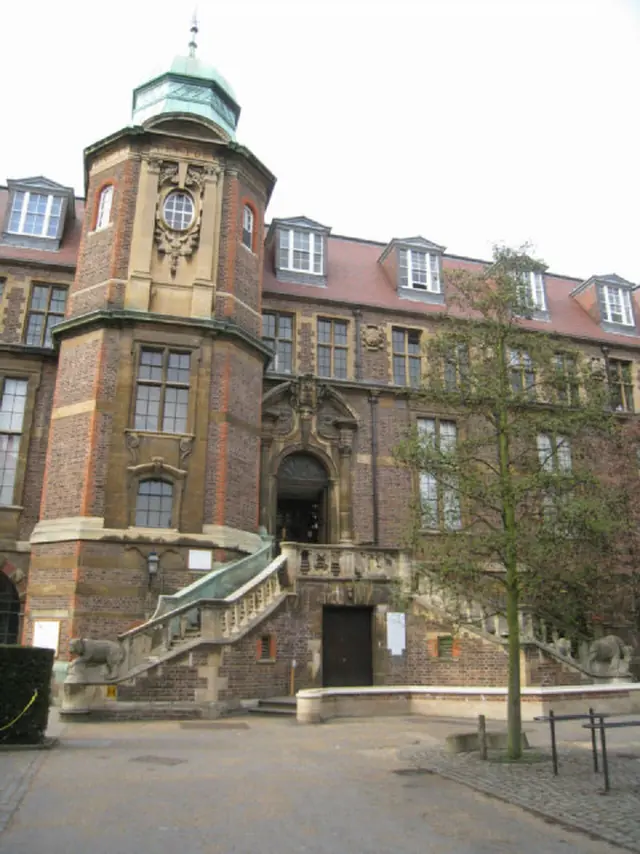
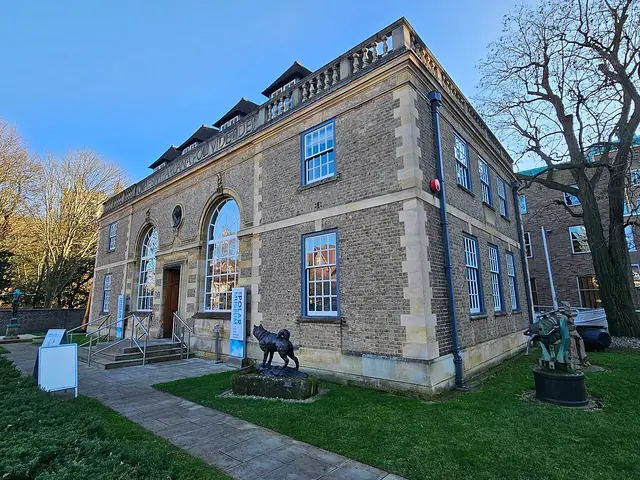
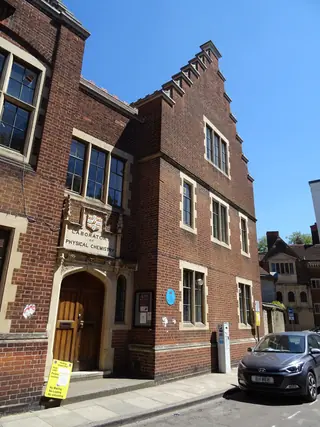
Because there was no space at first, the collection was kept in several places, including the basement of the Fitzwilliam Museum, until it moved in 1959 to its permanent home. This is the former hall of the Perse School, the first free school in Cambridge, with a Jacobean hammer-beam roof, built between 1618 and 1628. The Fitzwilliam collection was housed there from 1816 to 1842, and after the school moved away in 1890 the building became part of the university’s New Museums Site, serving as an electrical laboratory and then a physical chemistry laboratory. The hall was restored to its original form in 1973 to 1975.
Today the museum has a main gallery with large instruments such as the 18th-century Grand Orrery and William Herschel’s Newtonian telescope, a learning gallery with family activity boxes, an upper gallery of globes and a Victorian parlour. Its collections also cover microscopes, calculating devices, meteorology and models.
Admission is free.
| Groups (10+ people) | –Group tours are free for schools and community groups; commercial organisations, including language schools, pay £200 per booking. |
|---|
Entry is free for individuals and for groups of fewer than 10 people.
The main entrance on Free School Lane has a flight of stairs. The step-free entrance is through the Pembroke Arch on the New Museums Site; at present step-free access is restricted because of building works, and visitors who need lift access should phone ahead so that a member of staff can escort them. An accessible toilet with a baby-changing unit is on the ground floor. A wheelchair can be borrowed from the gallery attendant, and there is seating in the galleries. Blue Badge parking is on Free School Lane. Assistance dogs are welcome. Ear defenders and a sensory bag can be borrowed, neck loops can sometimes be arranged for events, and a visual story is available. There is no lunch room or cloakroom.
Great for kids & families
The Learning Gallery has family-friendly activity boxes with handling objects that illustrate scientific concepts, and the Victorian Parlour has zoetropes and stereoscopes to try. There is a baby-changing unit in the accessible toilet.
Drummer Street bus station · 8-min walk · 650 m
The museum is an 8-minute, 650-metre walk from Drummer Street bus station. Cambridge railway station is a 25-minute, 1.1-mile walk away, with frequent trains to London King’s Cross.
No on-site parking at the museum.
There is no visitor car park. The nearest is the Grand Arcade multi-storey on Corn Exchange Street, which has Blue Badge parking; Cambridge Park and Ride is encouraged.
Bicycle racks are outside the front and back entrances.
Get directionsA small selection of gifts such as pencils, notebooks and postcards is sold on site, and more items are available from the University of Cambridge “Curating Cambridge” online shop. The museum has no lunch room or cloakroom.
The museum hasn’t published any information on this.
| Guided tours | yes |
|---|---|
| School programs | yes |
| Photography | Photographs for non-commercial purposes are welcome; tripods, selfie sticks, external flashes and lighting are not permitted. |
| Good to know | Free themed tours such as the Whipple Highlights Tour and the Black History of Science Tour can be booked online. School and community groups can book free group tours. The museum is quietest in winter and during term time, and Wednesdays are usually the quietest day. |
Loading experiences …