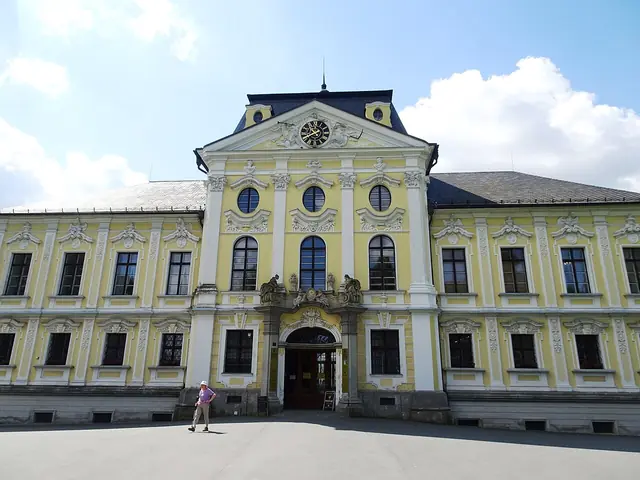
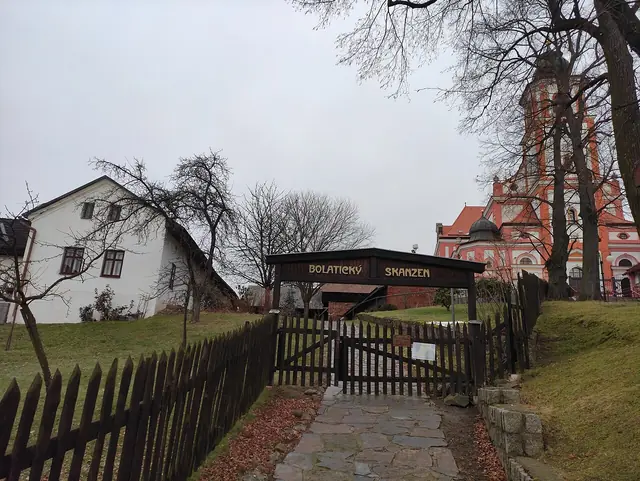
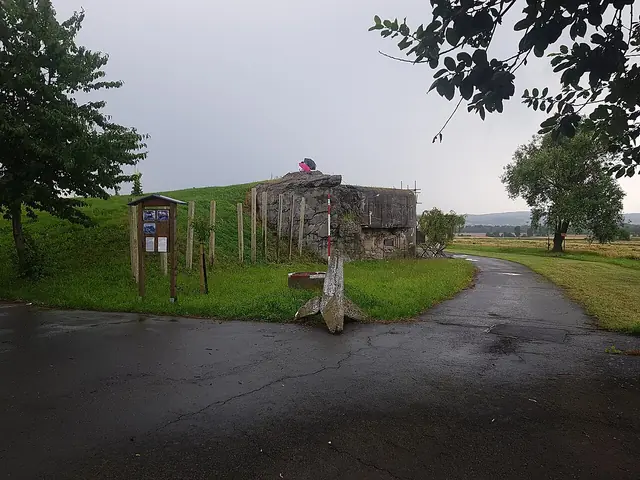
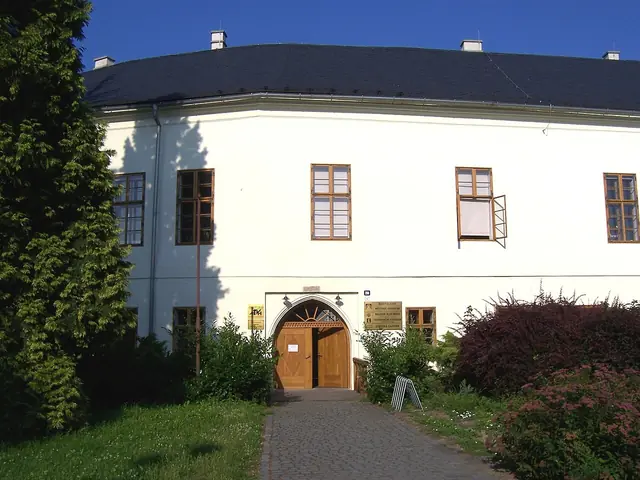
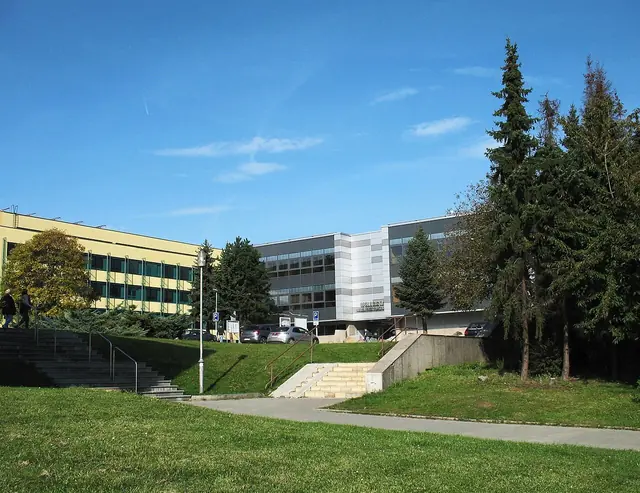
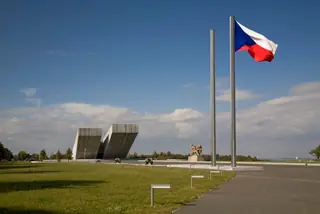
National Memorial of World War II in Hrabyně, with the exhibition Těžká léta 1938–1945, a symbolic cemetery and a viewing platform; part of the Silesian Museum (Slezské zemské muzeum).
Show individual sections
Key themes
Permanent exhibition Těžká léta 1938–1945
Sculpture group Lidické děti (Children of Lidice) by Marie Uchytilová
The outdoor exhibition follows the development of the gendarmerie, police, financial guard and the Sbor národní bezpečnosti in Silesia from the First Republic through the occupation until 1948; on view until the end of November 2026.
An exhibition by the Památník Terezín on officers and generals of the pre-Munich army from the resistance organisation Obrana národa, their resistance and imprisonment; on view until the end of November 2026.
The story of a border guard who defected to Italian partisans and later reached the Czechoslovak armoured brigade in Great Britain; panels, objects from his estate and photographs. On view until the end of November 2026.
The exhibition presents objects that the museum acquired for its collections in the years 2015 to 2025; on view until the end of November 2026.
About the museum
The foundation stone of the memorial was laid on 29 April 1970 in the presence of President Ludvík Svoboda, but construction did not begin until 1976. It opened in 1980 as the Památník Ostravské operace (Memorial of the Ostrava Operation). The complex consists of an administrative building and the memorial itself, around which a symbolic cemetery has been laid out. A linden avenue also leads to the memorial, and military equipment stands nearby.
Originally it was a place of commemoration rather than a museum. Since 1992 the memorial has been part of the Silesian Museum, and since 2000, by government decision, it has been the central memorial of the Second World War in the Czech Republic. In 2005 it was closed for reconstruction, which began in 2006; it was solemnly reopened on 29 April 2009. In 2014 it received its present name, Národní památník II. světové války (National Memorial of World War II).
The main building houses the permanent exhibition Těžká léta 1938–1945, which follows the war from military and political perspectives, looks at the life of the civilian population, culture and the economy, and commemorates Czechoslovak soldiers on all fronts as well as the resistance at home.
Permanent exhibitions
Těžká léta 1938–1945 – The exhibition in the main building recalls the Second World War from military and political perspectives, the life of the civilian population, culture and the economy, and the participation of Czechoslovak soldiers and of the domestic resistance.
Lidické děti – Plaster sculpture group of the murdered children of Lidice, which the sculptor Marie Uchytilová created in 1969–1989.
Founded
1970
Operated by
Slezské zemské muzeum
Admission & discounts
Adults
150 Kč
Reduced
90 Kčchildren and young people aged 6–18, students, holders of an ISIC or ITIC card, seniors over 65 (upon presentation of a card), members of the Club of Friends of Fine Arts, the children's club Čtyřlístek and the Fund for Endangered Children
Children & teens
90 Kčfree up to age 5 · Children and young people aged 6 to 18 pay the reduced admission.
Seniors
90 KčSeniors over 65 upon presentation of a valid card.
Visitors with disabilities
freecompanion free · Holders of a ZTP or ZTP/P card, including a guide, enter free.
Students & apprentices
90 KčUpon presentation of a student card or other card.
Groups (10+ people)
–Groups of 10 or more people receive a 20% discount when booking in advance.
Families
350 KčTwo adults and up to three children under 18.
Viewing platform
20 KčAscents at 10:00 and 15:00.
Free admission:Days of free admission to the permanent exhibitions according to the Ministry of Culture of the Czech Republic: 1 November 2026.
Free admission for, among others, children under 6 and holders of AMG and ICOM cards. Photography in the exhibitions without flash and tripod is free. Admission to the educational programme for booked groups costs CZK 50 per pupil.
Accessibility
Partially wheelchair accessible
Elevator
Accessible restroom
Accessible parking
Service dogs welcome
Tactile models & exhibits: no information
Sign language tours: no information
Easy-to-read materials: no information
Audio description: no information
The memorial is classed as a partially accessible building; the visitor centre is fully accessible. Steps lead to the entrance, which can be passed with a ramp; there is also a side barrier-free entrance, a lift for wheelchairs and a barrier-free toilet that can be unlocked with a Eurokey. A reserved parking space is by the building, and the nearest public transport stop is called Hrabyně.
Kids & families
The museum hasn’t published any information on this.
Getting there & parking
By public transit
Hrabyně
The nearest public transport stop is called Hrabyně.
By car
Parking available
A reserved parking space for people with disabilities is located at the building.